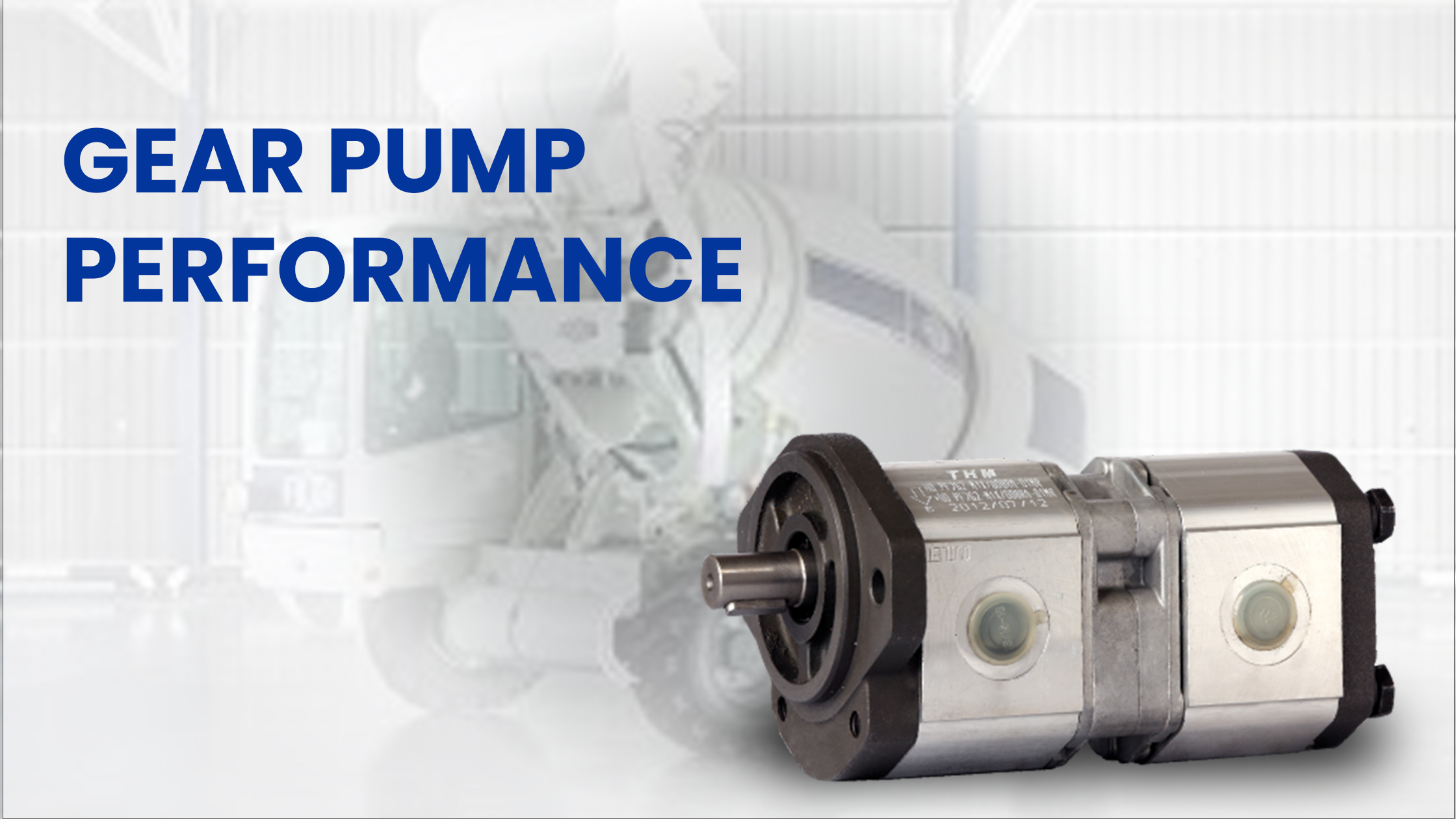
The performance of the gear pump is important in dealing with the hydraulic system, oil transfer unit, or industrial machinery. The reason why gear pumps are popular is that they provide stability in their flow, power, and can operate effectively even within a demanding environment. These pumps are applicable in low and high pressure systems, which is why their behavior in various conditions can be better understood to guarantee efficient operation, increased life of equipment, and the smooth working of the pumps.
This blog discusses the functioning of gear pumps, the influence of pressure on performance, and the considerations that users are urged to pay to a hydraulic gear pump when choosing or maintaining it.
How Gear Pumps Work
The mechanism by which gear pumps work is through two rotating gears in which the fluid is trapped and pumped in and out.
Key functions include:
- Forming suction gears unmesh.
- A fluid flow in and around the gear housing.
- During fluid discharge, pressure increases.
This is a simple mechanical design, which has good reliability and few components hence gear pumps are applicable in heavy duty industries.
Gear Pump Operation Under Low Pressure
Gear pumps in low pressure have smooth operation with minimal resistance.
Benefits include:
- Reduced heat build up
- Lower energy consumption
- Stable flow of lubrication.
- Less internal leakage
Low pressure gear pumps are typically utilized in the lubrication circuits, cooling systems, and small hydraulic systems where high force does not have as much significance as smooth flow.
Gear Pump Operation Under High Pressure
Less clearances and stronger materials are require in high pressure operation. A hydraulic gear pump with high pressure is meant to be use on loads that are more demanding such as:
- Lifting equipment
- Construction machinery
- Mining systems
- Transfer of oil in industries
At high pressure, gear pumps can be heat up and slightly lose their efficiency as a result of internal leakage. The correct cooling, filtration and choice of materials will preserve continuous running gear pump performance.
Gear Pump Technical Model Code Overview
THM GR472C025CCFSAEBACODXF2555, THM GR472C032CCFSAEBACODXF2555, THM GR472C040CCFSAEBACODXF2555, THM GR472C045CCFSAEBACODXF2555, THM GR472C055CCFSAEBACODXF2555, THM GR552C050CCFSAEBACOEDX, THM GR552C063CCFSAEBACOEDX, THM GR552C075CCFSAEBACOEDX, THM IGP2-63-01T/R-VPC, THM IGP2-63-01T/R-VPC-L-36, THM IGP2-63-01T/R-VPC-S10, THM IGP2-63-02T/R-PVS, THM IGP2-63-02T/R-VPC-S10, THM IGP3-100-01T/R-VPC, THM IGP3-100-02T/R-PVS, THM IGP3-125-01T/R-VPC, THM IGP3-125-02T/R-PVS (T012501105), THM IGP3-160-01T/R-VPC, THM IGP3-160-02T/R-PVS, THM IGP3-80-01T/R-VPC, THM IGP3-80-02T/R-PVS-S10, THM CBKP100-BFP, THM CBKP32-BFP, THM CBKP40-BFP, THM CBKP50-BFP, THM CBKP63-BFP, THM CBKP80-BFP
Key Factors Affecting Gear Pump Performance
- Fluid Viscosity: Viscous fluids have a better sealing effect, but add load and torque. Liquids can be leaking more at high pressure.
- Material Strength: Depending on the usage, gear pumps can be design using cast iron, stainless steel or aluminum.
- Operating Speed: Increasing RPM will bring up the flow rate, but will shorten the lifespan of the pump when it is overworked.
- Temperature Influence: Seal wear can be caused by high temperature and efficiency can be reduce.
- Internal Clearances: Tighter clearances will allow high pressure operation but must use clean oil to prevent wear.
Performance Tips for Longer Gear Pump Life
In order to have the best gear pump performance, these are the tips to follow:
- Use filtered hydraulic oil
- Avoid dry running
- Check the degree of pressure of the checks
- Check on the presence of abnormal sound or vibration
- Have adequate cooling systems
In the event that you are in need of the appropriate pump to match your pressure range, THM Huade offers efficient and economical hydraulic gear pump applications.
Choosing Gear Pumps for Different Pressure Needs
The product Low pressure gear pumps are ideal in application.
- Lubrication systems
- Cooling circuits
- Light duty oil transfer
- General machinery
Ideal Uses for High-Pressure Gear Pumps
- Heavy machinery
- Press systems
- Industrial hydraulic units
- Applications of high force lifting
Proper matching of pressure capability to your application is to guarantee safe and efficient and stable operation.
Final Thoughts on Gear Pump Performance Under Pressure
Gear pumps are also one of the most dependable parts of the hydraulic and industrial system as they are reliable at different pressure levels. Knowledge of the influence of pressure on gear pumps can assist operators to make the correct choice of the pump, to sustain its efficiency and to minimize downtime. Alternately you want a low pressure or high pressure solution, the right choice and upkeep is a must to have a long-lasting performance.
For expert support or to purchase hydraulic pumps and components, contact THM Huade today for the best solutions tailored to your system’s pressure and flow needs.
FAQs – Gear Pump Pressure & Working
Q1. What is the operating pressure of a gear pump?
The usual range of running a gear pump is 70 to 250 bar, depending on the type of design. The limits can be higher in the case of high-pressure gear pumps.
Q2. How to control pressure in a gear pump?
Relief valves, flow control valves and appropriate size of pumps are use so as to control pressure. The correct hydraulic settings can be maintaines to prevent overloading on the system.
Q3. How does a gear type pump operate?
The mechanism of the gear pump is that the fluid is stuck between payments in the gear teeth and the casing, and then pushed to the outlet by the rotation of the gears. This provides a free-flowing effect.
Q4. What is the principle of operation use in gear pumps?
Gear pumps are base on the principle of positive displacement, that is, they supply a certain amount of fluid with each turn, independent of the pressure variations.
Q5. Can gear pumps run dry?
No, gear pumps must not dry out because without lubrication they wear, become hot, and get inside damages in a few seconds.
Q6. Does a gear pump require priming?
Most gear pumps do need to be prime, as they need to operate so that they can get a good suction and not to contain air bubbles which may lower efficiency or lead to cavitation.