The servo motor price plays a major role in every industrial purchase decision. Buyers often compare servo motor cost and industrial servo motor price to see whether a low-budget option can still meet performance needs. This first step is important because the wrong choice affects long-term output, reliability, and maintenance. Many engineers rely on a servo motor comparison or a trusted servo buying guide to avoid costly mistakes.
Below, we break down cost vs durability, long-term value, and what US buyers should expect when choosing a servo motor for industrial use.
Why Servo Motor Cost Matters in Industrial Applications
The servo motor cost affects everything from efficiency to product quality. Companies sometimes choose cheaper models to reduce upfront expenses. However, the short-term savings often disappear once repairs, downtime, or early motor failure begin.
Moreover, industrial environments demand stable torque, consistent accuracy, and high cycle endurance. Therefore, choosing based only on initial price can lead to poor long-term results.
Key Cost Drivers
- Motor torque rating
- Speed and precision
- Encoder type
- Build materials
- Manufacturer reputation and support
Each factor directly influences performance and lifespan.
Servo Motor Comparison: Cheap vs Premium Models
A proper servo motor comparison helps highlight the performance gap between low-budget and high-grade motors. Although cheap units may seem attractive, they usually lack durability.
Cheap Servo Motors
Low-cost servo motors appeal to small startups and hobbyists. However, they typically show weaknesses in several areas.
- Lower-grade bearings
- Inconsistent torque delivery
- Shorter service life
- Limited heat resistance
- Fewer safety protections
Many inexpensive servo motors lack reliable encoder accuracy. As a result, precision-based industries like robotics, packaging, and CNC machining face higher failure risks.
Premium Industrial Servo Motors
Premium motors come at a higher industrial servo motor price, but they deliver stronger value over time. These units feature:
- Better torque stability
- Superior housing materials
- Accurate encoders
- Better heat dissipation
- Long operational life
Therefore, the higher purchase price typically reduces long-term ownership cost.
Is a Low Servo Motor Price Worth It?
Choosing a cheap motor depends on your workload. For light, low-duty applications, a lower servo motor price may still work. However, industries requiring precision and endurance should avoid bargain models.
Cheap Motors Work Best For:
- Prototyping
- Educational projects
- Light-duty automation
- Short-cycle applications
Cheap Motors Fail In:
- High-torque environments
- Continuous duty cycles
- Precision machining
- Harsh industrial settings
Consequently, cost-sensitive buyers must consider more than price alone.
Industrial Servo Motor Price: What US Buyers Should Expect
In the USA, industrial servo motor prices vary widely depending on torque and brand. While mid-range models balance cost and reliability, extremely cheap units usually lack the quality needed for industrial tasks.
Typical Price Ranges in the USA
- Low-Cost Hobby Motors: $20–$80
- Mid-Range Light Industrial Motors: $120–$500
- High-Grade Industrial Motors: $600–$3,500+
Higher-end brands are engineered to reduce heat, resist wear, and maintain accuracy over long cycles. Therefore, these motors deliver better ROI.
Servo Buying Guide: How to Choose the Right Motor
This servo buying guide outlines the most important steps in selecting the ideal motor without overspending.
1. Define Your Torque Needs
Higher torque means higher cost, but insufficient torque damages equipment. Therefore, always choose a motor with a safe torque margin.
2. Consider Duty Cycle
Continuous-duty applications require stronger materials and better cooling systems.
3. Examine Encoder Quality
Accuracy depends on encoder resolution. Cheap encoders drift over time, which impacts precision.
4. Compare Warranty & Support
Premium motors offer longer warranties because manufacturers trust their durability.
5. Review Long-Term Operating Costs
A cheaper motor may require:
- Frequent repairs
- More replacements
- Higher downtime costs
Thus, a higher upfront expense often saves money over the motor’s lifetime.
Cheap vs Durable: The True Cost Breakdown
Although the servo motor price can tempt buyers toward low-cost options, durability should guide the final decision.
Long-Term Value Comparison
| Feature | Cheap Servo | Premium Servo |
| Torque Stability | Low | High |
| Heat Resistance | Weak | Strong |
| Encoder Accuracy | Inconsistent | Precise |
| Lifespan | Short | Long |
| Maintenance Costs | High | Low |
As shown above, paying more up front often results in lower lifetime cost.
When Paying a Higher Servo Motor Cost Is the Best Choice
Buyers working in professional or industrial sectors must prioritize durability. High-performance servo motors guarantee stable production, fewer breakdowns, and strong ROI.
Industries that must choose premium motors include:
- Robotics
- Aerospace
- Factory automation
- CNC manufacturing
- Medical equipment
These sectors depend on accuracy; therefore, quality cannot be compromised.
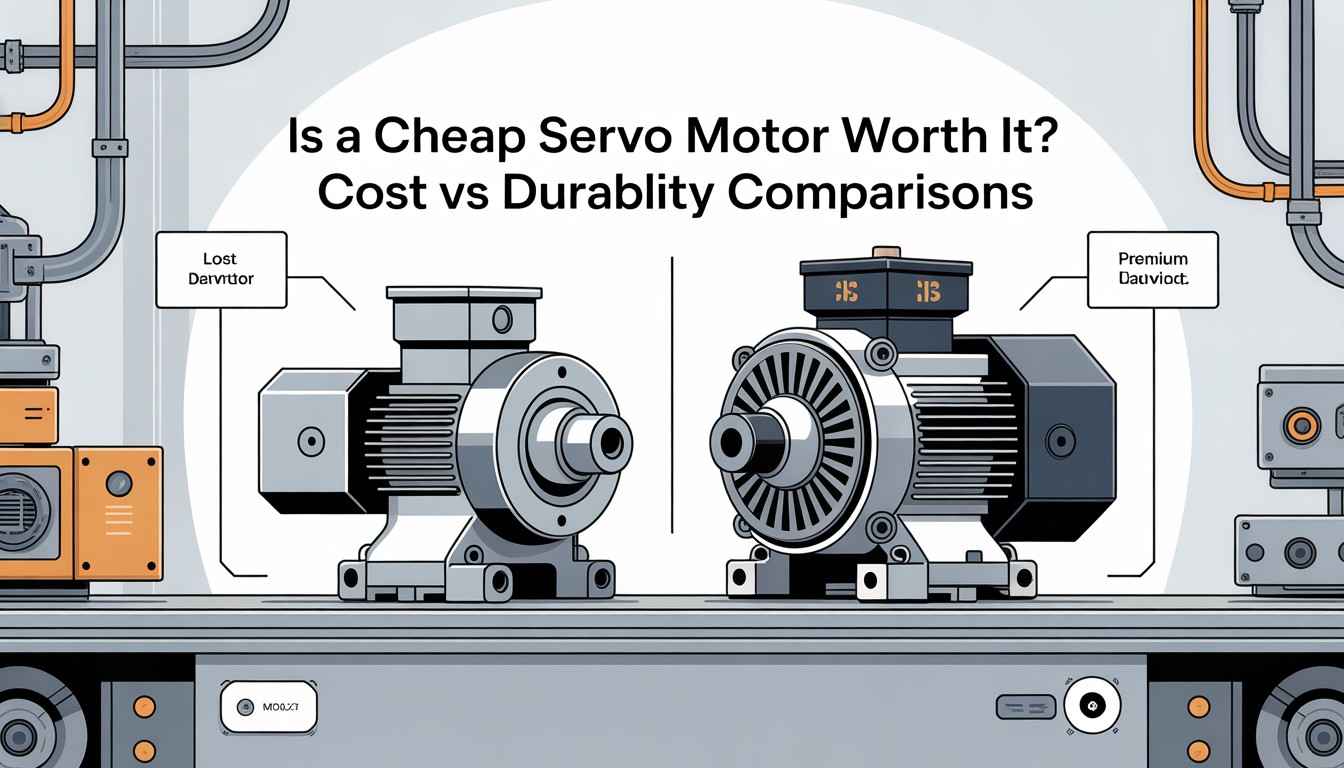
Final Verdict: Is a Cheap Servo Motor Worth It?
A low servo motor price may seem appealing at first. However, most cheap motors lack the durability required for industrial workloads. As a result, the best choice for US buyers is often a mid-to-high quality motor that balances performance, lifespan, and cost.
Therefore, always compare torque, encoder precision, heat resistance, and warranty before making a purchase. This approach ensures long-term savings and higher productivity.
Looking for long-lasting servo motors at the right price?
THM Huade delivers premium quality built for industrial excellence.
Contact us now to get the best deal for your application.
FAQs
What affects the industrial servo motor price the most?
Torque capacity, encoder quality, and build materials affect pricing the most. These features also determine durability and long-term performance.
How do I choose the right servo motor for my application?
Start by calculating torque needs. Then compare encoder accuracy, duty cycle, and warranty coverage. A balanced servo motor cost choice offers better lifetime value.
Why do premium servo motors last longer?
Premium motors use stronger components, better cooling, and higher-grade encoders. This combination reduces wear and helps maintain accuracy over time.
Is a cheap servo motor a good long-term investment?
A cheap servo motor may work for light tasks, but it often fails under continuous or high-precision use. Investing in a durable, higher-quality servo motor reduces downtime, maintenance costs, and long-term operational risks.