Hydraulic systems are considered the backbone of industrial operations, ranging from manufacturing and metal forming to plastics and heavy machinery. Central to these systems is the hydraulic pump, which provides the pressure and flow required to drive equipment efficiently.
The servo motor hydraulic pump is a relatively new addition to existing pump designs over the last couple of years. As energy costs rise and demand for precision increases, more and more businesses are asking whether upgrading away from conventional systems makes business sense.
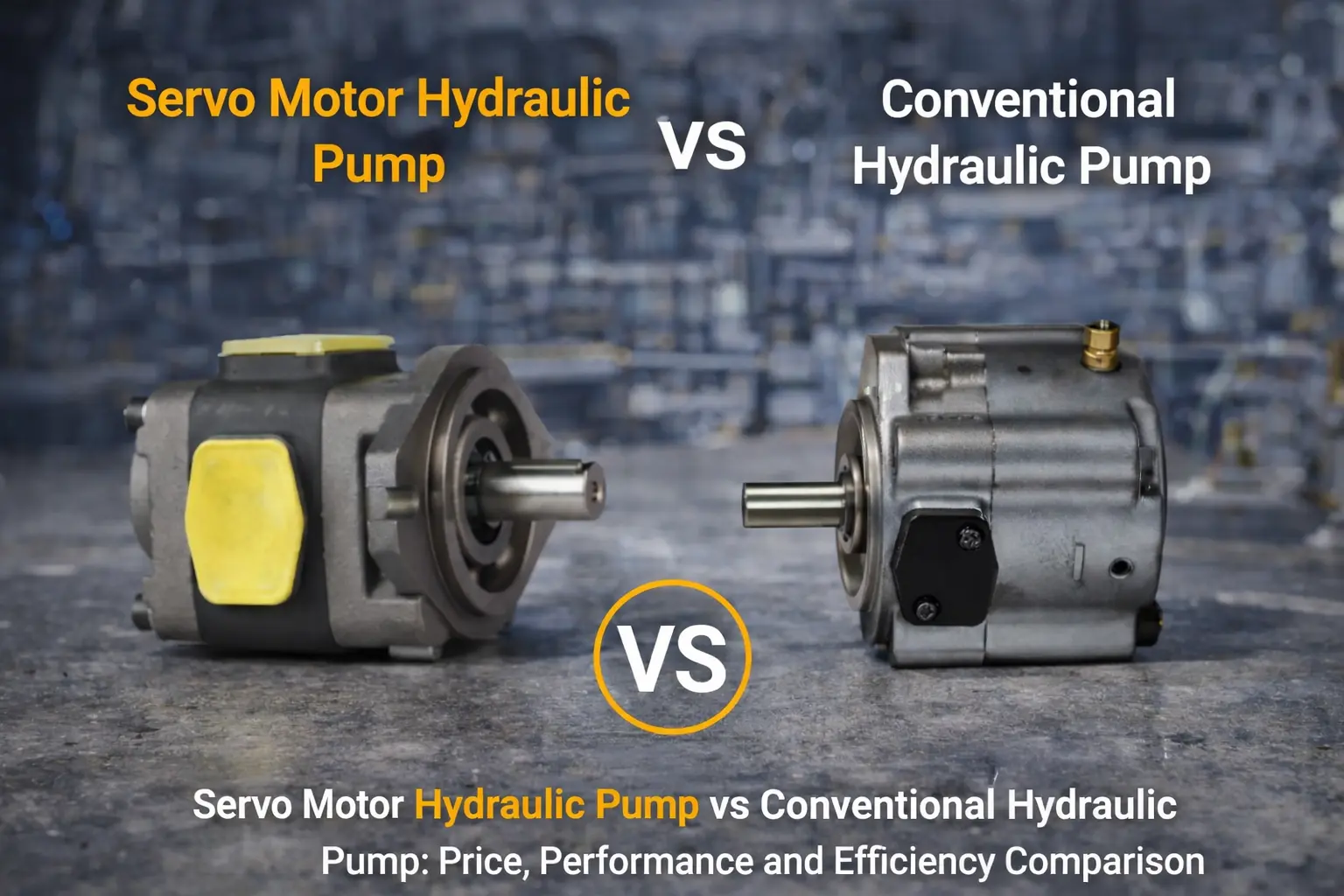
This article compares servo-motor hydraulic pumps with conventional hydraulic pumps on price, performance, and efficiency to help decision-makers make informed choices.
What are Conventional Hydraulic Pumps?
A typical hydraulic pump works at a constant speed, whether the system needs constant pressure at that very moment or not. This has a continuously operating motor, providing a constant flow of hydraulic oil even when the machine is operating at less than maximum power.
Though this design has proven to be reliable for more than three decades, it creates inefficiencies. Valves are frequently used to handle excess flow (converting unused energy to heat). This results in increased energy usage, further wear and tear, and additional need for cooling over time.
Traditional pumps are still popular because they offer a simple, lower-cost design, but they fall short of meeting modern efficiency demands.
What Is a Servo Motor Hydraulic Pump?
A servo motor hydraulic pump is a hydraulic pump system that pairs a servo motor with a variable-displacement or fixed pump and can adapt its output to varying system demand. Rather than constantly running at high speed, the motor responds instantaneously to demand for pressure and flow.
Such pump control is performed intelligently to supply only the energy required at a specific instant. As a result, servo pumps have reduced energy waste, noise, and heat generation by significant margins.
What makes servo-driven hydraulic systems modern is the move from constant-speed operation to demand-based control.
Servo Hydraulic Pump Comparison: Performance Differences
The distinction is apparent in performance assessment, as traditional systems differ from servo-driven solutions.
In applications with a changing load or demanding highly precise control, servo systems always have the advantage over traditional pumps in a servo hydraulic pump comparison over traditional pumps. Servo pumps provide quicker responses, smoother pressure transitions, and more stable operation.
In contrast, conventional pumps do a good job in steady-state applications but lack flexibility. Sudden changes in load can cause several issues, such as pressure spikes, noise, and unsteady operation.
In applications that demand precision and repeatability, servo motor hydraulic pumps really shine.
Hydraulic Pump Efficiency Explained
The widespread adoption of servo technology is, in large part, driven by the growing need for efficiency. System hydraulic pump efficiency (η) quantifies the degree to which a system uses electrical energy to produce hydraulic power.
Standard pumps consume energy for throttling, pressure relief, and constant-running motors. Even when a machine sits idle, power consumption does not drop.
Hydraulic pumps driven by servo motors significantly enhance efficiency by:
- Motor speed adjustment according to real-time demand
- Eliminating unnecessary oil circulation
- Minimizing heat generation and cooling needs
This means less electricity is consumed and lower operating costs
Conventional Hydraulic Pump vs Servo Pump: Energy Usage
When comparing a direct conventional hydraulic pump vs servo pump, energy savings are the main differentiator.
Depending on the application, servo systems can reduce energy use by 30-70 percent. This is especially valuable when machines endure constant load fluctuations, idle periods, or pressure requirements that vary.
Conversely, traditional pumps maintain a fixed energy consumption regardless of the actual workload, which makes them less ideal given the current demand for expedited tech at lower costs with greater efficiency.
Price and Servo Pump Cost Considerations
The only hesitation when considering a servo system is the upfront cost. Due to the use of high-end motors, controllers, and sensors, the servo pump costs are usually higher.
But getting caught up in the purchase price alone can be misleading. Although traditional pumps are less expensive in the short term, their operating costs are far higher in the long run.
While servo motor hydraulic pumps come with a significant price difference, they pay that off over time with:
- Lower electricity bills
- Reduced maintenance needs
- Longer component lifespan
- Less downtime
In the long run, servo pumps tend to offer a more favorable return on investment.
Maintenance and System Longevity
The maintenance and support needs of both systems are different, too. Standard pumps wear more because they run continuously, and oil temperatures are higher than necessary. Also, seals are replaced more often, oil gets dirty quick and components tend to fatigue.
Servo motor hydraulic pumps only run when needed, which keeps them cooler and lowers temperatures and stress, increasing the life of seals, valves, and hydraulic oil. In the long run, this means lower maintenance and greater system reliability.
If your factory wants to shorten downtime and maintenance work, servo systems are the obvious choice.
Noise Levels and Working Environment
Noise pollution is therefore an essential factor to consider in the industry. Conventional pumps produce continuous noise because the motor is always running at full speed, regardless of the pump’s load.
In general, whenever the load is less and the pump is idle, the servo motor hydraulic pumps run quietly. The motor then either slows down or turns off entirely, making it far more pleasant for the ears.
A quieter system is better for the workplace, facilitates regulatory compliance, and enhances overall workplace comfort.
Application Suitability
Here are some areas that are well matched to the servo motor hydraulic pump:
- Injection molding machines
- Presses with variable loads
- CNC and precision machinery
- Energy-conscious manufacturing facilities
And conventional pumps, of course, still have a place, in applications dealing with constant loads and little change between mild and maximum loads, for instance, where efficiency gains might not have as large an effect.
The proper system is based on operational needs, energy objectives, and uptime cost levels.
Making the Right Investment Decision
Do not simply look at the initial high price of the servo-driven pumps; instead, consider the total cost of ownership calculations for which driven pump to use vs. the conventional hydraulic pumps.
An in-depth servo-hydraulic pump comparison shows that servos outperform in efficiency, performance, and long-term savings. While traditional pumps may suffice for basic needs, they struggle to deliver maximum energy efficiency and precision where it matters.
As businesses invest in future-ready solutions, servo motor hydraulic pumps are increasingly seen by end users as a strategic upgrade rather than a value-add.
Conclusion
A servo motor hydraulic pump with a conventional hydraulic pump provides a host of benefits, including greater power savings, noiselessness, and control, making them suitable for the new-style needs of industry.
Although basic applications can be served by standard pumps, companies seeking a more efficient and sustainable solution are opting for advanced alternatives. Driven by servo, THM Huade is the best choice for a reliable hydraulic system and professional support in performance-centric industrial applications.
FAQs
What is the difference in the cost of a servo pump compared to a conventional pump?
The initial price of a servo pump is higher than that of a traditional hydraulic pump due to its advanced features. Yet, energy efficiency, reduced maintenance, and extended service life often translate to a lower total cost of ownership over the life of the system.
Are servo pumps better than any of the conventional systems used to date?
Many servo-motor hydraulic pumps can be easily retrofitted to existing systems. A thorough assessment of system compatibility, control integration, and the achievement of performance gains is warranted.
In which industries are the servo-hydraulic pumps most beneficial?
It is most useful to industries with more fluctuating loads, those that must be precise in their operations, or those that use a lot of energy. Let us just consider some of these places: plastics manufacturing, automotive, metal-forming centers, and energy-use facilities.