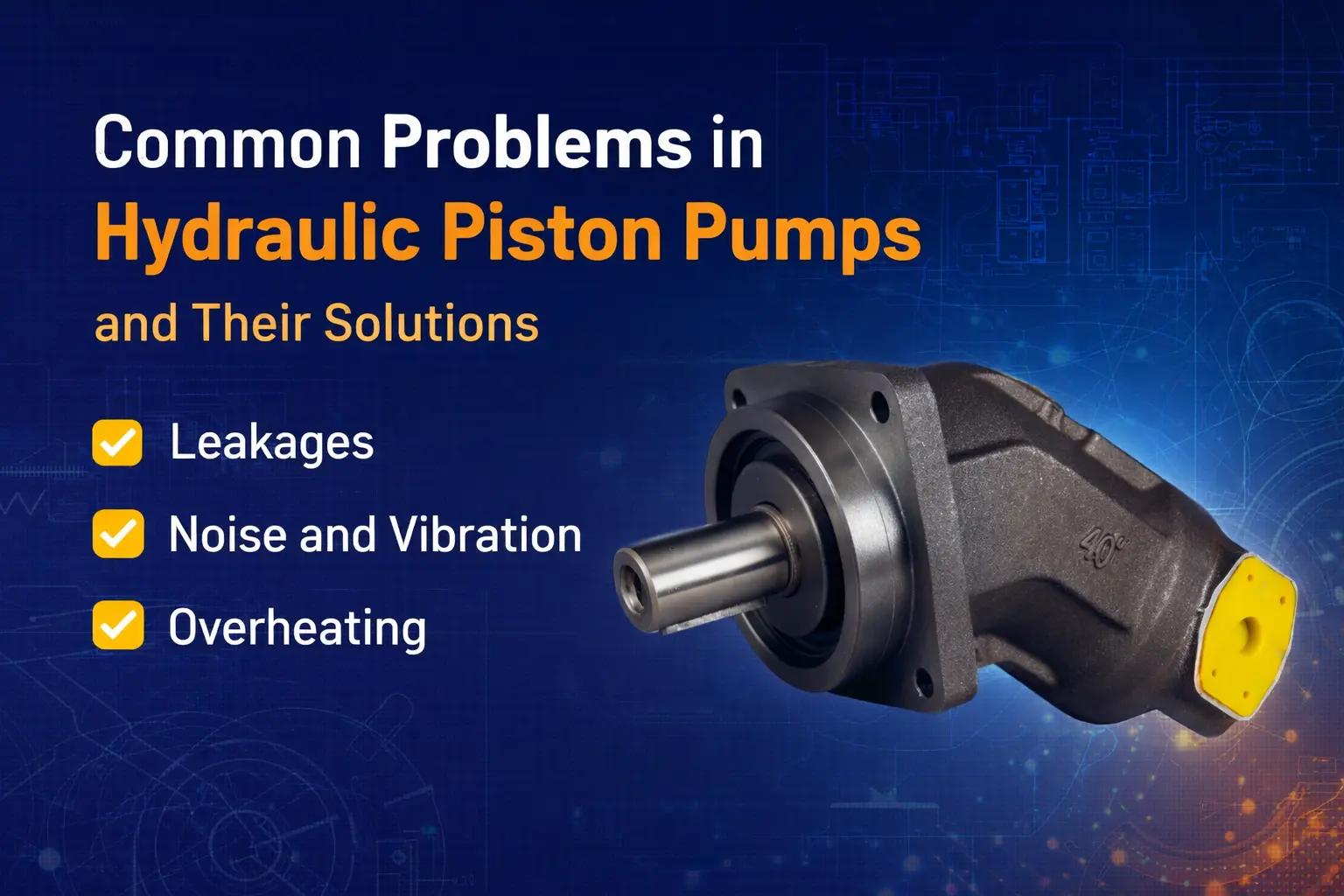
Hydraulic systems are sensitive to reliability and piston pump failure causes are among the most widely researched subjects by maintenance engineers and plant managers. Once a hydraulic piston pump begins to perform poorly, it will impact productivity, waste energy, and create expensive downtime. Most of the problems associated with hydraulic pumps can be prevented or avoided early enough provided the signs are known.
Under this blog, practical explanations of real world problems and solutions of piston pumps are expounded and this assists industries to maximize the life of the pumps, enhance efficiency and minimize the cost of repairs.
Understanding Hydraulic Piston Pumps in Industrial Systems
The hydraulic piston pump is meant to produce high pressure stream flow. These pumps find extensive application in construction machinery, plastic injection machines, presses and severe industrial applications.
Piston pumps are preferred because:
- It is equipped with high pressure ability.
- Flow accuracy is maintained
- They should have a long service life.
Nevertheless, the problem of performance may emerge under the conditions of neglect of operating conditions.
Common Hydraulic Pump Issues Faced in Piston Pumps
There are a number of common issues that are witnessed in piston pumps in industries. These problems are usually associated with installation problems, low quality of oil or absence of preventive maintenance.
Problems that are commonly reported are:
- Pressure instability
- Excessive noise
- Overheating
- Oil leakage
- Reduced output flow
Both issues mention certain causes of piston pump failures, which need to be mentioned at the earliest stages.
Piston Pump Pressure Issues
One of the most urgent problems and solutions of a piston pump that are searching online is pressure loss or unstable pressure.
Main causes:
- Leakage within the engines through deteriorated pistons.
- Damaged valve plates
- Wrong pressure modes.
The loss of pressure is not always quick and the system can continue to operate with lesser efficiency. Otherwise, significant damages to pumps can be obtained.
Solution:
- The recalibration of the pressure settings is required.
- Old internal components should be changed.
- The cleanliness of hydraulic oil must be taken care of.
Noise Problem on Hydraulic Piston Pump
Strange noise is a good sign of internal injuries. Cavitation or aeration is the cause of noise in most instances.
Common reasons:
- Air that flows in suction line.
- Low hydraulic oil level
- Blocked inlet filters
The problem of noise is not considered seriously, but serious pump failure may occur.
Solution:
- Leaks on suction lines should be inspected.
- Oil reserves should be kept up.
- There should be cleaning or changing of filters.
Heater and Overheating of Piston Pump
Excessive heating shortens the life of oil and increases wear. However, often a problem of overheating of a piston pump is associated with the ineffectiveness of system design.
Possible causes:
- Excessive internal leakage
- Extensive long term high system pressure.
- Oil that is of low viscosity or has been degraded.
Heat is usually produced quietly until there is a sudden decrease in performance.
Solution:
- The right grade of oil should be used.
- There should be check ups of cooling systems.
- Valves that relieve pressure should be effective.
Hydraulic Pump Leakage Problem
Leakage of oil is not only sloppy, but it is also risky. Leakage of the hydraulic pumps is usually a sign of seal or housing failure.
Causes of leakage:
- Worn shaft seals
- Cracked pump housing
- Loose fittings
The external leaks are mostly external yet internal leakage may be more harmful.
Solution:
- The replacement of seals should be timely.
- Fittings should be provided with proper torque.
- Pump casing must be checked against cracks.
Early Warning Signs Hydraulic Pump Troubleshooting
Troubleshooting a hydraulic pump requires an individual to detect the early warning signs before the pump fails.
Warning signs include:
- Slow actuator response
- Abnormal vibration
- Rising oil temperature
- Higher power consumption.
On noticing these signs, the corrective action should be taken immediately.
Causes of piston pump failure You must never overlook
There are some causes of piston pump failure that are commonly recurring in the industries and can be avoided.
Most common causes:
- Contaminated hydraulic oil
- Running the pump dry
- Improper alignment of installation.
- Poor maintenance practices
Many failures are not sudden, damage is accumulated over time.
Conclusion: Keeping Piston Pumps Running Without Failures
Hydraulic systems are best performed when problems are identified early and handled accordingly. Knowing the cause of failure of the piston pump has enabled industries to prevent the incidental failure, cut down on the cost of maintenance and enhance efficiency in the operation.
Under correct management of oil, frequent checkups and professional assistance of reputable suppliers such as THM Huade, piston pumps can perform at constant speed over years.
FAQs
Q1. What are the most common problems in hydraulic piston pumps?
The issues that are common are low pressure, excessive noise, oil leakage, overheating, and low efficiency. All these problems tend to arise as a result of wear, contamination or incompetent maintenance.
Q2. What causes low pressure in a hydraulic piston pump?
The major causes of low pressure include internal leakage, worn pistons, damaged seals, clogged filters or low level of hydraulic oil.
Q3. Why does a hydraulic piston pump make noise?
Cavitation, entry of air into the system, low level of oil, blocked suction line, and low quality of oil are some of the reasons that cause noise in a piston pump.
Q4. What causes overheating in hydraulic piston pumps?
High internal leakage, constant overload, poor cooling, dirty oil or wrong oil viscosity can cause overheating.
Q5. Can contaminated oil damage a piston pump?
Yes, polluted hydraulic oil may wear it away, clog internal passages, decrease efficiency and cause premature pump failure.
Q6. How can the efficiency of a hydraulic piston pump be improved?
The process can be made more efficient through clean oil usage, proper pressure and timely replacement of parts that wear out and overheating.