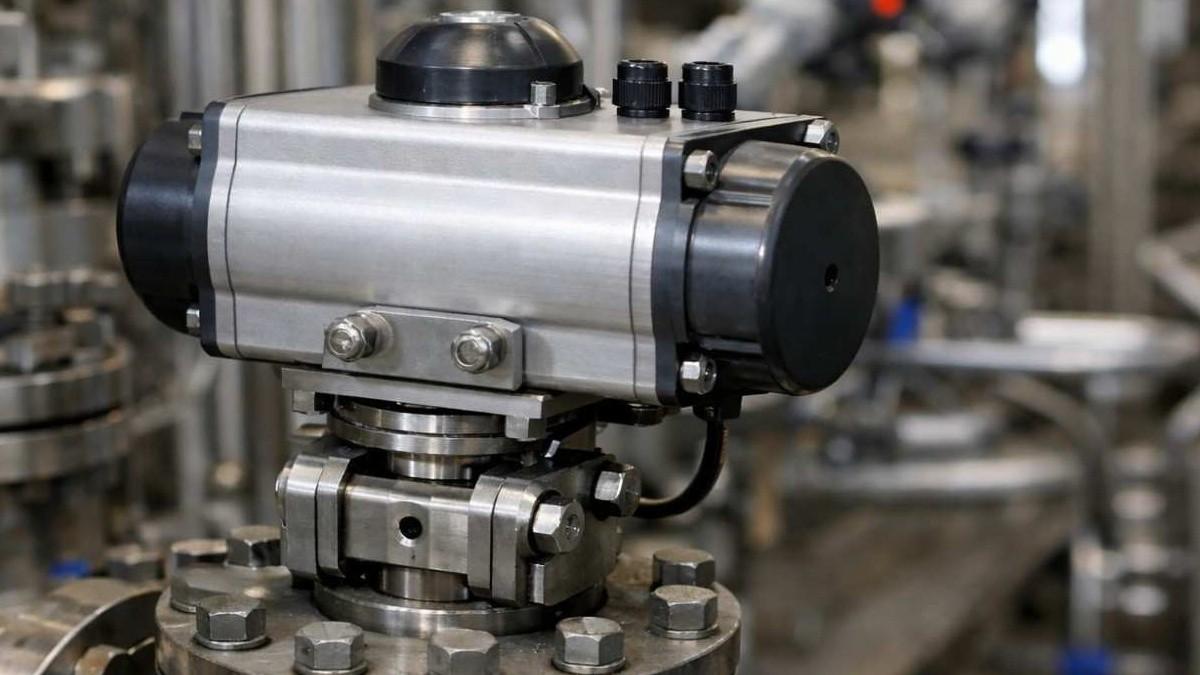
Rotary actuators are important, revolutionary components that appear in new-age industrial automation, robotics, and valve control systems. Actuators convert energy (hydraulic, pneumatic, or electric) into accurate rotary motion, making them fundamental to even the most complex systems in most industries. The overall cost of a rotary actuator is influenced by several factors, including materials, technology, and other performance specifications.
Choosing an inductive linear position sensor or combining a hydraulic cylinder with a linear position sensor can greatly affect cost. Additionally, performance specifications play a significant role in overall cost and efficiency. Understanding what contributes to the total cost helps engineers and industrial buyers decide on the best rotary actuator for their situation.
Understanding Rotary Actuator Cost Components
The primary factors influencing the cost of a rotary actuator include material, modern technology, and performance specifications. Quality metals, lightweight alloys, and certain composite materials can increase durability and the extent of service, but they may also raise the price.
High-precision applications, such as robotic arms or automated valve systems, typically include inductive linear position sensors in the design to provide greater accuracy and reliability by giving feedback on the position of the actuator.
Likewise, using a linear position sensor for a hydraulic cylinder provides accurate tracking of movement in a hydraulic system, as moving hydraulic cylinders are often critical to performance and reliability.
Materials
Material is a major factor in the cost and life of rotary actuators. Actuators are commonly made from stainless steel, aluminum alloys, and high-strength composites. Stainless steel has excellent corrosion resistance, while aluminum alloys help reduce weight and improve energy efficiency.
If your hydraulic system is severe-duty and a rotary actuator is piped to a hydraulic cylinder, your valve actuator may have a consistent torque regardless of the load. In serious service hydraulic systems, a linear position sensor for the cylinder will help improve accuracy and reliability, while minimizing wear and shortening future maintenance costs.
Actuators designed for high-performance applications may utilize specialized alloys or composite materials, which allow them to withstand extreme temperature environments, corrosive environments, or heavy loads. The upfront costs of using these materials are higher, but they reduce replacement frequency and are more cost-effective over the total lifetime of the actuator.
Advanced Technology Integration
Today, advanced technologies are embedded into robotic actuators to increase precision, reliability, and efficiency. Inductive linear position sensors are primarily used to provide precise feedback regarding rotation angles, allowing for improved control in robotic systems and automated machinery. Inductive position sensors mitigate error, improve repeatability, and add reliability to safety, especially in operations where either speed or precision is paramount.
Implementation of smart sensing technologies and control, such as those in actuators, enables real-time monitoring, predictive maintenance, and notification of system faults to operators. For example, a linear position sensor for hydraulic cylinders verifies the stroke of the cylinder and detects abnormal deviations, thereby keeping operations free of unplanned downtime and the associated repair costs. Although implementing electronic components raises the initial investment cost, it enhances reliability, reduces expenses over time, and should be a contributor to selection efforts for robotic actuators.
Performance Requirements
The cost of rotary actuators is significantly influenced by performance criteria such as torque, speed, load capacity, and duty cycle. These factors must be considered to decide whether to choose a standard or premium actuator. Many applications, especially in automation, robotics, and industrial processes, demand high torque and precise control, which contribute to design complexity and expense.
Employing a hydraulic cylinder with a linear position sensor ensures smooth operation under all loads and enhances overall performance. In applications such as robotic welding, packaging, or valve control, actuator performance directly affects productivity and product quality, which are independent.
Applications of Rotary Actuators
Rotary actuators have a wide scope of application in many different areas:
- Robotics: They allow for precise control of the arms, rotations of grippers, and articulation of fingers within both industrial robots and collaborative robots.
- Valves: Actuators adjust valves and control the flow of fluids in water treatment plants, oil and gas pipelines, and chemical processes. They ensure accurate control, safety, and reliable operation in critical situations.
- Automation: They provide repeatable and controlled motions in the manufacturing line, packing systems, and process automation, including robotics manipulations.
Rotary actuators can be combined with inductive linear position sensors or linear position sensors for hydraulic cylinders to provide accurate feedback to operators to monitor the position of the rotary actuator in real time, minimize errors, and create additional efficiencies.
Cost-Saving Strategies
Selecting the appropriate actuator for the application is vital to match both performance and cost considerations. The poorest actuation performance often involves paying more for a nice rotary actuator, which is integrated with sensors and made from specialty materials to justify the cost. The increased cost is often related to low maintenance costs, longer wait times, and better energy use.
By considering the operational needs, the invasiveness of the environment, and the strictness of the actuator’s specifications, companies will purchase only what they need without overspending on the actuator.
Conclusion
Material costs, technological demands, and performance expectations influence the cost of a rotary actuator. Considering these cost factors, businesses and engineers can select a rotary actuator that meets their application needs in the context of robotics, automation, and valve automation for precise, reliable, and long-lasting operations.
THM Huade provides dependable rotary actuators. Get in touch today and let us help you optimize your systems, save on costs, and improve efficiency!
FAQs
Q2: What value do the inductive linear position sensors add to rotary actuators?
A2: The inductive sensors provide accurate feedback regarding actuator position, which improves accuracy, repeatability, and reliability, minimizing operational mistakes and maintenance costs.
Q3: Why do rotary actuators use hydraulic cylinders?
A3: The hydraulic cylinders expand torque and stable operating conditions, enabling rotary actuators to operate efficiently and consistently under heavy loads in industrial settings.
Q4: Is it possible for linear position sensors for hydraulic cylinders to minimize downtime?
A4: Yes, linear position sensors for hydraulic cylinders enable real-time monitoring and control of hydraulic cylinders, exposing errors earlier and limiting costly downtime.
Q5: In what circumstances are rotary actuators applied?
A5: Actuators are often used as part of robotic devices, automated valves, industrial machines, and other automation systems in applications where precise motion control is required.
Q6: How does material choice impact the total cost of ownership?
A6: Using higher quality materials may have higher initial costs, but their benefits are often longer life, less maintenance, and increased reliability, all of which result in lower costs of ownership.