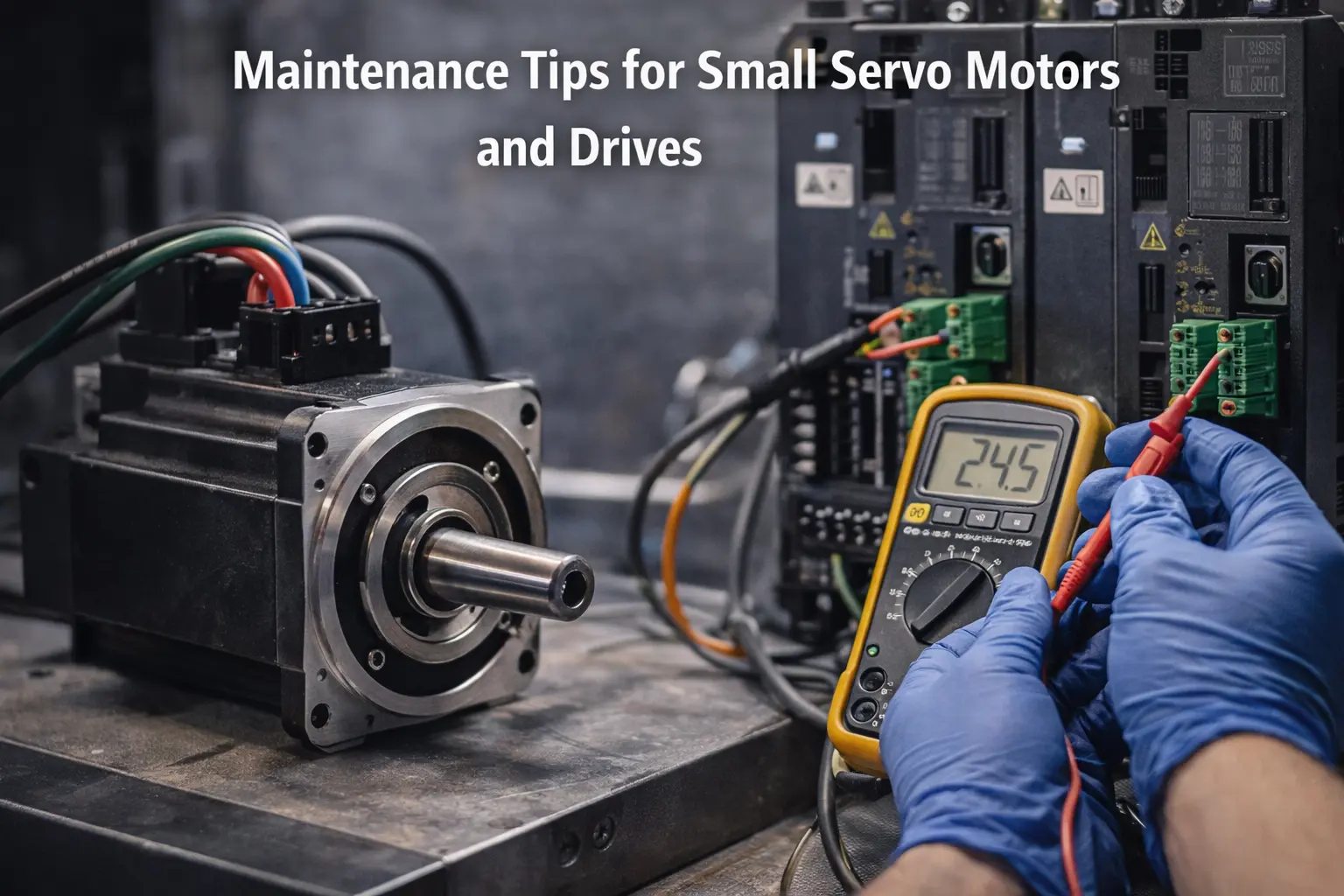
In modern automation, small servo motors and drives are the silent force behind precision, speed, and reliability. Users who rely on small servo motors and drives understand one truth: preventive maintenance is more affordable than emergency breakdowns.
If you want to protect your automation assets and maximize ROI, these expert-backed maintenance tips will help you safeguard your small servo motors and drives with confidence and clarity.
Why Is Maintenance Critical for Small Servo Motors and Drives?
Regular maintenance of small servo motors and drives ensures consistent torque, accurate positioning, and minimal performance drift. When overlooked, even a high-quality industrial servo drive or premium small servo motor can experience overheating, vibration, or unexpected faults.
1. Prevent Costly Servo Motor Repair
Emergency servo motor repair often results in production delays, labor costs, and lost revenue. By scheduling routine inspections of your servo motor drive and checking for worn bearings, loose connectors, or degraded insulation, you reduce the likelihood of costly downtime.
Predictive monitoring tools integrated within an industrial servo drive system can detect abnormal current draw or voltage irregularities before they escalate. This strategy keeps your small servo motors and drives operating at peak precision.
2. Control Long-Term Servo Motor Price Investments
Many facility managers focus on the initial price of the servo motor, but lifecycle cost matters more. A well-maintained small servo motor can operate efficiently for years beyond its projected service interval. Proper lubrication, thermal management, and regular calibration ensure your small servo motors and drives deliver sustained value.
Routine maintenance reduces replacement frequency, helping you manage overall capital expenditure without sacrificing performance.
How Can You Extend the Life of a Small Servo Motor?
A small servo motor may be compact, but its performance demands are high. Extending its lifespan requires a structured and disciplined approach.
1. Maintain Clean Operating Conditions
Dust, oil mist, and moisture are major threats to small servo motors and drives. Contaminants can infiltrate enclosures, compromising winding insulation. Follow workplace safety and ventilation recommendations from reputable industrial guidelines to maintain a clean environment.
Install protective covers where necessary and inspect seals on the servo motor drive cabinet to prevent ingress. A clean environment directly reduces the frequency of servo motor repair.
2. Monitor Temperature and Ventilation
Overheating is one of the leading causes of failure in small servo motors and drives. Ensure cooling fans in your industrial servo drive are functioning correctly and that airflow pathways remain unobstructed.
Excess heat not only shortens insulation life but can also impact torque accuracy in a small servo motor. Periodic thermal scans help identify hotspots before they become critical.
3. Check Electrical Connections and Cabling
Loose or corroded terminals affect signal quality between the servo motor drive and the small servo motor. Poor connections may cause erratic movement, positioning errors, or sudden shutdowns.
Inspect cables regularly for wear or mechanical stress. Secure grounding reduces electrical noise, which enhances the reliability of small servo motors and drives in sensitive automation environments.
What Maintenance Steps Protect an Industrial Servo Drive?
An industrial servo drive is the control center of your motion system. Protecting it ensures your small servo motors and drives operate seamlessly.
1. Perform Routine Parameter Verification
Incorrect drive parameters can unnecessarily strain a small servo motor. Verify torque limits, acceleration settings, and feedback configuration within your servo motor drive software.
Consistent parameter checks reduce strain and lower the risk of premature servo motor repair.
2. Inspect Power Supply Stability
Voltage fluctuations can damage both the industrial servo drive and the connected small servo motors and drives. Use power conditioning equipment if your facility experiences unstable supply conditions.
Reliable input power preserves internal electronics and helps stabilize your long-term investment in servo motors.
3. Schedule Predictive Maintenance Reviews
Modern servo motor drive systems often include diagnostic logs and performance metrics. Reviewing these logs allows early detection of anomalies such as overcurrent events or encoder feedback errors.
Predictive maintenance transforms your strategy from reactive servo motor repair to proactive asset management.
How Does Maintenance Improve Operational Efficiency?
Well-maintained small servo motors and drives deliver smoother motion control, better energy efficiency, and consistent torque output. When paired with a properly calibrated industrial servo drive, they operate within optimal current ranges, reducing energy waste.
Energy-efficiency guidance from respected regulatory agencies emphasizes that properly maintained electric motor systems can significantly reduce energy consumption. Efficient small servo motors and drives not only protect your machinery but also support sustainability goals.
Stable operation minimizes vibration and mechanical wear in connected systems, creating a ripple effect of reliability across your automation line.
Conclusion
Maintaining small servo motors and drives is not just about preventing breakdowns; it is about protecting productivity, profitability, and precision. From environmental cleanliness and electrical inspections to proactive servo motor repair strategies, each maintenance step safeguards your investment in automation.
By carefully monitoring your small servo motor, optimizing your servo motor drive, and protecting your industrial servo drive, you control overall servo motor price expenditures and extend equipment life.
In high-performance industrial environments, excellence is built on reliability. And reliability begins with disciplined maintenance.
Partner with THM Huade for precision-engineered solutions, expert support, and reliable industrial servo drive technology.
FAQs
What causes frequent servo motor repair issues?
Frequent servo motor repair often results from overheating, poor ventilation, loose wiring, voltage instability, or contamination. Maintaining a clean environment and monitoring your servo motor drive prevent recurring failures.
Does maintenance affect the servo motor price over time?
Yes, proper maintenance lowers total lifecycle servo motor price costs. By extending the lifespan of small servo motors and drives and reducing industrial servo drive failures, businesses minimize replacement and downtime expenses.
How can I improve the lifespan of a small servo motor?
You can improve the lifespan of a small servo motor by maintaining proper ventilation, ensuring a stable power supply, tightening electrical connections, and routinely checking the servo motor drive parameters to prevent overload and overheating conditions.
What are the warning signs of industrial servo drive failure?
Common warning signs of industrial servo drive failure include unusual noise, overheating, inconsistent motor speed, error codes, vibration, and frequent shutdowns. Early detection reduces costly servo motor repair and protects small servo motors and drives.