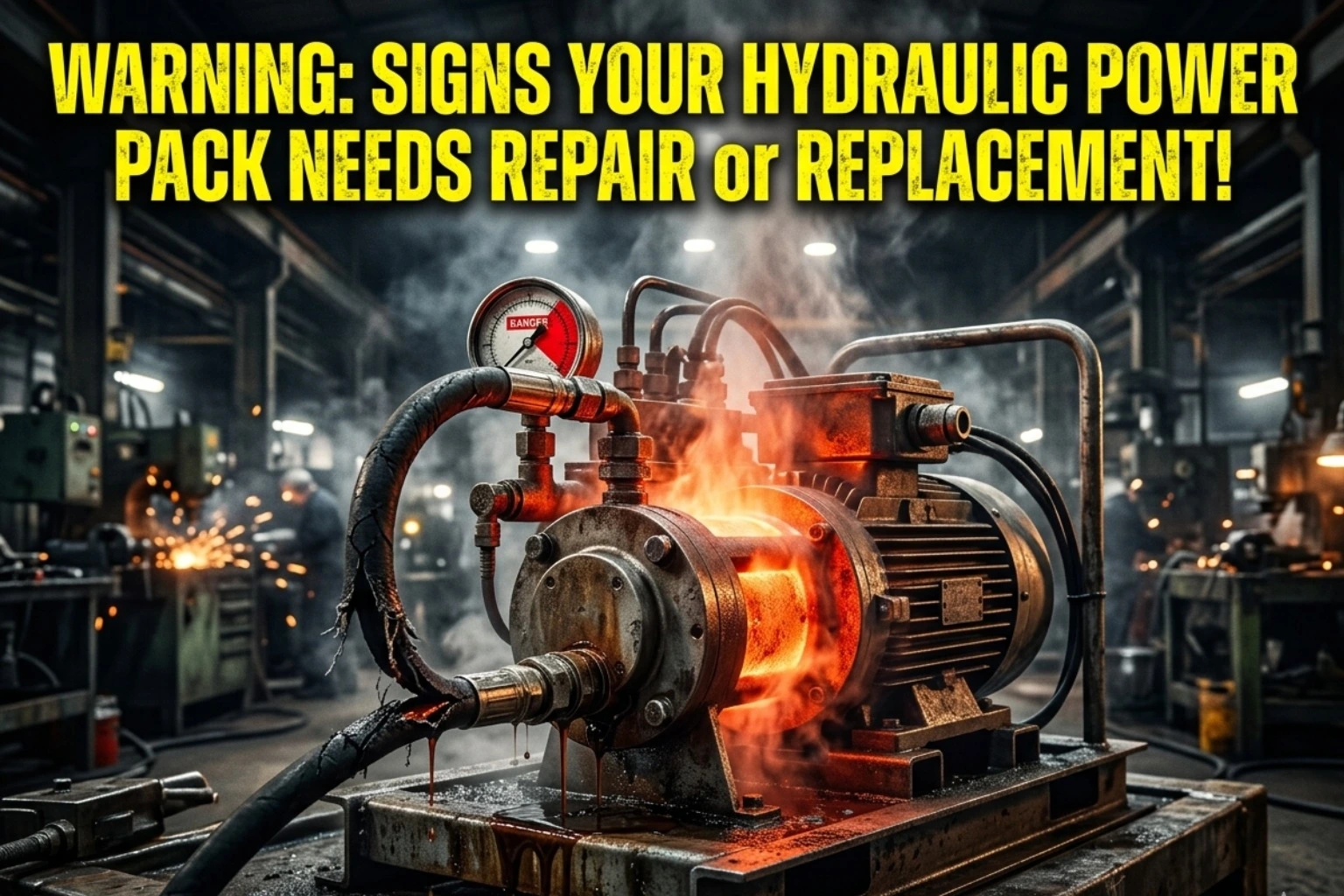
The most common signs that indicate a need for repair for your hydraulic power pack include overheating, loss of pressure, unusual sounds, and poor performance of the machine.
The hydraulic power pack is the heart of any hydraulic system, and its main purpose is to provide the required pressure and flow to run any industrial machine. Like any other mechanical system, the hydraulic power pack may face problems over time, and understanding the signs that indicate a need for repair for your power pack can help you avoid costly system downtime and equipment damage.
In any industrial hydraulic system, minor problems are often neglected until major system failures occur. When a system starts to show early warning signs such as overheating, loss of pressure, unusual sounds, and poor performance, immediate action is required. Understanding these problems can help you determine if a repair is required or if a new system is required.
Early Warning Signs Your Hydraulic Power Pack Is Failing
Identifying problems early can save both time and money.
Common Warning Signs:
- Overheating problems:
If your system is frequently overheating, this is likely to be an indication of some problems with the system. - Pressure drop in the system:
Sudden or gradual pressure loss is one of the most common problems associated with the use of a hydraulic power pack. - Unusual noise or vibration:
If the power pack is producing unusual noise, this is likely to be an indication of some problems with the machine. - Slow or inconsistent machine performance
If the machines are performing slowly, it is likely that the power pack is not performing well. - Oil leakage
If the oil is leaking, this is likely to be an indication of some problems with the machine. These are some of the common warning signs of failure.
Common Hydraulic Power Pack Problems in Industry
In industry, similar problems are encountered with hydraulic power packs.
Major Problems:
- Hydraulic pump wear
Because the equipment is used constantly, wear and tear occur, leading to reduced efficiency. - Hydraulic pump wear
This affects the efficiency of the equipment and also damages the internal parts. - Blocked filters
Blocked filters reduce the flow of oil, increasing pressure on the equipment. - Motor problems
In some cases, the motor is affected due to excessive load or heat. - Incorrect set-up
This also contributes to problems with the equipment in the long term.
Why Your Hydraulic Power Pack Is Losing Pressure
Losing pressure in a hydraulic system is a critical problem.
Possible Reasons:
- Internal leakage in the pump
- Worn out seals and valves
- Low hydraulic fluid levels
- Presence of air in the system
- Defects in pressure relief valve
If your hydraulic power pack is losing pressure, then it has to be checked and maintained promptly to prevent damage.
When Should You Repair or Replace a Hydraulic Power Pack?
This is one of the most searched questions on Google.
Repair vs Replacement Guide
You should repair your power pack if:
- The problem is minor, it involves a seal, filter, or oil.
- The system is relatively new.
- The cost of repair is low.
You should replace your power pack if:
- Frequent breakdowns are taking place.
- Major components of your system have been damaged.
- The overall efficiency of your system has declined significantly.
- The cost of maintaining your system is increasing.
How to Fix Hydraulic Power Pack Problems
Taking prompt action will prevent major problems.
- Basic Steps to Troubleshoot
- Hydraulic oil level and quality
- Filters
- Pump and motor
- Tightening loose connections
- Removing air
These are some of the steps that will be useful in the troubleshooting guide.
Maintenance Tips to Avoid Power Pack Failure
Maintenance is the key to longterm performance.
- Preventive Maintenance Checklist
- Regular oil inspection and replacement
- Filter cleaning and replacement
- Temperature monitoring
- Leak inspection
- System pressure check
These steps can improve the life of the system and minimize the cost of the hydraulic power pack repair in India.
Knowing when to replace your hydraulic power pack system can help you save more in the long run.
Conclusion
Your Hydraulic Power Pack is an important part of your industrial system, and neglecting the early symptoms might cause significant damage to the equipment. Symptoms such as excessive heat, reduced pressure, and abnormal noises are obvious signs that indicate the need to maintain the system.
Through this, you can avoid major failures and increase the lifespan of your equipment. Be it a repair or replacement, the right decision at the right time is important.
If your Hydraulic Power Pack needs to be repaired or replaced, upgrade to THM for best power pack solutions. Our products offer high efficiency, precision, and better heat control, thus increasing the lifespan of your equipment.
Enquire now THM Huade for a boost to your hydraulic system performance.
FAQ’s
Q1. What are the most common signs that a hydraulic power pack needs repair?
Some of the major indicators include overheating, loss of pressure, abnormal noise, oil leakage, and sluggish operation of the machine. These problems indicate possible internal wear or reduced system efficiency.
Q2. How do I know if my hydraulic power pack is losing pressure?
You might notice weak movements in the machine or slow and uneven performance. Also, pressure gauges may fall during use.
Q3. How often should a hydraulic power pack be serviced?
A hydraulic power pack needs to be serviced every three to six months depending on how much it is used. Some regular checks should be done on the quality of oil, filters, and performance of the system in order to avoid failures.
Q4. Can a hydraulic power pack be fixed or does it need to be fully replaced?
Small leaks or bad filters can be fixed, but if there is a big breakdown or repeated problems, then the whole setup may need to be changed.
Q5. How do I identify a hydraulic fluid leak in my power pack?
Check for visible oil around seals, pipes, or fittings along with a drop in oil level or pressure. Leaks can also cause reduced system efficiency.