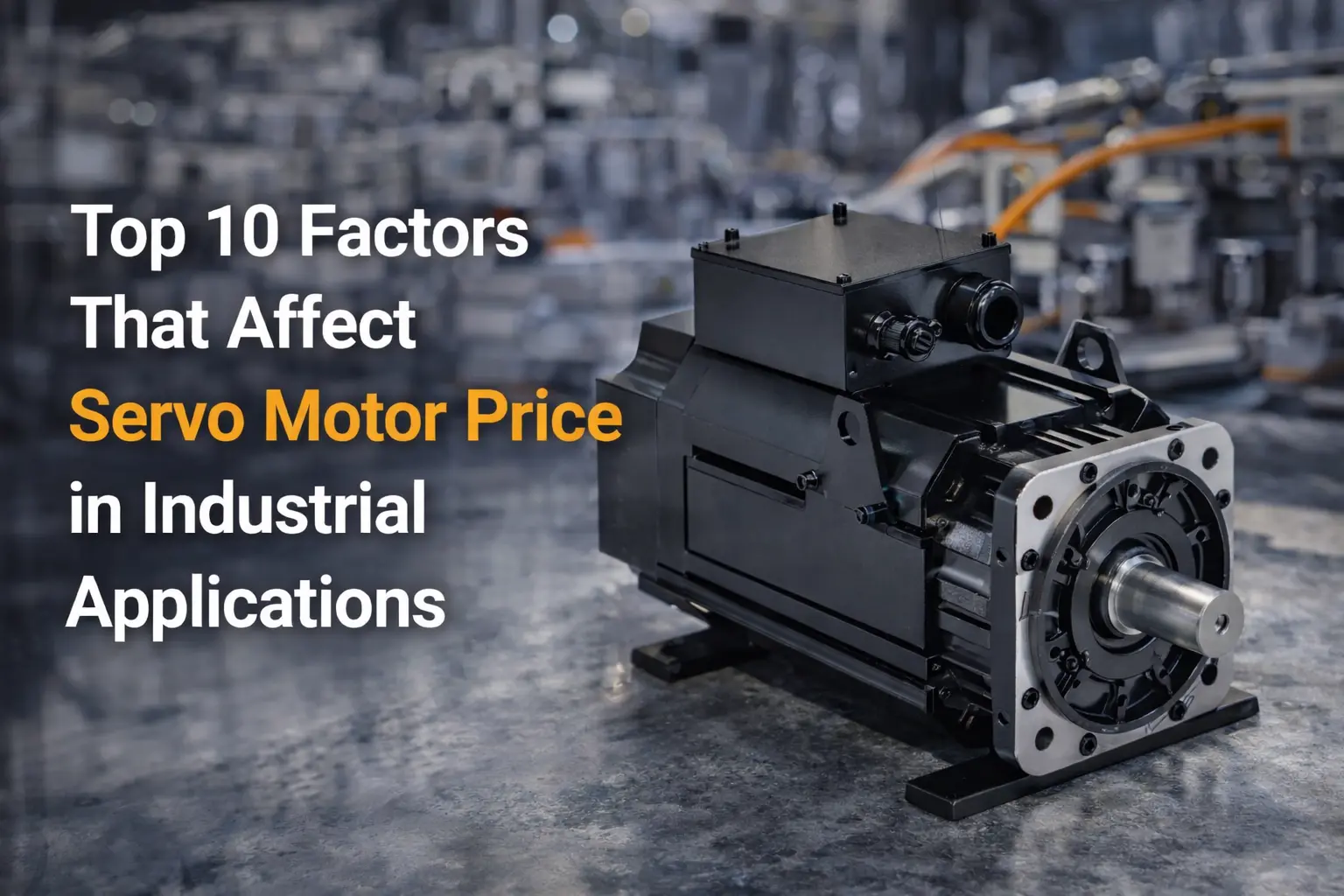
When you invest in servo-driven equipment, price is never the only concern. Still, understanding servo motor price differences helps you make informed decisions. If you work in construction equipment, steel plants, cement plants, or plastics manufacturing, servo motors directly affect performance, efficiency, and long-term costs.
Servo motors are widely used in presses, CNC press brakes, baling presses, servo injection molding, and blow molding machines. Each application places different demands on the motor. Those demands directly influence cost.
This guide explains the top 10 servo motor price factors clearly and practically, helping you choose the right motor for your application.
Why Servo Motor Pricing Varies So Much
Servo motors are precision components. Unlike standard motors, they offer controlled speed, torque, and position. That precision comes from advanced design, materials, and electronics.
As a result, industrial servo motors can vary widely. Two motors with similar power ratings may differ significantly in price due to differences in performance and durability.
Understanding these factors protects you from overpaying or under-specifying critical equipment.
1. Torque Rating and Load Capacity
Torque is one of the strongest drivers of servo motor price. Higher torque motors require stronger materials, larger rotors, and better cooling.
In applications such as CNC press brakes and heavy presses, high torque is essential. That requirement increases the servo motor torque price compared to light-duty automation tasks.
If your application runs high loads continuously, expect higher costs.
2. Power and Speed Requirements
Servo motors designed for high speed and high power cost more. These motors require precise balancing and stronger internal components.
Injection molding and blow molding machines often need fast acceleration and deceleration. Motors built for these cycles are priced higher than low-speed alternatives.
Choosing only the power you need helps control cost.
3. Motor Size and Frame Design
Compact servo motors often cost more than larger units with similar output. Smaller designs require advanced manufacturing techniques and tighter tolerances.
Machine tool manufacturers often prefer compact motors to save space. That space-saving design usually increases the price.
Larger frames cost less per unit of power.
4. Feedback Device and Encoder Type
Encoders provide position and speed feedback. Higher-resolution encoders improve accuracy but increase cost.
Basic incremental encoders are affordable. Absolute or multi-turn encoders increase cost due to their complexity.
In precision industries such as servo injection molding, advanced feedback devices are often required.
5. Duty Cycle and Continuous Operation Rating
Servo motors rated for continuous duty cost more than intermittent-duty motors. Continuous operation requires better insulation and thermal management.
Steel and cement plants often operate machinery continuously. Motors designed for such conditions have higher upfront costs but longer service life.
Short-duty motors cost less but wear faster.
6. Environmental Protection and Sealing
Industrial environments can be harsh. Dust, moisture, heat, and vibration affect motor design.
Servo motors with higher IP ratings, sealed housings, and corrosion-resistant materials cost more. These features are essential in cement plants and construction equipment.
Standard motors cost less but fail sooner in harsh conditions.
7. Control Compatibility and Integration
Servo motors designed for advanced servo drives and control systems are more expensive. These motors integrate easily with modern automation platforms.
In servo-hydraulic systems, motor compatibility with drives affects stability and response.
Better integration reduces setup time but increases motor price.
8. Manufacturing Quality and Materials
Material quality impacts both performance and price. High-grade bearings, copper windings, and insulation increase cost.
Low-cost motors often use lower-grade materials. This reduces the price but shortens the lifespan.
In high-load presses and baling systems, material quality matters more than initial savings.
9. Brand Reputation and Certification
Brand plays a major role in servo motor brand comparison. Established brands invest in testing, quality control, and certifications.
Motors meeting international standards often cost more. However, they offer consistent performance and global support.
Unbranded motors may cost less but carry a higher risk.
10. Long-Term Operating Cost
Upfront price is only part of the equation. Energy efficiency, maintenance, and downtime affect total cost.
High-quality servo motors reduce energy use and wear. Over time, this lowers operating costs.
A lower-priced motor may end up costing more due to frequent repairs and replacements.
How Servo Motor Price Impacts Key Industries
Different industries experience price factors differently:
- Press and CNC press brake systems: High torque and accuracy increase cost
- Injection molding machines: Speed, feedback, and duty cycle drive price
- Blow molding machines: Acceleration and thermal control affect cost
- Baling presses: Torque and durability matter most
- Construction equipment: Environmental protection raises price
Matching the motor to your exact application avoids unnecessary expense.
Avoiding Common Buying Mistakes
Many buyers focus only on the initial price. This approach often leads to higher long-term costs.
Avoid these mistakes:
- Over-specifying torque and speed
- Ignoring environmental conditions
- Choosing incompatible control systems
- Comparing prices without considering lifespan
A balanced approach delivers better value.
Servo Motors and Hydraulic Systems
Servo motors are often paired with hydraulic components in modern machinery. Servo-driven hydraulics improve control and efficiency.
If you operate servo hydraulic equipment, system compatibility matters more than motor price alone. Integrated solutions reduce motor stress and improve reliability.
Explore advanced options, such as hydraulic servo systems designed for demanding industrial use.
Choosing the Right Partner Matters
Selecting a servo motor involves technical and operational decisions. Working with experienced suppliers reduces risk.
High-quality hydraulic motors also contribute to system stability. You can explore durable options from THM Huade Hydraulic Motors.
For guidance tailored to your application, it helps to speak with specialists.
Making a Smart Investment Decision
The right servo motor balances price, performance, and reliability. Paying slightly more upfront often reduces long-term expenses.
Focus on torque needs, duty cycle, environment, and integration. These factors matter more than brand name alone.
In industrial settings, reliability protects productivity and safety.
Final Thoughts
Servo motor price reflects far more than size or power. Torque, speed, environment, feedback, and quality all influence cost. Understanding these servo motor price factors helps you choose wisely.
If you plan to upgrade servo-driven equipment or hydraulic systems, expert guidance makes a difference. Reach out to THM Huade to discuss solutions that fit your industry needs. Their experience across hydraulic and servo systems supports reliable performance in demanding USA applications.
FAQ
Why do high-torque servo motors cost more?
High-torque servo motors require stronger materials, advanced cooling, and precision manufacturing. You often need these motors for presses, CNC press brakes, and baling machines. The added durability and performance increase production cost, which directly affects the final price.
How does application type affect industrial servo motor cost?
Your application defines required speed, accuracy, and load capacity. Servo motors used in injection molding or blow molding machines need fast response and precise control, raising the cost. Lighter automation tasks enable simpler designs at lower overall cost.
Is a higher-priced servo motor worth the investment?
A higher-priced servo motor often offers higher efficiency, longer service life, and lower maintenance costs. In continuous industrial operations, these benefits reduce downtime and energy costs. Over time, you usually recover the higher initial price through improved reliability and performance.