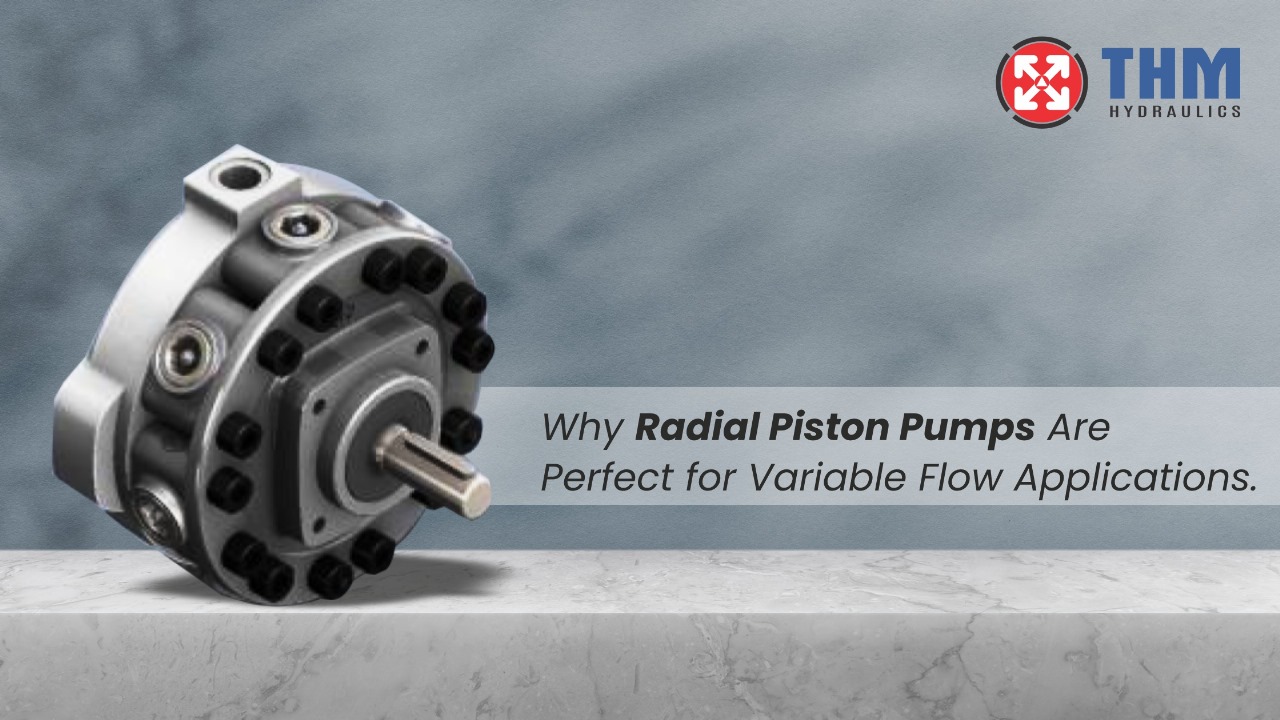
Radial piston pumps are now the most popular choice for industries looking for high performance and flexibility. For variable flow applications, their ability to be efficient, reliable, and accurate means they are superior to most other choices.
This article will explain why radial piston pumps are the best for variable flows, how they differ from gear pumps, and what to keep in mind when selecting a piston pump.
What is the definition of a radial piston pump?
In a radial piston pump, all of the pistons are set up in a circle around a central shaft. The pistons go in and out to move the hydraulic fluid and create the pressure needed for the system.
Radial Piston Pump Function:
The cam ring pushes the pistons to the outside of the cylinder.
The cylinder gets fluid during the suction stroke.
The piston forces the fluid through the outlet in the compression stroke.
The design is very efficient, especially when the pump is asked to work with different speed and volume settings.
Why Choose Radial Piston Pumps for Variable Flow?
In the case of applications that require a high level of control over flow and pressure, radial piston pumps are superior to many other pump types.
Key Benefits:
Excellent for High Pressure: They are capable of withstanding pressures of up to 700 bar, and are therefore real high pressure piston pumps.
Smooth Operation: Low pulsation at varying speeds.
Superior Efficiency: More efficient in terms of how much fluid is moved compared to gear or vane pumps.
Ideal for Load-Sensitive Systems: It works well in mobile equipment, presses, and other variable displacement systems.
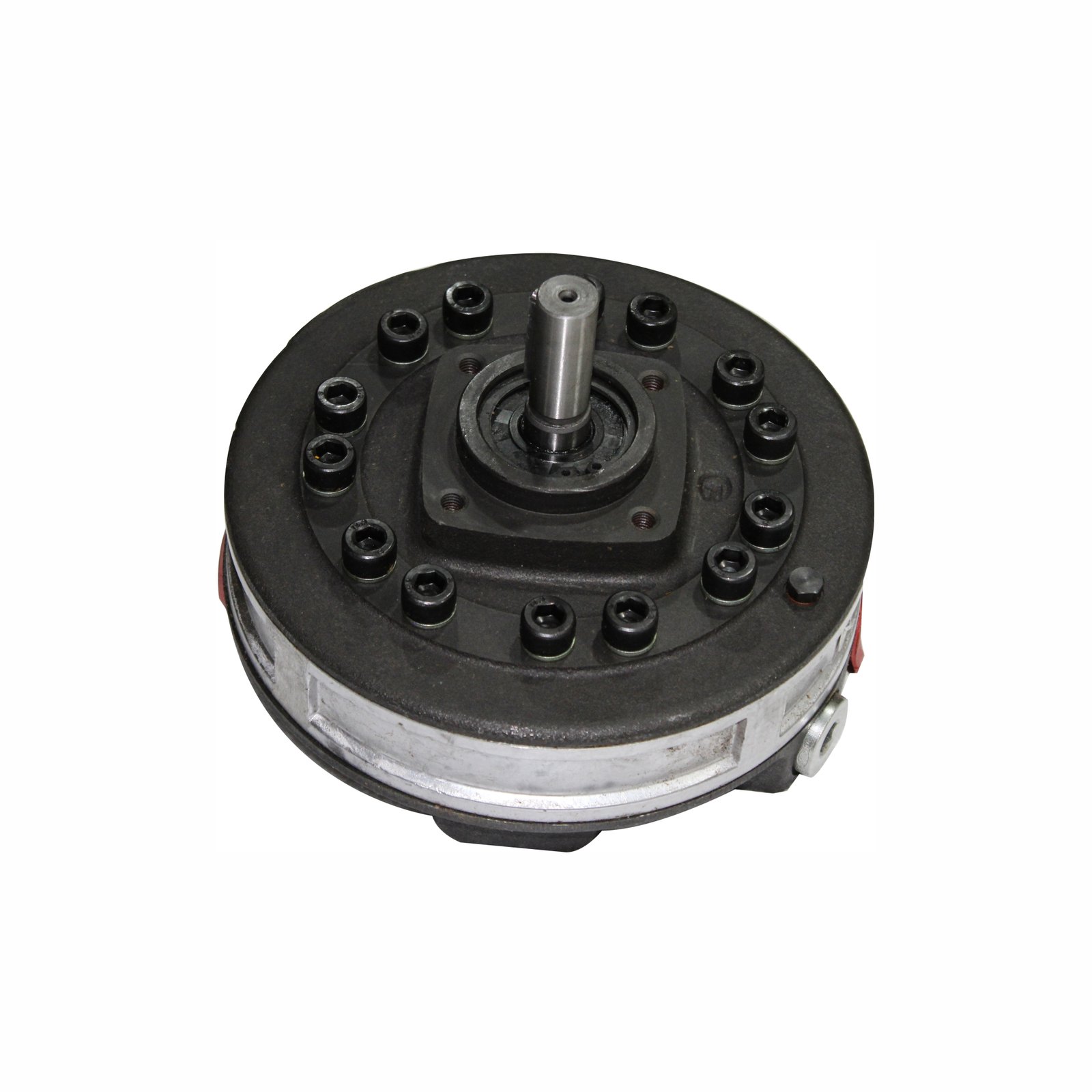
How They Compare: Piston Pump vs Gear Pump
Understanding the differences between piston and gear pumps gives a reason for radial piston pumps being better in situations where flow needs to be adjusted.
| Feature | Radial Piston Pump | Gear Pump |
| Pressure Handling | Up to 700 bar | Up to 250 bar |
| Flow Control | Excellent with variable displacement | Fixed displacement only |
| Efficiency | High | Moderate |
| Maintenance | Moderate | Low |
| Applications | Industrial, mobile, precision work | Simple, low-cost systems |
Radial Piston Pump is a type of feature, while Gear Pump is another feature.
Radial vs Axial Piston Pump: What’s the Difference?
Axial Piston Pump Working:
Pistons in axial designs move along the shaft. The working principle of axial piston pump is based on the rotation of the pistons with a cylinder block around the drive shaft.
Key Differences:
Radial piston pumps are more efficient when it comes to high pressures.
Axial piston pumps are smaller and more mobile.
Radial types provide for smoother flow at low speeds.
Applications Where Variable Flow Matters
Radial piston pumps are applied in the systems where the flow needs to vary along with demand.
- Hydraulic presses
- Injection molding machines
- Machine tools
- Hydraulic power units
- Construction machinery
Their capability of adjusting displacement makes them effective for systems that have demand variation during operation.
Piston Pump – Important Tips for Selection
Below are some of the practical tips when choosing a variable displacement piston pump for your project:

1. Analyze Flow Requirements
Select a pump that can modulate flow depending on the demand for load without wastage of energy.
2. Check System Pressure
Choose a high pressure piston pump if your system has more than 300 bar of operation.
3. Review Pump Type
Use radial piston pumps where flow consistency at variable speeds is important.
4. Check the Mounting and Size.
Make sure it is compatible with your system with the right connection ports and drive compatibility.
5. Understand the Piston Pump Diagram
Studying a piston pump diagram will help to understand the internal function and to find parts for servicing.
Conclusion – The Best option for variable flow
Radial piston pumps are a good investment if you are dealing with variable flow hydraulic applications. Their high pressure capability, controllability, and efficiency make them perfect for complex systems. In comparison to gear and axial pumps, radial types are robust for performance and reliability.
Looking for performance and reliability in variable flow hydraulic systems? Radial piston pumps from THM Hydraulics are your best choice. With high pressure capability and excellent controllability, they outperform gear and axial pumps in complex operations.
FAQs
A radial piston pump operates by pushing the pistons radially in and out. The cam ring regulates the movement of the piston, sucking and pushing out fluid with every revolution.
Axial piston pump working is the process of pistons which are arranged parallel to the drive shaft. The rotating swash plate makes pistons move to and fro, sucking and compressing fluid.
Piston pumps have variable flow and high efficiency.
Gear pumps are easy and fixed flow and relatively cheaper.
High pressure capability
Variable flow control
Low noise and vibration
Long service life if maintained properly.
There are four main parts to a general piston pump diagram:
Pistons
Cylinder block
Cam ring (for radial)
Swash plate (for axial)
Inlet/outlet ports
Drive shaft
Being able to understand the layout is important for troubleshooting and repair tasks.