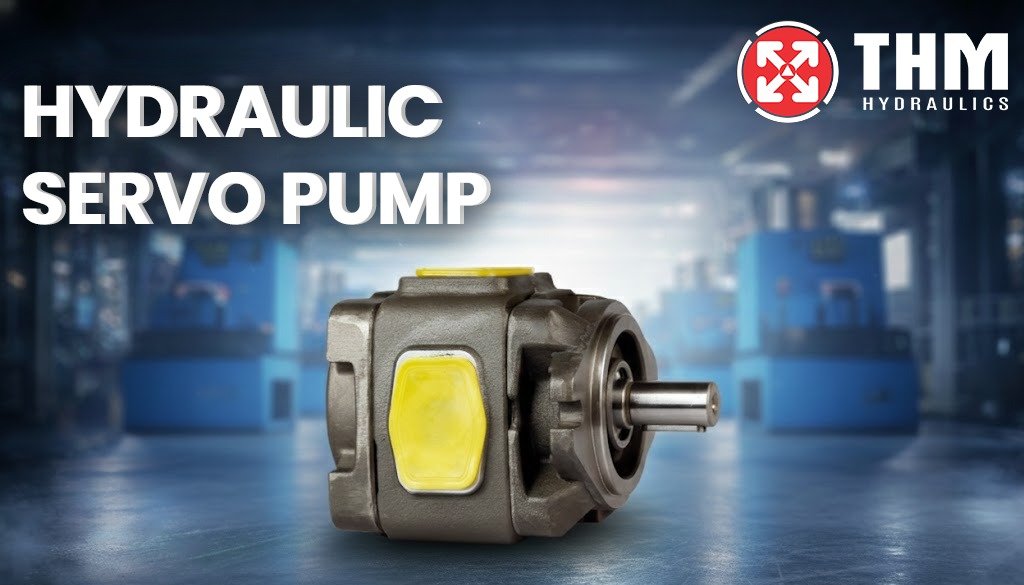
The modern industrial world is no longer able to afford inefficiency, inaccuracy and saving of energy. A Hydraulic servo pump has been in favour of those machines requiring high performance and also consuming less power. Servo pumps do not need constant-speed pumps so that unlike conventional pumps, they can instantly respond to loads and only provide the necessary flow and pressure. The net effect of this intelligent control is to make the system smoother, use less energy and have a longer life. In high demand environments, such technology is being increasingly dependent on.
What is a Servo Pump?
A servo pump is a hydraulic pump that is power by a hydraulic servo motor as opposed to a fixed-speed motor. Flow and pressure are regulates by regulating motor-speed instead of throttling valves.
Loss of energy is minimize in most systems since unnecessary flow is not create. The pump output adjust to machine demand is compares against machine demand, and performance is optimise automatically.
Key Characteristics:
- The use of pumps with speed control
- Sensitive to changes in loads
- Accurate pressure and flow control
- Reduce heat generation
How a Hydraulic Servo Pump System Works
Hydraulic servo pump system combines a drive, a servo motor, a pump and sensors. The servo drive constantly checks on the demand of the system and varies the speed of the pump. Pressure and flow is electronically controlled. Mechanical losses are kept low and the steady output is ensure even in the presence of the changing loads.
Main Components:
- Servo motor
- Hydraulic pump
- Servo drive controller
- Pressure and flow sensors
Why Servo Pumps Excel in High-Demand Applications
1. Superior Energy Efficiency
The modern factories need to have an energy efficient hydraulic pump. Servo pumps turn on and off at the calls of duty as opposed to the traditional pumps, which operate at all times.
In many applications, up to 60% of energy saving has been report. The production of heat is lowered and the cooling needs are lowered.
2. High Performance at Full loads
The hydraulic pump should be high performance and provide constant pressure as the hydraulic system operates on the strenuous cycles. Even when the load is changing very quickly, the servo pumps ensure stable pressure is maintain.
This enhances output since the speed of the motor is immediately adjust. Delivery of power is smooth and regulates.
3. Accurate Control and Stability
There is unparallel accuracy with servo pumps. It provides an accurate flow control, which is accomplished by real-time feedback, and better positioning accuracy.
This accuracy is of great significance in molding machines, presses as well as CNC machines. The mistakes due to pressure changes are minimize.
Servo Driven Hydraulic System v/s Conventional Systems
| Feature | Servo Driven Hydraulic System | Conventional Hydraulic System |
| Energy Consumption | Low | High |
| Noise Level | Quiet | Loud |
| Heat Generation | Minimal | Excessive |
| Control Accuracy | Very High | Moderate |
| Maintenance | Reduce | Frequent |
A servo driven hydraulic system is prefer where efficiency and precision matter.
Applications That Demand Servo Pump Technology
Hydraulic Pump for Heavy Duty Applications.
Servo pumps are also use in places where high force and constant operation is need.
Its common uses are:
- Injection molding machines
- Die casting systems
- Hydraulic presses
- Equipment of forging and metal forming
- Automation of heavy industries
In these systems, uniform pressure supply is need, and wastage of energy should be prevented.
Role of Variable Speed Hydraulic Pumps
A variable speed hydraulic pump will vary the output according to the demand of the system. The most sophisticate type of this concept is the servo pumps.
Speed variation allows:
- Reduce power consumption when idle
- Quick reaction to high demand
- Better consistency in the processes
There is an electronic management of control and less mechanical wear.
Advanced Hydraulic Pump Technology Explained
Through advance hydraulic pump technology, servo pumps are a combination of electronics and fluid power.
Benefits include:
- Smart pressure regulation
- Reduce oil temperature
- Extend seal and part life
- Lower operating costs
Reliability in the system is enhance and downtime is reduce.
Performance in High Pressure Hydraulic Systems
High pressure hydraulic system needs to be stable and highly controle. The high pressure is not suddenly spiked with servo pumps.
There is progressive pressure that is precision sustained. System safety is enhance and shock loads are minimize.
Guidelines to Selecting the Appropriate Hydraulic Servo Pump
- Correlate pump capacity of match machine load
- Choose a good servo drive controller
- Ensure proper system tuning
- Select reputable suppliers such as THM Huade
- Look at long-term saving of energy, not first cost
When the right choice is made, efficiency and longevity will be optimize.
Conclusion: The Smart Future of Hydraulics
The Hydraulic servo pump has now become a disruptive product with industries aiming at efficiency, precision, and sustainability. It provides power on demand, has an outstanding accuracy of control, and low cost of operating. In the case of manufacturers that want to redefine their performance, with reduce energy use, servo pump technology is now a necessity rather than an option. Industries can now stay assures on their way to a smarter and more efficient hydraulic future with solutions they can trust, which are provides by THM Huade.
Contact THM Huade today to discuss it with you in a solution of advance servo pumps.
FAQ’s
Q1 Why are servo pumps suitable for high-demand hydraulic applications?
Servo pumps are characterised by rapid reaction and steady pressure at high loads. This renders them best suite in hydraulic systems of high performance and sustain duties.
Q2 How do servo pumps improve energy efficiency in hydraulics?
They do not run constantly but only at the needed speed. This saves on energy, heat production and general operating expenses.
Q3 What industries use servo pump hydraulic systems?
The applications of servo pump systems are injection molding, metal forming, plastic machinery, CNC equipment, and industrial automation.
Q4 Do servo pumps reduce noise in hydraulic systems?
Yes, there is much less noise, as the motor is turn on only when necessary. This guarantees a lot easier and noiseless operations of the machines.
Q5 Can servo pumps handle high-pressure hydraulic applications?
The servo pumps are engineered to maintain consistent performance of high pressure hydraulic systems. They also have proper pressure control in challenging environments.