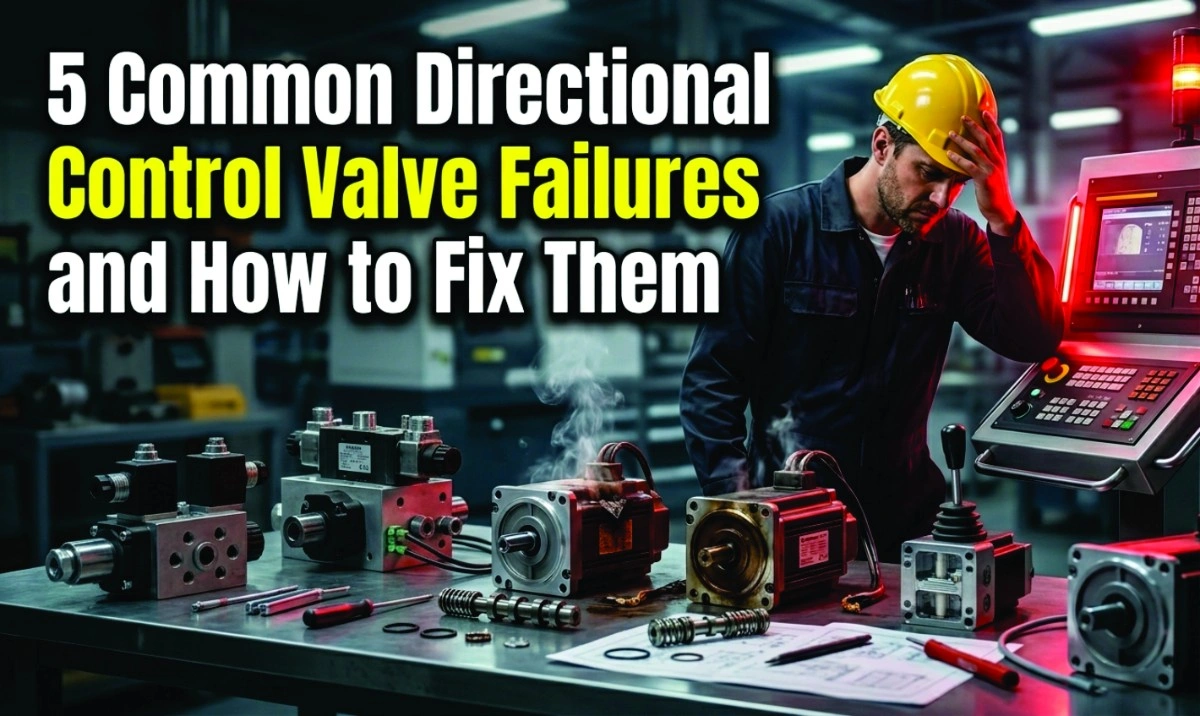
When your hydraulic system is acting up, such as poor response, leaks or no motion at all, the problem is frequently a failure in the hydraulic directional valve. A defective directional control valve can cause a production line to come to a standstill in mere minutes for manufacturers and industrial businesses all over India. The valves are the traffic controllers of a hydraulic circuit, controlling the flow of fluid to actuators and cylinders. Once they are not functioning properly, all of the downstream is affected.
There are some common failure modes and knowing what to watch for will make directional control valve troubleshooting a lot easier. Here are the 5 most common directional control valve failures, causes and solutions to get your equipment back online as soon as possible.
1. Internal Leakage, Fluid Bypassing the Spool
One of the common problems of the directional control valve is internal leakage, which is observed in a lot of manufacturing plants in India, particularly, those using older hydraulic equipment’s. Occurs when fluid passes around the spool without going through the desired port.
What Causes It?
- Worn spool or bore surfaces due to long-term use
- Abrasive wear due to contaminated hydraulic fluid
- Oil leaks due to incorrect viscosity oil
How to Fix It
First, test the oil cleanliness with an ISO contamination test. Drain and replace damaged oil. If the spool and bore have visible scoring or scratching, the valve most probably needs to be replaced. For high demand industrial applications, consider a precision manufactured hydraulic directional control valve with tighter tolerances, this will greatly minimize bypass losses.
2. Solenoid Coil Burnout, Valve Won’t Shift
Solenoid directional valve failures are very prevalent in electrically controlled hydraulic systems. If the solenoid coil is burned out, then the electrical signal won’t get to the valve to shift it, allowing the actuator to stay in place.
What Causes It?
- This could result in voltage spikes or wrong supply voltage.
- This is moisture that enters the coil housing.
- Excessive energisation (coil left ON too long) A.
- Overheating caused by ambient temperature in poorly ventilated machine rooms.
How to Fix It
Test coil resistance with a multi-meter – if it is open or shorted, it means that the coil is burnt. Use the coil that has the specified voltage rating by the manufacturer. Check on the voltage supply line for voltage fluctuation and use a surge protector if necessary. In high humidity areas (which are prevalent in many coastal and industrial areas in India), choose solenoid enclosures that are rated IP65.
3. Spool Sticking or Sluggish Movement
A classic hydraulic control valve problem is a slow moving or stuck Spool. The valve is moving but not moving fully, thus causing a partial motion or an irregular motion speed of the actuator.
What Causes It?
- Varnishing or sludge may result from degradation of oil.
- Particulate contamination that prevents movement of the spool.
- Spring fatigue or breakage, return
- High-temperature fit due to thermal expansion.
How to Fix It
Take off the valve body and check the valve spool for deposits or scoring. Use compatible solvent to clean; use compressed air to blow dry, DO NOT use rags as they leave fibres behind. Check the spring for deformation. If there is a lot of contamination, a complete hydraulic valve repair may be needed, which might involve replacing the spool. In future, stick to the oil change schedule and use good quality filters (10 micron or smaller).
4. External Seal Leakage, Oil Weeping from the Body
A problem with a directional control valve is manifested by external leakage at the port connections or from the valve body. It could begin as a slight weep, but can quickly grow into a serious problem, particularly when under system pressure, and poses a safety risk in factory environments.
What Causes It?
- Heat, chemical attack or age degradation of O-ring
- Over or under tightening of port fittings
- Pressure surges that have caused hairline cracks in the valve body.
- The loosening of connections caused by vibration.
How to Fix It
Drain off all the pressure from the system before inspection. Use new seals which match the operating fluid and temperature range of all O-rings. Re-tighten port connections to manufacturer’s torque. Pressure cycling of hydraulic components is not a good way to repair the valve body if the body is cracked. Here, it’s important to use the manufacturer’s original seals, as opposed to after-market seals that may have the wrong durometer ratings.
5. Incorrect Valve Sizing or Misapplication
Mechanical failure is not the only cause of a hydraulic directional control valve failure. Valves are not sized in many industrial installations in India particularly in the small and medium-scale manufacturing units. This causes an ongoing lack of performance, overheating and early wear.
What Causes It?
- A valve’s flow rating (Cv/Kv) is inadequate for the system.
- The pressure rating of the operating circuit is wrong.
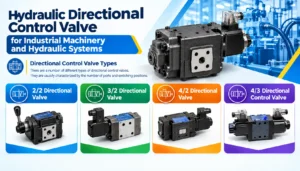
- Incorrect valve configuration (4/2 valve instead of 4/3)
- Running a low duty cycle valve in a continuous operation mode.
How to Fix It
Revisit flow rate, operating pressure and switching frequency of your system. Compare these parameters with the parameters shown on the valve’s datasheet. If you are unsure, check with a hydraulics engineer or your valve supplier. Whether it’s press machinery, injection moulding or material handling equipment, brands such as THM Huade provide a variety of directional control valves with well-defined technical specifications, that make it easier to choose the right valve for the specific application.
Preventive Maintenance: Stop Failures Before They Start
In the manufacturing industry in India, from auto component makers in Pune to textile machine makers in Surat, reactive maintenance is the usual practice.Most hydraulic directional control valve failures, however, are completely avoidable if a simple maintenance program is followed:
Replace hydraulic oil at recommended time (usually 2,000 to 4,000 hours)
Install and maintain quality inline filters (10-micron or better)
In wet areas, check solenoid coil connections every month.
Use calibrated pressure and temperature gauges to monitor system pressure and temperature. Have on hand stock of common O-ring kits and solenoid coils for quick change out.
Manufactured to withstand the rigorous conditions found in industrial application, THM Huade directional control valves are provided with a full set of technical documentation for Indian OEMs and maintenance personnel to ensure their systems are reliably and efficiently maintained.
Conclusion
The directional control valve is one of the most vital parts of hydraulic systems, which are essential to many manufacturing processes today. It doesn’t matter if the problem is sudden or gradual, catching the failure type early is essential to a more rapid and less costly solution.
Any extended downtime is too costly for Indian industries. Machinery that is reliable, shift after shift, is required in industries, such as auto manufacturing, construction equipment, or process industries, where competition is high.
By understanding the parts of a directional control valve and knowing the correct ones to use, you can avoid most issues with the valve before they arise. When to call on THM Huade expert help, don’t delay.
Get your hydraulic system back to full performance. Contact THM Huade is technical team to get authentic directional control valves, solenoid coils, seal kits, valve repair support in India.
FAQ’s
Q1: What are the most common directional control valve failures?
Five of the most frequently encountered include: Internal leakage (spool wear), Solenoid coil burnout, Spool sticking (contamination), External seal leakage (O-ring failure) and Incorrect valve sizing.
Q2: How do you troubleshoot a faulty directional control valve?
Look for oil leaks and listen for alarms, measure solenoid coil resistance, inspect the condition of the oil and system pressure, and manually move the spool to determine whether the fault is electrical or mechanical.
Q3: Why is my hydraulic directional control valve not working properly?
Common causes include a burned out solenoid, contaminated oil resulting in sticking solenoids, worn internal seals or a too small valve. Check the oil cleanliness and then the solenoid coil.
Q4: What causes directional control valve leakage?
Worn spool lands or abrasive contamination is the cause of internal leakage. Cracked valve body caused by excess pressure, or failed O-rings and loose port fittings are causes of external leakage.
Q5: How do you prevent directional control valve failure?
Clean oil (ISO cleanliness standard), correct size valves for flow/pressure, and monthly solenoid, seal and fitting checks.