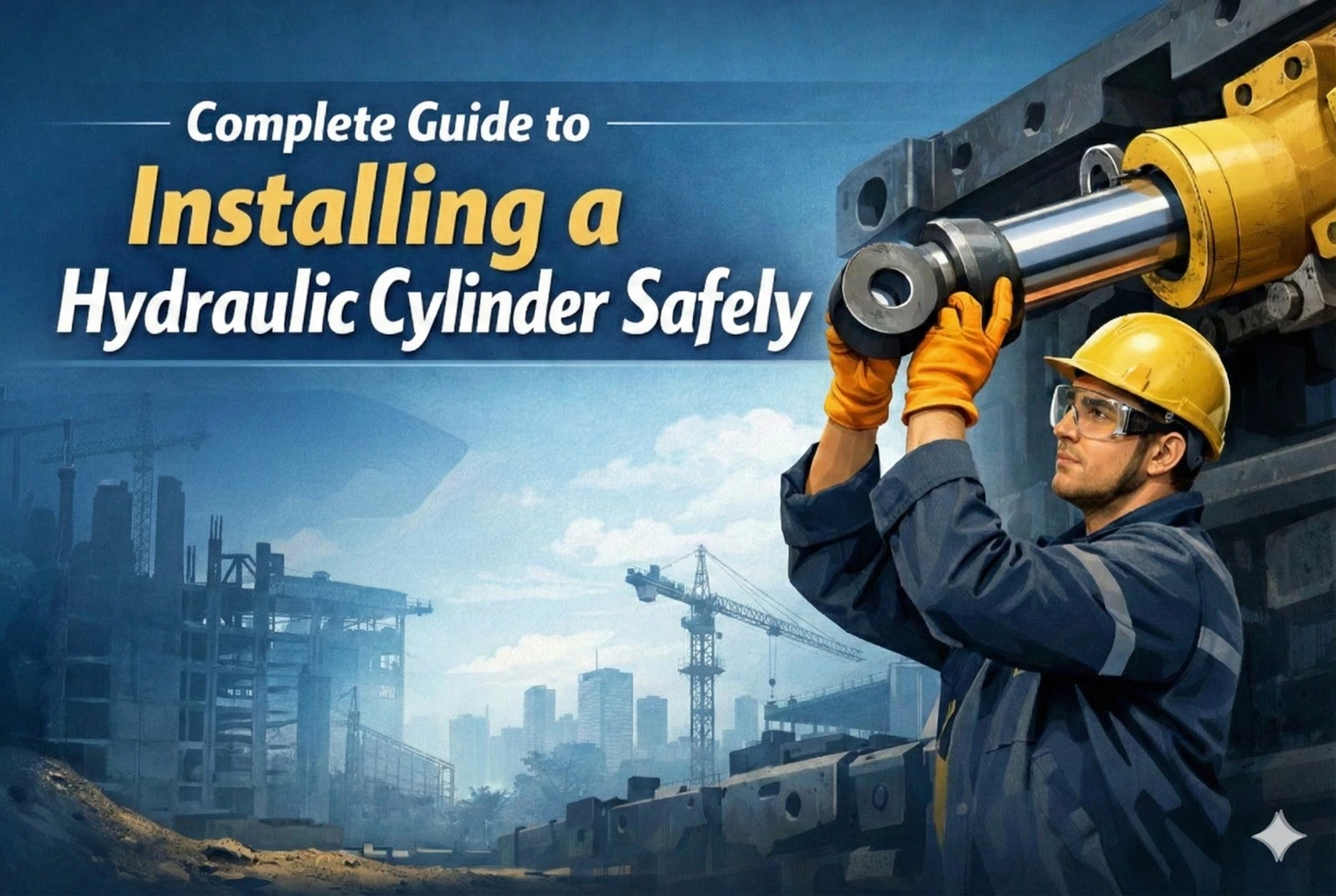
Hydraulic cylinder setup is the key to a good hydraulic system and it is not given much importance in machine assembly and maintenance. A cylinder can be engineered perfectly yet the performance can be impaired in case the practice of installation is overlooked. The care of positioning, connection and alignment of the cylinder has a direct effect on the safety, efficiency and service life. Regardless of the sphere of work (industrial machinery, construction equipment, or mobile hydraulics), it is necessary to know the principles of a correct installation.
Why Proper Installation Matters
The improper installation may result in untimely failures, leakage of fluids and safety issues. Overloading can be applied, seals can be broken and one-sided wear can occur.
- When the procedures are not followed in the right way:
- Reliability of the systems is enhanced.
- Lifespan of components is increased.
- There is minimized downtime when it is not expected.
- Safety risks are minimized
Hydraulic systems are created with accuracy and even minor errors during installation can cause severe problems in operation.
Pre Inspection Checklist of Installations
In the course of installing hydraulic cylinders, there are a number of checks that ought to be conducted before starting the installation. Issues that are identified in time will save them the expensive repairs in the future.
1. Visual Cylinder Inspection
The cylinder body must be investigated in:
- Surface damage
- Rod scratches
- Seal integrity
- Port cleanliness
Any form of contamination should be eliminated. Hydraulic parts are very susceptible to dust and debris.
2. System Compatibility Verification
Confirm that:
- Pressure ratings are equivalent to system requirements.
- Stroke length is suitable
- Mounting style is correct
- The size of hoses and fittings match.
Poor choice of components is one of the frequent reasons of failure during the installation.
Hydraulic Cylinder Mounting Best Practices
Mechanical stability directly depends on hydraulic cylinder. This is because poor mounting can cause side loads, thereby greatly decreasing the life of the cylinder.
1. Choosing the right Mounting Type
Typical mounting arrangements are:
- Flange mounting
- Foot mounting
- Clevis mounting
- Trunnion mounting
Each type of mounting is mounted in a direction of its load. The manufacturer recommendations should be obeyed at all times.
2. Mounting Surface Alignment
Mounting faces should be:
- Flat and rigid
- Free from distortion
- Properly machined
The stress concentrations can be a result of misaligned surfaces. Structural damage can be experienced over time.
Significance of Hydraulic Cylinder Alignment
It is important that hydraulic cylinders are aligned in order to operate smoothly. Angular movements that are minor may result in rod bending and seal wear.
Correct alignment ensures:
- Uniform load distribution
- Reduced friction
- Lower seal stress
- Improved efficiency
In case of misalignment, too much vibration can be produced and performance can deteriorate very quickly.
Step by Step Cylinder Installation Overview
Although installation process will depend on the application, there are some general rules.
1. Positioning the Cylinder
Proper supports should be used to position the cylinder. The sudden impacts should be avoided.
2. Securing Mounting Points
The tightening of fasteners must be done in stages in a uniform manner. Squeezing of mounting brackets might be distorted.
3. Connecting Hydraulic Lines
Clean fittings should be used in connecting hydraulic ports. Cross-threading ought to be avoided.
4. Verifying Free Movement
Manual movement checks should be carried out before the pressurizing of the system where possible.
Hydraulic Cylinder Setup and System Checks
Hydraulic cylinder installation is not limited to physical installation. System behavior has to be tested prior to full functioning.
Important checks include:
- Hose routing integrity
- Correct pressure relieving arrangements.
- Leak inspection
- Valve functionality
The air in the circuit ought to be eliminated. Enclosed air may result in unpredictable movement and sound.
Safety Precautions That Must Not Be Ignored
Hydraulic systems are very high pressure systems and there should be safety procedures that should be followed.
Key precautions:
- Adjustments are to be made before pressure is released.
- There should be the use of protective equipment.
- Hydraulics can never be used to support loads.
- Unforeseen movement is to be expected.
The lack of adherence to safety measures may lead to severe injuries.
Common Installation Mistakes
A number of common errors are realized in the installation of hydraulic cylinders.
Improper Alignment
- When alignment is neglected:
- Seal failure may occur
- Rod damage can develop
- System inefficiency can be increased.
Contaminated Connections
- The dirt into the system may result in:
- Valve malfunction
- Pump wear
- Reduced component life
Incorrect Hose Selection
- Hoses that are poorly designed may result in loss of pressure and faultiness.
Hydraulic Cylinder in India – Market Considerations
The need of hydraulic cylinder in India is keeping on increasing because of the rate of industrialization and development of infrastructure. Companies often consider the alternatives by different hydraulic cylinder suppliers in India and hydraulic cylinders manufacturers in India.
During the choice of components, it is necessary to focus on:
- Quality certifications
- Material durability
- Service support
- Pressure capabilities
Sourcing reliability contributes significantly to the long term system performance.
Conclusion
When this is done with care and attention to safety, hydraulic cylinder set up is taken to be the backbone of an effective hydraulic system. All phases, including inspection and mounting, alignment and testing, etc. should be approached with care. Installation errors are expensive however they can be avoided extensively with strict procedures and quality elements. An installed cylinder provides stability, reliability and longevity in all challenging applications.
THM Huade is a reliable partner in terms of reliable hydraulic products and professional assistance.
FAQ’s
Q1. How do you install a hydraulic cylinder safely?
Make sure that it is properly aligned, mounted and connected to the hose and must be done in accordance to manufacturer specifications and even depressurization of the system.
Q2. What tools are required for hydraulic cylinder installation?
Common tools are spanners, torque wrench, alignment tools, lifting equipment and thread sealant of fittings.
Q3. What safety precautions should be followed during installation?
Always relieve hydraulic pressure, use PPE, ensure that loads are supported, and ensure that there are no leaks prior to system start up.
Q4. What is the time taken to install a hydraulic cylinder?
The installation process usually requires 1-4 hours, based on the design of the machine, its accessibility and complexity of the system.
Q5. What are common mistakes during hydraulic cylinder installation?
Leaks and contamination, inadequate alignment, excessive tight fittings, improper mounting, and not checking of leaks and contamination are among the common mistakes.