The current industrial machines are based on the steady flow of fluids, the correct control of pressure and reliable work. The functions of gear pump are very important in ensuring that hydraulic equipment’s run smoothly, efficiently and safely.
A hydraulic gear pump is a commonly trusted hydraulic pump whether in heavy machinery or in manufacturing plants or in mobile equipment due to its simple construction, durability and constant production.
Knowledge of the operation of these pumps and their effect on hydraulic systems would assist the engineers, technicians and buyers make better choices.
1 Understanding the Basics of a Gear Pump
A gear pump is a positive displacement pump that is used to transfer fluid by rotating gears. Gear pumps in contrast to other types of pumps force a constant volume of fluid through with each rotation.
Some of the main features are:
- Basic mechanical building
- Continuous fluid flow
- Dependable generation of pressure
- Low maintenance levels
Due to these benefits, gear pumps have wide applications in industries.
2 Gear Pump Working Principle Explained
The principle of operation of the gear pump is displacement of fluid between the gear teeth. Liquid is trapped in between the teeth and the pump housing as the gears turn.
How the process works:
- Fluid enters the pump inlet
- The fluid is captured by rotating gears
- Liquid is circulated in the casing
- This is forced out by fluid pressure
This mechanism provides the maintenance of steady flow and unchanging gear pump pressure.
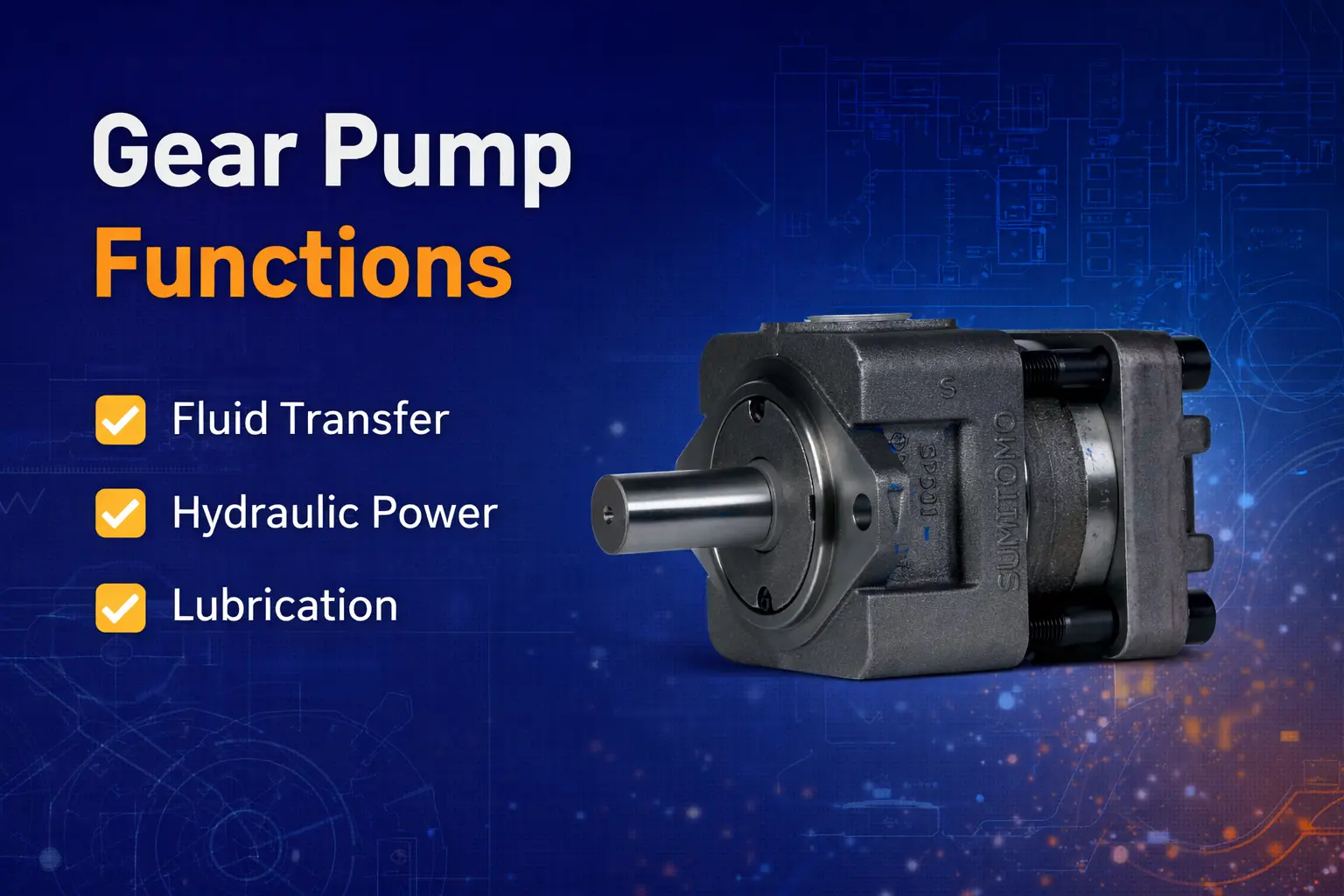
3 Gear Pump Functions in Hydraulic Systems
Fluid transfer is the main role of gear pumps, and there are a number of other essential gear pump tasks that are executed in hydraulic loops.
Functions include:
- Production of hydraulic pressure
- Providing fluid at regulated discharges
- Ensuring system stability
- Assistance actuator movement
- Lubrication of the inside components
Hydraulic performance would be seriously impaired without a proper functioning of the pumps.
4 Significance of Gear Pump Pressure Control
System safety and efficiency demand sufficient gear pump pressure. High pressure and low pressure may cause operational issues.
Low pressure may result in:
- Slow actuator response
- Reduced machine force
- Inefficient energy usage
High pressure can lead to:
- Seal damage
- Increased component wear
- Overheating issues
Monitoring of pressure should therefore be done on a regular basis.
5 Operating of Gear Pumps under various conditions
The correct operation of the gear pump is based on the design of the system, the quality of oil and the load. When there is a change in the pressure demands, performance differences are usually witnessed.
In many applications:
- Flow consistency should be anticipated.
- Stability of temperature should be ensured.
- At higher loads, mechanical stress is augmented.
In the event of optimized operating conditions, longer service life is normally realized.
6 Gear Pump Six Factors Affecting Performance
There are a number of variables which influence the working of the gear pump and these have to be taken into account during installation and maintenance.
Main influences include:
- Hydraulic fluid viscosity
- Operating temperature
- Internal clearances
- Pressure levels
- Contamination control
Unsuitable conditions may cause drastic decrease of the pump efficiency.
7 Pump Maintenance Procedure to make Pumps reliable
Preventive maintenance is an excellent way of increasing the life of the pumps and the system in general.
Best practices include:
- Keep hydraulic fluid clean.
- Replace filters regularly
- Monitor operating pressure
- Avoid running the pump dry
- Inspect seals and fittings
Regular maintenance saves time which is expensive.
Final Thoughts
The right choice of pumps is essential to efficient fluid circulation, regulated pressure and stable functioning of the machine. The functions of the gear pumps have been still basic in current hydraulic design due to their simplicity, reliability and cost effectiveness.
Gear pumps can work over a long period of time with minimum problems when the pressure, the quality of the fluids and operating conditions are controlled.
By selecting reliable manufacturers like THM Huade, the long term performance, system safety and confidence in operation is guaranteed.
FAQ’s
Q. What does a gear pump do in a hydraulic system?
A gear pump moves hydraulic fluid at a constant flow rate, enabling pressure generation and smooth actuator operation.
Q. How does a gear pump generate hydraulic pressure?
Pressure is created when fluid trapped between gear teeth is forced into the outlet against system resistance.
Q. What is the difference between internal and external gear pumps?
In external gear pumps, two identical gears are employed, whereas in the internal gear pumps, they are driven by a larger gear rotating a smaller one.
Q. Are gear pumps suitable for high-pressure applications?
Yes, the majority of gear pumps is rated to moderate to high pressure but this should be according to the design and the materials.
Q. Where are gear pumps commonly used?
They are normally used in hydraulic power units, lubrication, construction equipment and industrial machinery.