The fixed-speed hydraulic power unit is not a legacy technology. It is still the correct specification for a significant range of industrial applications, and engineers who replace one with a servo driven hydraulic pump without analysing the duty cycle first sometimes find that the efficiency gains they expected do not materialise at the scale the investment required.
That qualification matters because the comparison between servo driven hydraulic pump systems and fixed-speed alternatives is frequently framed as a straightforward upgrade decision. The reality is more precise. The performance differences between the two architectures are real and in many applications substantial, but they are application-dependent. The correct conclusion from this comparison is not that one system is universally superior. It is that each system has a defined set of operating conditions under which it delivers better outcomes, and knowing where those boundaries sit is what enables a sound specification decision.
This analysis covers five key technical differences between a servo driven hydraulic pump and a conventional fixed-speed hydraulic power unit, with specific reference to how those differences affect energy consumption, thermal performance, control precision, noise, and total cost of ownership across real industrial duty cycles.
Difference 1: Energy Consumption Across the Full Duty Cycle
Energy consumption is where the performance gap between a servo driven hydraulic pump and a fixed-speed unit is most measurable, and where the application dependency of that gap is most clearly visible.
A fixed-speed hydraulic power unit runs its drive motor at constant speed regardless of what the system is doing at any given moment. During actuator movement, that energy is productive. During hold phases, return strokes under low load, or idle periods between machine cycles, the pump continues to circulate fluid through the relief valve and back to the reservoir. That circulating flow represents energy converted entirely to heat, with no productive output.
A servo motor hydraulic pump eliminates this by reducing motor speed in proportion to the reduction in system demand. During a hold phase, motor speed drops to whatever minimum is needed to maintain pressure, typically consuming 10 to 15 percent of rated motor power. During idle, it approaches zero. The energy saving is real and directly proportional to the time the system spends below peak demand.
The table below illustrates how duty cycle structure determines the energy saving achievable with a servo drive hydraulic pump compared to a fixed-speed equivalent:
| Duty Cycle Profile | Peak Demand Time (% of cycle) | Estimated Energy Saving with Servo | Payback Period (Indicative) |
| Injection moulding (with cooling phase) | 30 to 40% | 40 to 60% | 18 to 30 months |
| Hydraulic press with hold phase | 40 to 50% | 30 to 50% | 24 to 36 months |
| Clamping and indexing (intermittent) | 20 to 35% | 45 to 65% | 18 to 28 months |
| Continuous flow (conveyors, mixers) | 85 to 100% | 5 to 15% | 60 months or more |
| High-cycle automation (short cycle time) | 60 to 75% | 20 to 35% | 30 to 42 months |
The final row in that table is the critical one for procurement decisions. Continuous-flow applications where the system is at or near peak demand throughout the operating shift show modest efficiency gains with a servo driven hydraulic pump, and the capital cost premium over a fixed-speed unit may not be recovered within the expected machine service life.
How Partial-Load Motor Efficiency Contributes
The efficiency advantage of a servo driven hydraulic pump is not only a consequence of reduced flow during low-demand phases. It also comes from the motor technology itself. Permanent magnet synchronous motors used in servo hydraulic systems maintain 90 to 97 percent efficiency across a wide speed range, from approximately 20 percent to 100 percent of rated speed. Fixed-speed induction motors operate at peak efficiency only near their rated load and drop off significantly at partial load.
In a system where the motor rarely operates at its rated load, the average efficiency of the drive motor across the full duty cycle is materially higher in a servo configuration than in a fixed-speed arrangement, independent of the flow reduction benefit.
Difference 2: Heat Generation and Thermal Management
Heat in a hydraulic system is the physical expression of energy loss. Every watt that enters the system and does not exit as useful mechanical work at the actuator becomes heat in the fluid. Reducing energy losses reduces heat generation proportionally, and this has downstream effects on fluid condition, cooling system requirements, and component service life.
A fixed-speed hydraulic power unit in a variable-demand application generates heat continuously, primarily through relief valve bypass during low-demand phases. The thermal load on the reservoir and heat exchanger reflects the total energy input minus the productive work output averaged across the duty cycle.
A servo drive hydraulic pump system generates heat in proportion to actual system losses, which are significantly lower during partial-demand phases. Field measurements on comparable press and injection moulding installations consistently show operating fluid temperatures 15 to 25°C lower in servo hydraulic systems than in fixed-speed equivalents under the same duty cycle.
This temperature reduction has three practical consequences that affect operating cost beyond energy consumption:
- Fluid service life: Hydraulic fluid oxidation rate approximately doubles for every 10°C rise in operating temperature. A system running 20°C cooler than its fixed-speed equivalent can extend fluid change intervals by a factor of three to four under otherwise identical conditions.
- Seal and component life: Elastomeric seals in hydraulic pumps and motors degrade faster at elevated temperatures. Lower operating temperatures extend seal service intervals and reduce the frequency of unplanned maintenance.
- Cooling system cost and energy: A smaller thermal load allows a smaller heat exchanger and lower cooling fan or chiller energy consumption. In some installations, the cooling system can be eliminated entirely for servo driven hydraulic pump units operating in moderate ambient conditions.
Difference 3: Control Precision and Dynamic Response
Control precision is where the servo driven hydraulic pump creates a performance category that a fixed-speed system fundamentally cannot match, regardless of the valve assembly used.
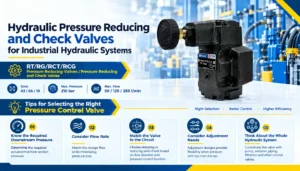
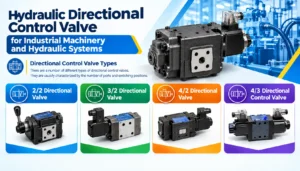
In a fixed-speed hydraulic system, flow and pressure control are achieved entirely through the valve circuit. Proportional directional valves regulate flow to the actuator, pressure-reducing valves manage downstream pressure, and the pump supplies whatever excess flow is not directed to the actuator back through the relief valve. The actuator’s velocity and force are products of the valve positions, not the pump output. The pump is a passive flow source operating at a fixed delivery rate.
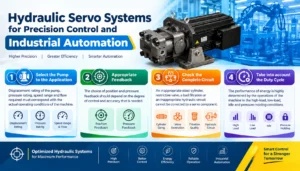
In a servo motor hydraulic pump system, the pump output is itself a control variable. The servo controller can adjust motor speed to match exactly the flow required by the actuator at each point in the velocity profile, removing the need for excess flow through relief or bypass circuits.
Pressure Control Without Continuous Relief Valve Actuation
One specific control advantage of a servo drive hydraulic pump is the ability to maintain system pressure without continuous relief valve flow. In a fixed-speed system, holding a set pressure means the pump delivers its full output continuously and the relief valve opens to divert the excess. The valve is under constant thermal and mechanical stress during holding phases.
In a servo hydraulic system, the controller reduces motor speed to the minimum required to maintain the target pressure against leakage. The relief valve remains closed. This approach maintains tighter pressure control, eliminates the thermal load from continuous relief valve bypass, and extends relief valve service life significantly.
Velocity Profiling and Ramp Control
Servo drive hydraulic pump systems support programmable velocity profiles for actuator movement, including acceleration ramps, deceleration curves, and intermediate speed steps within a single stroke. Fixed-speed systems can approximate this through proportional valve control, but the combination of servo pump speed control and proportional valve position creates finer resolution and more repeatable profiles.
For applications in press forming, die casting injection, and precision clamping where the actuator velocity profile directly affects product quality, this control capability represents a functional difference rather than an incremental improvement.
THM Huade’s servo drive hydraulic pump units INSERT PAGE LINK integrate onboard pressure and flow feedback to support closed-loop pressure and velocity control without requiring external control hardware beyond a standard PLC interface.
Difference 4: Noise Levels in Operation
Noise is a specification criterion that receives less formal attention than energy or pressure but has direct implications for workplace compliance in CE-marked machine builds and for operator comfort in environments where hydraulic equipment runs throughout a working shift.
The noise output of a servo driven hydraulic pump system varies with motor speed. At low demand, when motor speed is reduced, the pump operates at reduced rotational speed and the noise level drops accordingly. During idle periods, noise falls to near zero. This contrasts with a fixed-speed system, which produces constant noise at rated pump speed regardless of system demand.
The practical difference for an operator working adjacent to a hydraulic press or injection moulding machine is significant. During the hold and cooling phases of a press cycle, a fixed-speed system continues to generate full pump noise. A servo motor hydraulic pump system drops to near silence. Over an eight-hour shift, the cumulative noise exposure difference is measurable against workplace exposure limits.
The table below provides a general comparison of noise characteristics between the two system types:
| Operating Phase | Fixed-Speed Pump Noise Level | Servo Driven Hydraulic Pump Noise Level |
| Peak demand (full flow) | 72 to 82 dBA at 1 metre | 70 to 80 dBA at 1 metre |
| Partial demand (50% flow) | 72 to 82 dBA (unchanged) | 60 to 68 dBA |
| Hold phase (pressure only) | 72 to 82 dBA (unchanged) | 48 to 55 dBA |
| Idle | 72 to 82 dBA (unchanged) | Near silent |
Noise performance of hydraulic pumps and motors is increasingly requested as a formal specification item in procurement tenders.
Difference 5: Total Cost of Ownership Over the Machine Lifecycle
Purchase price comparison between a servo driven hydraulic pump system and a fixed-speed equivalent is straightforward and consistently favours the fixed-speed unit. Capital cost for a servo hydraulic power unit is typically 40 to 80 percent higher than a comparable fixed-speed unit at the same power rating, reflecting the cost of the permanent magnet motor, servo drive, and closed-loop control hardware.
Total cost of ownership over the machine lifecycle is a different calculation, and in variable-demand applications it typically reverses the capital cost ranking within two to four years of operation.
The cost components that shift in favour of a servo drive hydraulic pump over the operating life of the machine include the following:
- Energy cost: The largest single factor. At industrial electricity tariffs, a 40 percent reduction in energy consumption on a 15 kW hydraulic power unit running two shifts represents a saving of approximately 25,000 to 35,000 kWh per year depending on operating hours. At current industrial electricity costs, this translates to a meaningful annual saving that compounds across the machine service life.
- Fluid and maintenance cost: Extended fluid change intervals from lower operating temperatures, reduced seal replacement frequency, and lower cooling system maintenance requirements reduce the ongoing maintenance budget for a servo motor hydraulic pump system compared to a fixed-speed equivalent.
- Cooling system capital cost: Smaller or eliminated heat exchanger requirements reduce the initial installation cost, partially offsetting the motor and drive premium.
- Production quality improvement: In applications where actuator velocity profiling reduces scrap or rework, the quality improvement has a cost value that adds to the total ownership benefit.
For hydraulic pumps and motors applications where a detailed cost comparison between servo and fixed-speed configurations is needed before a purchase decision, THM Huade‘s engineering team provides duty cycle analysis and total cost modelling at [thmhuade.com/contact]. Product specifications for the servo driven hydraulic pump range are available at [thmhuade.com/servo-hydraulic-range].
Bottom Line: Making the Right Choice Between Servo and Fixed-Speed
A servo driven hydraulic pump delivers measurable advantages over a fixed-speed system in energy consumption, heat generation, control precision, noise, and long-term operating cost, in applications where the duty cycle creates meaningful low-demand periods. The magnitude of each advantage scales directly with the proportion of cycle time spent below peak demand.
For continuous-flow applications with high sustained demand and minimal idle time, the capital cost premium of a servo drive hydraulic pump system may not be recovered within the machine’s service life, and a well-specified fixed-speed unit with optimised valve control remains the more cost-effective choice.
The decision framework is the duty cycle. Map the flow and pressure demand across a complete operating cycle before specifying either system. The data from that analysis will point clearly to the right architecture.
Frequently Asked Questions
What Is the Main Advantage of a Servo Driven Hydraulic Pump Over a Fixed-Speed System?
The main advantage is energy efficiency in variable-demand applications. A servo driven hydraulic pump reduces motor speed during low-demand phases of the operating cycle, eliminating the continuous bypass losses that occur in a fixed-speed system when pump output exceeds actuator demand. In applications with significant idle or hold phases, energy savings of 30 to 60 percent compared to a fixed-speed equivalent are achievable and well documented in industrial press and injection moulding installations.
Is a Servo Drive Hydraulic Pump Always More Efficient Than a Fixed-Speed Unit?
Not always. A servo drive hydraulic pump delivers significant efficiency advantages in variable-demand duty cycles with frequent low-demand or idle phases. In continuous-flow applications where the system operates at or near peak demand throughout the operating shift, the energy saving is modest, typically 5 to 15 percent, and the capital cost premium of the servo system may not be recovered within the machine service life. Duty cycle analysis before specification is the correct basis for the decision.
How Does a Servo Motor Hydraulic Pump Maintain Pressure During a Hold Phase?
A servo motor hydraulic pump maintains hold pressure by reducing motor speed to the minimum required to compensate for system leakage, rather than circulating full pump output through a relief valve as a fixed-speed system does. The servo controller monitors system pressure via a transducer and adjusts motor speed to maintain the target pressure with minimal energy input. This approach eliminates continuous relief valve flow and the associated heat generation during hold phases.
What Is the Typical Payback Period for Upgrading to a Servo Driven Hydraulic Pump?
Payback period depends on the duty cycle, operating hours, local energy costs, and the power rating of the system. For variable-demand applications such as hydraulic presses and injection moulding machines running two shifts, indicative payback periods of 18 to 36 months are achievable. Continuous-flow applications with high sustained demand show longer payback periods of 48 months or more. A duty cycle analysis using actual operating data is required to calculate a reliable payback estimate for a specific installation.
Can a Servo Drive Hydraulic Pump Replace an Existing Fixed-Speed Power Unit?
In most cases, yes. Retrofit installations replace the fixed-speed motor and starter with a permanent magnet servo motor and compatible servo drive, retaining the existing pump, manifold, and valve circuit where these are in acceptable condition. The hydraulic interface remains unchanged in most retrofit projects. Electrical supply requirements may change depending on the servo drive’s input specification, and the control system requires a pressure feedback signal to the servo controller if this was not present in the original installation.
How Do Hydraulic Pumps and Motors Perform Differently in Servo vs Fixed-Speed Configurations?
In a fixed-speed configuration, hydraulic pumps and motors operate at constant speed and generate heat, noise, and wear continuously at rated output regardless of actual system demand. In a servo configuration, the pump operates at variable speed matched to demand, which reduces average mechanical stress, lowers operating temperature, and extends service intervals for seals, bearings, and fluid.