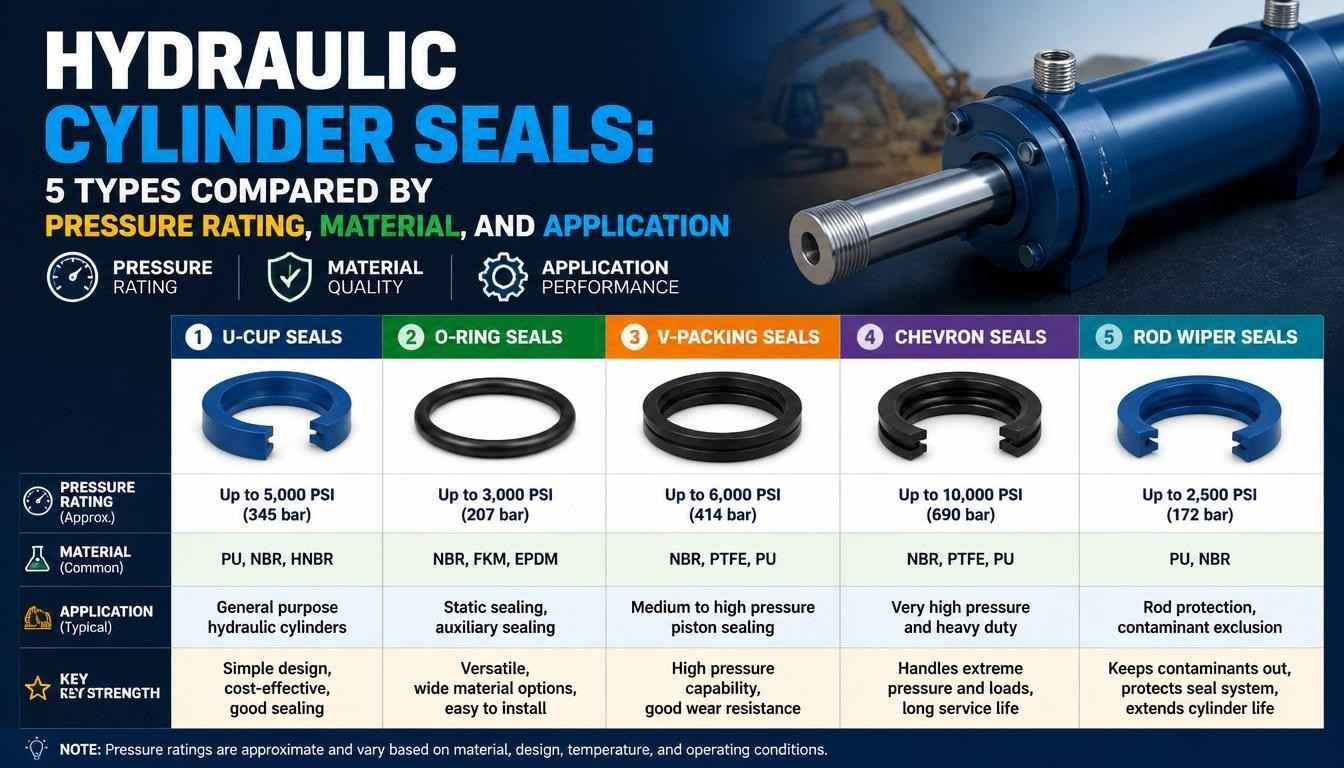
Hydraulic systems operate under intense pressure, constant movement, and demanding environments. At the center of this performance are hydraulic cylinder seals, small yet essential components that keep systems efficient and leak-free. When seals fail, equipment performance declines, maintenance costs rise, and downtime increases.
Choosing the right seal is not simply a matter of size. Engineers and maintenance professionals must evaluate pressure capacity, material composition, and the intended application. Whether you are maintaining a small hydraulic cylinder, servicing heavy industrial machinery, or planning a hydraulic cylinder repair, the correct seal type makes a significant difference.
This guide compares the five most common hydraulic cylinder seal types. It explains their pressure ratings, materials, and practical applications so that you can confidently select the right replacement seal.
Why Are Hydraulic Cylinder Seals Critical for System Performance?
Hydraulic cylinders rely on pressurized fluid to generate force. Seals ensure this pressure remains contained while allowing controlled movement of components like the hydraulic cylinder piston.
Without proper sealing, several problems can occur:
- Hydraulic fluid leakage
- Loss of pressure and efficiency
- Contamination entering the system
- Increased wear on internal components
- Premature equipment failure
In addition, seals help maintain system cleanliness. They prevent dust, debris, and moisture from entering the cylinder assembly. This protection is particularly important in construction, manufacturing, agriculture, and marine applications.
Because hydraulic systems operate at pressures ranging from a few hundred PSI to several thousand PSI, hydraulic cylinder seals must match the operational conditions of the equipment.
What Factors Should You Consider When Choosing Hydraulic Cylinder Seals?
Before comparing seal types, it is important to understand the key factors that influence seal performance.
Pressure Rating
Hydraulic systems can operate under extreme pressure. Seals must withstand these conditions without deformation or leakage. High-pressure systems often require reinforced materials or specialized seal designs.
Material Composition
Seal materials determine durability, chemical resistance, and temperature tolerance. Common materials include:
- Polyurethane (PU)
- Nitrile rubber (NBR)
- PTFE (Teflon)
- Viton (FKM)
Each material offers unique advantages depending on fluid type, pressure levels, and environmental exposure.
Application Environment
Working conditions influence seal selection. Dusty construction sites, marine environments, or high-temperature industrial settings each demand different seal properties.
Motion Type
Hydraulic cylinders contain dynamic and static sealing points. The hydraulic valve seal, piston seals, rod seals, and wiper seals all serve different functions within the system.
With these factors in mind, let us examine the five most common seal types used in hydraulic cylinders.
1. Piston Seals: How Do They Maintain Pressure Inside the Cylinder?
Piston seals are one of the most important hydraulic cylinder seals. They are mounted on the hydraulic cylinder piston and separate the pressure zones inside the cylinder.
Their primary role is to prevent fluid from bypassing the piston as it moves.
Key Features:
Piston seals are designed for dynamic motion within the cylinder and play a critical role in maintaining pressure between chambers. They can withstand moderate to extremely high pressure and are often manufactured using durable materials such as polyurethane or PTFE blends.
Pressure Capability:
Piston seals typically operate between 1,500 PSI and 5,000 PSI, depending on the seal design, material composition, and system requirements.
Applications:
These seals are widely used in construction equipment, industrial presses, agricultural machinery, and mining systems. A properly designed piston seal supports smooth hydraulic cylinder piston movement while maintaining reliable pressure control within the system.
2. Rod Seals: Why Are They Essential for Preventing Fluid Leakage?
Rod seals are installed on the cylinder head and seal the hydraulic fluid as the rod moves in and out of the cylinder.
They are considered the most critical seal for preventing external leakage.
Common Characteristics
- High resistance to pressure spikes
- Excellent wear resistance
- Often paired with wiper seals
Typical Materials
Rod seals are commonly manufactured from:
- Polyurethane
- Nitrile rubber
- PTFE
Pressure Range
These seals can handle pressures ranging from 3,000 PSI to over 6,000 PSI in heavy-duty systems.
Applications
Rod seals are used in:
- Excavators
- Industrial lifts
- Hydraulic presses
- Compact systems with a small hydraulic cylinder
When rod seals fail, hydraulic oil leaks outside the system, leading to performance loss and safety concerns.
3. Wiper Seals: How Do They Protect Hydraulic Cylinders from Contamination?
Wiper seals, also known as scraper seals, are positioned at the outer edge of the cylinder assembly. Their purpose is to remove dirt, moisture, and debris from the rod surface before it re-enters the cylinder.
Although they do not retain pressure directly, they protect internal hydraulic cylinder seals from contamination.
Key Characteristics:
Wiper seals prevent dirt, dust, and moisture from entering the hydraulic cylinder as the rod retracts. By keeping contaminants out, they protect internal hydraulic cylinder seals and help extend the overall lifespan of the system.
Materials Used:
Wiper seals are commonly manufactured from durable materials such as polyurethane, rubber compounds, and metal-reinforced elastomers to provide strong wear resistance and reliable performance.
Typical Applications:
They are widely used in demanding environments like construction sites, agricultural machinery, and mining equipment, where contamination can quickly damage components and lead to frequent hydraulic cylinder repair.
4. Buffer Seals: Can They Protect Rod Seals from Pressure Spikes?
Buffer seals are secondary seals installed between the piston seal and the rod seal. Their primary function is to absorb pressure spikes that occur during operation.
In high-pressure hydraulic systems, sudden pressure changes can damage rod seals. Buffer seals help distribute these loads more evenly.
Key Characteristics
- Works alongside rod seals
- Reduces pressure shock
- Improves seal longevity
Material Composition
Most buffer seals are made from:
- PTFE compounds
- Polyurethane blends
Pressure Capabilities
Buffer seals can operate at extremely high pressures exceeding 7,000 PSI when paired with reinforced materials.
Applications
These seals are common in:
- Heavy construction machinery
- Industrial hydraulic presses
- High-performance lifting equipment
Buffer seals significantly reduce wear, which minimizes costly hydraulic cylinder repair work.
5. Static Seals: Why Are They Important for Hydraulic Valve Systems?
Static seals are used where there is no relative motion between components. Unlike piston or rod seals, they seal stationary surfaces.
They are widely used in components like the hydraulic valve seal, cylinder end caps, and hydraulic ports.
Key Characteristics
- Simple design
- Reliable under steady pressure
- Often made from elastomeric materials
Typical Materials
Static seals are commonly manufactured from:
- Nitrile rubber
- Viton
- Silicone compounds
Pressure Range
Static seals can operate effectively at pressures exceeding 5,000 PSI, depending on material and system design.
Applications
You will typically find static seals in:
- Hydraulic valves
- Cylinder housing assemblies
- Pump and manifold connections
Though simple in structure, static seals are essential for preventing leaks in hydraulic systems.
How Do Seal Materials Influence Hydraulic Cylinder Performance?
The material used in hydraulic cylinder seals significantly affects durability and system efficiency.
Polyurethane (PU)
Polyurethane is widely used because it offers excellent abrasion resistance and high pressure tolerance.
Advantages include:
- Strong wear resistance
- Good load capacity
- Long service life
PTFE (Teflon)
PTFE provides extremely low friction and excellent chemical resistance.
Benefits include:
- High temperature tolerance
- Minimal friction
- Suitable for high-speed applications
Nitrile Rubber (NBR)
Nitrile rubber is commonly used for cost-effective sealing.
Key features:
- Good oil resistance
- Flexible and durable
- Affordable solution for standard applications
Selecting the right material improves reliability and reduces maintenance costs.
When Should Hydraulic Cylinder Seals Be Replaced?
Seal failure is often gradual but can lead to severe equipment issues if ignored.
Common signs include:
- Hydraulic fluid leakage
- Reduced cylinder force
- Slow or uneven piston movement
- Contaminated hydraulic oil
If these symptoms appear, immediate hydraulic cylinder repair may be required. Replacing worn seals promptly helps restore performance and prevents further damage to internal components.
Final Thoughts
Hydraulic systems depend on accurate sealing to maintain pressure, efficiency, and long-term durability. From piston seals to wiper seals, every type of hydraulic cylinder seals performs a specific role in protecting components and ensuring smooth operation. When choosing the right seal, it is important to evaluate the pressure rating, material compatibility with hydraulic fluids, environmental conditions, and the equipment’s application.
Whether you are servicing heavy industrial machinery or a small hydraulic cylinder, selecting the correct seal helps improve reliability and reduce maintenance costs. If you are looking for dependable hydraulic components and expert support, explore the solutions offered by THM Huade for high-quality sealing products and trusted hydraulic system performance.
Frequently Asked Questions
How do I choose the correct hydraulic cylinder seal?
Selecting the right hydraulic cylinder seal requires evaluating pressure rating, material compatibility, temperature resistance, and system design. It is also important to match the seal type with the application, whether it involves industrial equipment or a small hydraulic cylinder.
What causes hydraulic cylinder seal failure?
Seal failure typically occurs due to wear, contamination, improper installation, excessive pressure, or incompatible materials. Over time, these factors damage the seal structure, leading to fluid leakage and reduced system efficiency.
How often should hydraulic cylinder seals be replaced?
Seal replacement depends on operating conditions and maintenance schedules. In heavy-duty equipment, seals may require replacement every few thousand operating hours. Regular inspections help detect wear early and reduce costly hydraulic cylinder repair work.
Are hydraulic valve seals different from cylinder seals?
Yes, a hydraulic valve seal is designed for stationary or controlled movement within hydraulic valves, while hydraulic cylinder seals handle dynamic motion within cylinders. Both serve essential roles in maintaining hydraulic pressure and preventing leaks.