Hydraulic systems rely heavily on efficiency, reliability, and precise fluid control. Among the many options available, the QT pump has gained attention for its refined engineering and consistent performance in demanding industrial environments. While standard gear pumps have long been a staple in hydraulic systems, modern industries often require more advanced solutions that support smoother operation and improved durability.
Understanding the design differences between QT pumps and traditional gear pumps helps engineers, maintenance professionals, and equipment designers select the most suitable solution for their hydraulic applications. In this guide, we explore how QT pumps differ from standard gear pumps and identify the environments where they deliver superior results.
What Is a QT Pump and How Does It Work?
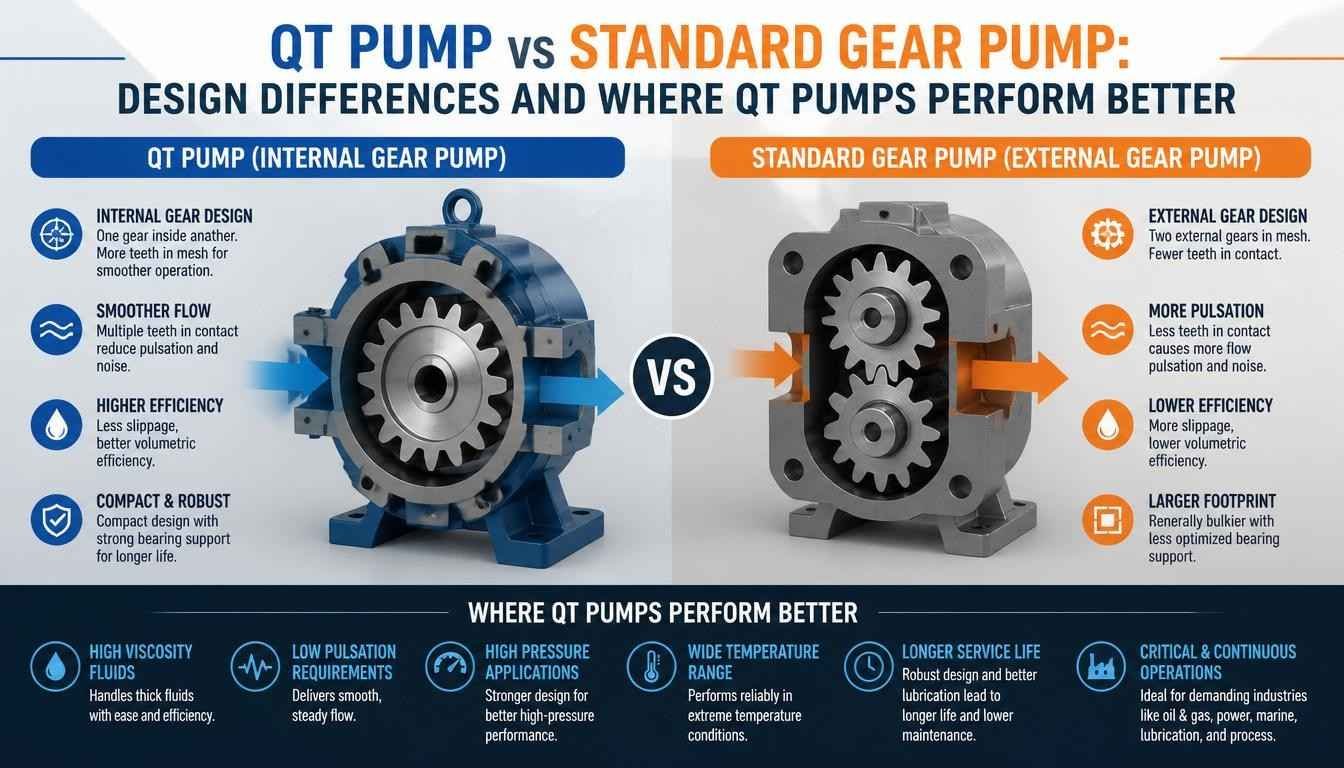
A QT pump is a specialized type of hydraulic internal gear pump designed to move hydraulic fluid smoothly and efficiently through industrial systems. Unlike conventional gear pumps, QT pumps are engineered to reduce vibration, noise, and wear during continuous operation.
These pumps operate by using internal gears that rotate together inside a precisely machined housing. As the gears rotate, hydraulic fluid is drawn into the pump, transported through the gear chambers, and then discharged at a controlled pressure.
Because of this design, QT pumps provide:
- Smooth and consistent fluid delivery
- Reduced pressure fluctuations
- Higher efficiency during extended operation
Many modern hydraulic pumps and motors rely on internal gear designs because they allow for controlled flow and improved reliability in demanding hydraulic circuits.
How Do Standard Gear Pumps Operate?
Standard gear pumps are widely used in hydraulic systems because of their simple and durable construction. These pumps typically consist of two external gears that rotate in opposite directions within a pump housing.
As the gears rotate:
- Hydraulic fluid enters the pump through the inlet.
- The gears trap the fluid between the gear teeth and housing.
- The fluid is carried around the outside of the gears.
- It exits the pump through the outlet at higher pressure.
This design works effectively in many applications, especially where cost efficiency and basic hydraulic performance are the primary concerns.
However, compared with internal gear pumps, standard gear pumps can sometimes produce:
- Higher noise levels
- Increased vibration
- Less precise fluid flow control
These limitations are where QT pump designs often demonstrate their advantages.
What Makes QT Pumps Different in Design?
The most significant difference between a QT pump and a standard gear pump lies in the internal configuration of the gears and the way hydraulic fluid flows through the pump.
Key Design Differences
- Internal Gear Configuration
QT pumps use an internal gear arrangement where one gear rotates inside another. This configuration allows fluid to move smoothly through the pump with minimal turbulence.
Standard gear pumps, on the other hand, use two external gears that mesh together.
- Reduced Pulsation
Because QT pumps move fluid through larger internal chambers, they produce fewer pressure fluctuations.
This smoother operation is beneficial in hydraulic systems that require precise control.
- Improved Sealing and Efficiency
QT pumps often include tighter internal clearances and improved sealing surfaces. As a result, less hydraulic fluid leaks internally during operation.
- Lower Noise and Vibration
Industrial facilities frequently prefer QT pumps because they produce less operational noise compared with many traditional gear pumps.
These design advantages contribute to better long-term performance in demanding hydraulic environments.
Why Do QT Pumps Deliver Better Performance in Certain Applications?
Performance in hydraulic systems depends on several factors, including pressure stability, energy efficiency, and fluid handling capability.
A qt pump performs particularly well in applications where steady hydraulic flow is essential.
Applications Where QT Pumps Excel
- Industrial Manufacturing Equipment
Manufacturing machines often rely on stable hydraulic pressure to maintain consistent motion and positioning.
QT pumps help maintain smoother pressure delivery, which improves machine precision.
- Injection Molding Systems
Plastic injection molding requires reliable hydraulic power and accurate fluid control. QT pumps support stable pressure levels, which help maintain product consistency.
- High-Duty Hydraulic Systems
Some systems operate continuously for long periods. QT pumps are designed to handle extended operation while maintaining efficiency.
- Low-Noise Industrial Environments
Facilities that prioritize quieter machinery often choose QT pumps because they operate with reduced mechanical noise.
How Does Fluid Handling Compare Between QT Pumps and Gear Pumps?
One of the most important roles of any hydraulic fluid pump is maintaining consistent fluid flow while minimizing internal energy loss.
QT pumps often demonstrate advantages in fluid handling because of their internal gear structure.
Benefits of Fluid Handling
- Smooth hydraulic flow: Internal gear movement reduces turbulence.
- Improved efficiency: Less energy is lost during fluid transfer.
- Better performance with viscous fluids: Internal gear pumps handle thicker hydraulic oils effectively.
These characteristics make QT pumps especially suitable for advanced hydraulic systems that require dependable fluid circulation.
Are QT Pumps Compatible With Modern Hydraulic Systems?
Yes. Many modern hydraulic pumps and motors are designed to work seamlessly with internal gear pump technology, including QT pump configurations.
QT pumps integrate well with systems that require:
- Controlled hydraulic pressure
- Continuous operation
- High reliability in industrial environments
Engineers often select QT pumps when designing systems that require long-term durability combined with efficient hydraulic performance.
What Should You Consider When Choosing Between QT Pumps and Standard Gear Pumps?
Selecting the right hydraulic pump depends on system requirements, operating conditions, and performance expectations.
When Standard Gear Pumps May Be Suitable
Standard gear pumps may still be appropriate for:
- Basic hydraulic circuits
- Lower-pressure applications
- Systems where cost efficiency is the primary factor
When QT Pumps Are the Better Choice
A QT pump may be preferable when:
- Smooth hydraulic flow is critical
- Equipment requires consistent pressure control
- Reduced vibration and noise are priorities
- Systems operate continuously for long periods
Evaluating the specific demands of your hydraulic system ensures that the chosen pump provides reliable and efficient performance.
Why Are Internal Gear Pumps Becoming More Popular?
The growing demand for efficient and reliable hydraulic equipment has increased interest in internal gear pumps across many industries.
Several factors contribute to their rising popularity:
- Enhanced operational stability
- Improved fluid flow consistency
- Reduced mechanical wear
- Greater adaptability in complex hydraulic circuits
As industrial equipment becomes more advanced, the role of hydraulic internal gear pump designs continues to expand in modern hydraulic engineering.
Conclusion
Choosing between a QT pump and a standard gear pump ultimately depends on your system’s performance demands. QT pumps stand out for their smooth operation, efficient fluid handling, and reduced noise, making them an excellent choice for modern hydraulic applications. When paired with reliable hydraulic pumps and motors, they help maintain consistent pressure and long-term system stability.
If your operation requires dependable performance from a high-quality hydraulic internal gear pump, working with a trusted manufacturer is essential. THM Huade offers advanced hydraulic solutions designed for durability, efficiency, and industrial reliability. Contact THM Huade today to explore hydraulic systems tailored to your operational needs.
FAQs
Where are QT pumps commonly used?
QT pumps are frequently used in manufacturing equipment, injection molding systems, and other industrial machines that require consistent hydraulic pressure and reliable fluid movement during extended operation.
Are QT pumps more efficient than standard gear pumps?
In many systems, QT pumps can offer improved efficiency due to their internal gear design. This configuration reduces energy loss and allows smoother hydraulic fluid movement through the pump.
Can QT pumps handle different hydraulic fluids?
Yes. Many hydraulic fluid pump systems using QT pump designs can handle a variety of hydraulic oils and viscosities, making them suitable for multiple industrial environments.
Do QT pumps require special maintenance?
Maintenance requirements for QT pumps are similar to many internal gear pumps. Regular inspection, proper lubrication, and maintaining clean hydraulic fluid help ensure long service life and reliable system performance.