In high-performance motion control, the rotary actuator plays a critical role in managing torque, positioning, and rotational force under demanding conditions. When integrated with a hydraulic servo system and supported by a hydraulic flow control valve, a rotary actuator delivers precise motion even under extreme dynamic loads. From aerospace platforms to hydraulic systems for mobile equipment, modern engineering relies on advanced shock-absorption and intelligent control to ensure safety, efficiency, and longevity.
Understanding how a rotary actuator responds to dynamic forces is essential for engineers, system designers, and operators who demand reliability and smooth performance. This guide explores the science, control strategies, and hydraulic integration techniques that make dynamic load handling possible.
How Does a Rotary Actuator Handle Dynamic Loads?
A rotary actuator converts hydraulic energy into controlled rotational motion. However, when subjected to dynamic loads, such as sudden torque changes, impact forces, or rapid directional shifts, the system must react instantly without compromising stability.
According to engineering standards referenced by agencies like NASA and the U.S. Department of Energy, dynamic load management requires a combination of structural integrity, fluid power regulation, and responsive servo control.
Structural Design for Load Resistance
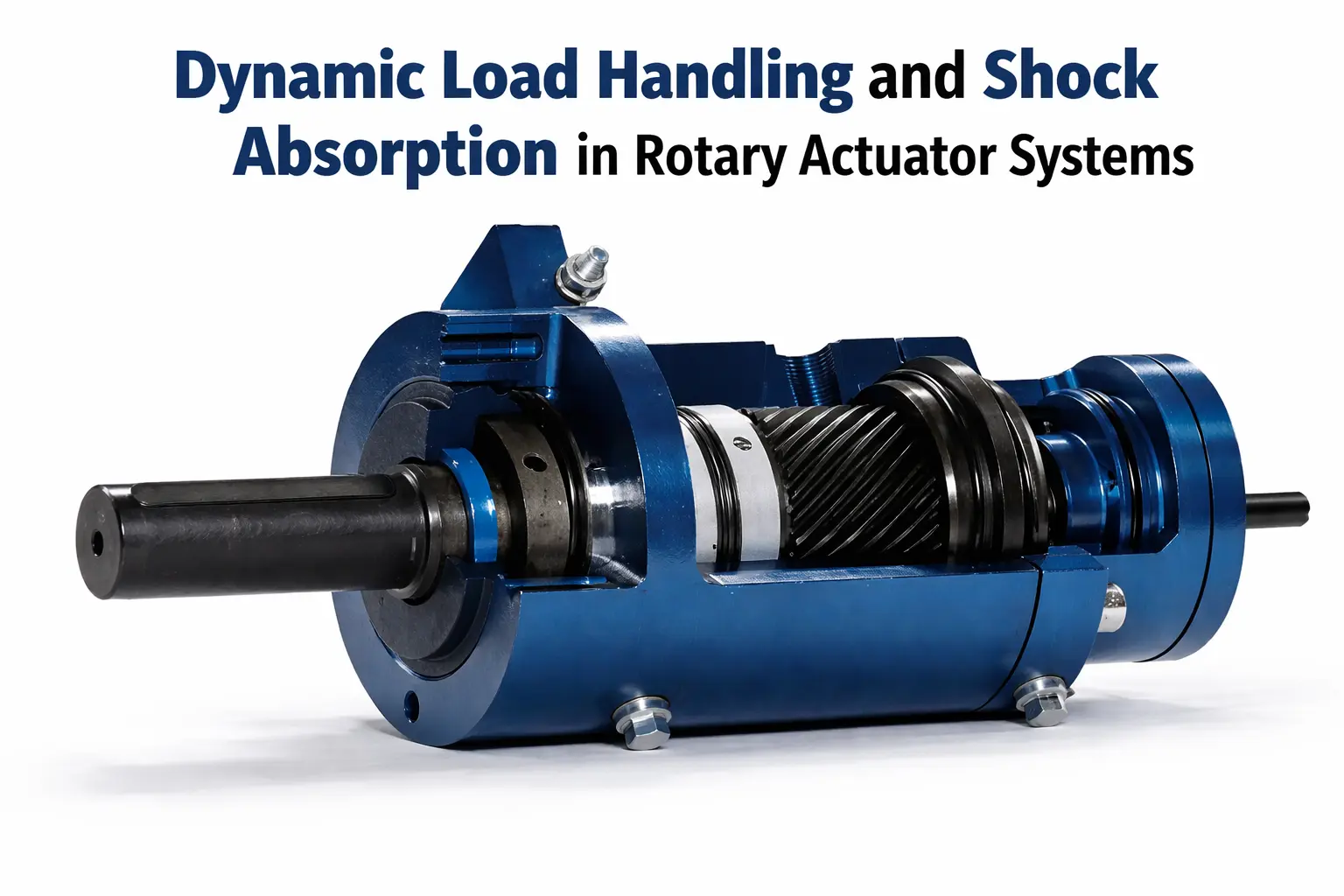
Modern rotary actuator designs include:
- High-strength alloy housings
- Precision-machined gears or vane assemblies
- Reinforced shaft bearings
These elements allow the rotary actuator to withstand shock loading while maintaining alignment and torque accuracy. In hydraulic systems for mobile equipment, where terrain and operational variables change rapidly, this resilience is crucial.
Role of the Hydraulic Servo System
A hydraulic servo system enhances the actuator’s ability to manage load fluctuations. It continuously monitors position, pressure, and speed using feedback sensors.
Here’s how it works:
- Sensors detect deviation in torque or speed.
- The hydraulic servo system sends corrective signals.
- Fluid flow adjusts instantly to compensate.
This closed-loop response prevents overshoot and reduces mechanical stress. In precision industries, such as defense or aerospace, this level of control is not optional; it is essential.
Integration with a Hydraulic Motor Pump
The hydraulic motor pump provides consistent energy delivery. Without a stable pressure supply, even the most advanced rotary actuator cannot perform effectively.
A high-quality hydraulic motor pump ensures:
- Stable flow rate
- Rapid pressure response
- Reduced cavitation risk
This synergy between the rotary actuator and hydraulic motor pump creates a stable operating environment that minimizes shock transmission.
How Does a Hydraulic Servo Control System Reduce Shock?
Shock occurs when there is a sudden change in motion or load. In hydraulic environments, this can result in pressure spikes, vibration, or structural fatigue. A properly designed hydraulic servo control system mitigates these risks.
Intelligent Pressure Regulation
The hydraulic flow control valve plays a pivotal role in shock absorption. By regulating the rate of hydraulic fluid entering the rotary actuator, it smooths transitions during acceleration and deceleration.
Benefits include:
- Controlled ramp-up speed
- Reduced pressure spikes
- Enhanced component lifespan
In hydraulic systems for mobile equipment, where lifting arms, cranes, or rotating platforms face unpredictable forces, the hydraulic flow control valve prevents abrupt jerks that could damage components.
Closed-Loop Feedback for Precision
A hydraulic servo control system continuously adjusts fluid flow based on feedback signals. When a sudden load is introduced:
- The system detects resistance.
- Flow is adjusted through the hydraulic flow control valve.
- The rotary actuator compensates without abrupt motion.
This process significantly reduces vibration and mechanical shock. Industries following OSHA safety guidelines emphasize smooth motion control to protect both machinery and operators.
Energy Dissipation Techniques
Advanced rotary actuator systems may also incorporate:
- Accumulators for pressure buffering
- Damping chambers
- Variable displacement hydraulic motor pump units
These components absorb excess hydraulic energy and redistribute it smoothly. The result is quieter operation, less wear, and superior durability.
Why Are Hydraulic Systems for Mobile Equipment So Demanding?
Heavy-duty industries such as construction, agriculture, and defense rely on hydraulic systems for mobile equipment that endure unpredictable terrain and fluctuating loads.
A rotary actuator in such systems must:
- Handle continuous torque variation
- Operate in extreme temperatures
- Resist contamination and vibration
Adaptive Control in Mobile Environments
In mobile applications, a hydraulic servo system ensures adaptability. For example, when a crane rotates under load, wind forces may alter resistance. The hydraulic servo control system responds instantly, adjusting the hydraulic flow control valve and the hydraulic motor pump output.
This dynamic correction prevents:
- Sudden rotational jolts
- Structural fatigue
- Premature component failure
The integration of rotary actuator systems within hydraulic systems for mobile equipment exemplifies intelligent engineering at its finest.
Minimizing Downtime Through Precision Engineering
Reliable shock absorption reduces:
- Maintenance costs
- Seal degradation
- Shaft misalignment
A well-calibrated hydraulic servo system paired with a premium hydraulic motor pump ensures operational continuity even in harsh environments.
The Engineering Elegance Behind Shock-Free Motion
The seamless performance of a rotary actuator is not accidental; it is engineered through synergy. When a hydraulic servo control system works harmoniously with a hydraulic flow control valve and hydraulic motor pump, dynamic loads become manageable rather than destructive.
Industries guided by federal engineering standards prioritize controlled energy transfer and precise fluid management. These principles ensure that rotary actuator assemblies maintain peak efficiency across demanding applications.
From aerospace precision to rugged hydraulic systems for mobile equipment, the ability to absorb shock and adapt to dynamic forces defines system excellence.
Conclusion
A high-performance rotary actuator must do more than rotate; it must respond, adapt, and endure. Through integration with a hydraulic servo system, an advanced hydraulic servo control system, a reliable hydraulic flow control valve, and a robust hydraulic motor pump, dynamic load handling becomes a refined and predictable process.
In complex hydraulic systems for mobile equipment, this orchestration ensures safety, efficiency, and durability. Shock absorption is not merely a protective feature; it is a cornerstone of intelligent hydraulic engineering.
When precision meets resilience, the rotary actuator transforms from a mechanical component into a sophisticated motion control solution.
Experience precision, durability, and intelligent motion control with THM Huade’s advanced rotary actuator and hydraulic solutions. From robust hydraulic servo systems to high-performance hydraulic flow control valves, THM Huade delivers engineering excellence built for demanding industrial and mobile applications.
FAQs
Why is a hydraulic servo control system important for shock absorption?
A hydraulic servo control system monitors feedback signals and adjusts fluid delivery in real time. This closed-loop correction minimizes overshoot, reduces mechanical stress, and protects the rotary actuator from dynamic impact forces.
What role does a hydraulic motor pump play in performance?
The hydraulic motor pump supplies consistent pressure and flow to the rotary actuator. Stable hydraulic energy ensures accurate positioning, improved load handling, and reduced wear in demanding hydraulic systems for mobile equipment.
How does a hydraulic flow control valve improve rotary actuator lifespan?
A hydraulic flow control valve regulates fluid speed entering the rotary actuator, preventing abrupt acceleration and pressure spikes. This controlled movement reduces internal stress, seal wear, vibration, and long-term component fatigue.
Are rotary actuators suitable for hydraulic systems for mobile equipment?
Yes, a rotary actuator integrated with a hydraulic servo system performs reliably in hydraulic systems for mobile equipment, handling variable terrain loads, shock forces, and continuous torque changes with precision, stability, and durability.