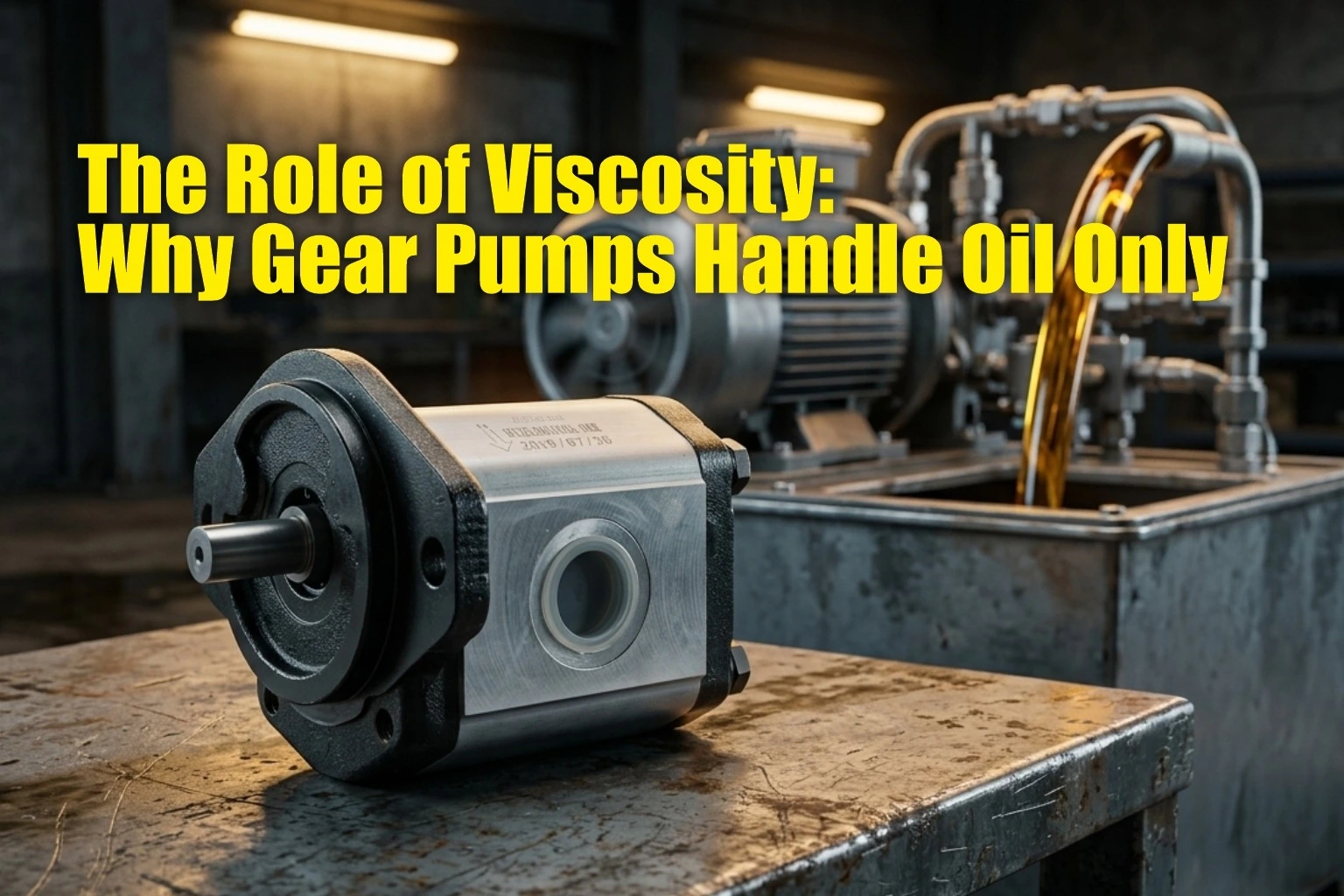
When selecting the appropriate pump in modern industrial systems, it is not only a technical choice but also has a direct impact on the performance, efficiency, and long term reliability. A gear pump for oil is specifically designed to handle viscous fluids like lubricants and heavy oils.
When the wrong fluid is used, it decreases performance, wears more, and the system may fail. Knowledge of the effect of viscosity in pump operation assists industries to make better and economical decisions.
What is Viscosity and Why It Matters
Viscosity is the resistance of the fluid to flow. In simple terms, oil being a thicker fluid is highly viscous compared to water which is lowly viscous.
Fluids with high viscosity are slow moving, and they offer lubrication.
Fluids with low viscosity are fast but provide minimal lubrication.
High viscosity gear pump is designed to be used with thick fluids. Its internal design guarantees easy motion and less leakage which is critical in an industrial environment.
Why Gear Pumps Are Designed for Oil
Gear pumps are driven by intermeshing gears which squeeze and transfer fluid between them. This design is most effective when the fluid is a good natural lubricant-oil is a good lubricant.
The major reasons why Gear Pumps work with oil only:
- Lubrication is maintained: Oil also minimizes friction among the gears which helps in avoiding wear and tear.
- Leakage is minimized: Oil with a high viscosity forms a superior seal in the pump.
- Efficiency is improved: Since the thickness of the fluid is constant, there is a consistent flow rate.
- Life of components is prolonged: The internal components are safeguarded against damage.
When low-viscosity liquids such as water are utilized, internal leakage will rise, and damage can be brought about in the long run.
How an Oil Gear Pump Works
An oil gear pump is a pump that uses rotating gears to take fluid through the inlet to the outlet.
Working Process:
- The inlet pumps fluid into the pump.
- Gears turn round and squeeze the fluid.
- Fluid is circulated around the casing.
- It is forced out via the outlet.
This is an easy process, yet it is dependent on the thickness of fluids. Without proper viscosity, performance will be affected.
Types of Gear Pumps Used for Oil Applications
1. Hydraulic Gear Pump
Hydraulic gear pump is commonly employed in hydraulic systems in which oil is the working fluid. It guarantees the easy generation of pressure and uniform functioning.
2. Industrial Gear Pump
An industrial gear pump is made to be used in heavy industry like the manufacturing and processing industries. It is capable of sustained performance on a high efficiency level.
3. Gear Pump Oil Transfer
An oil transfer gear pump is an equipment that is used to transfer oil between two points, e.g. storage tanks or machinery systems.
4. Heavy Oil Gear Pump
A heavy oil gear pump is constructed to operate thick oils such as fuel oil, bitumen and lubricants without losing its efficiency.
5. Lube Oil Gear Pump
Lubrication systems have a lube oil gear pump to make machinery components run smoothly.
Gear Pump in the oil industry
An oil gear pump is very common in the industries that need viscous fluids.
Common Applications:
- Industrial lubrication systems
- Hydraulic machinery
- Oil pipelines and storage facilities
- Power plants and heavy equipment
- Manufacturing and automobiles
They are reliable pumps since they maintain a steady flow even during adverse conditions.
What Happens if you use the Wrong Fluid?
Serious problems can arise when low-viscosity or non-lubricating fluids are used in a gear pump.
Potential Problems:
- Increased internal leakage
- Rapid wear of gears
- Reduced efficiency
- Overheating of components
- Shortened pump lifespan
In most instances, irreversible damage may be done in case wrong fluids are applied frequently.
Tips for Selecting the Right Gear Pump
The selection of the appropriate pump guarantees performance and cost-effectiveness.
Important Tips:
- The pump should be always used with the fluid viscosity.
- Select a thick oil gear pump with a high viscosity.
- Flow requirements and check pressure.
- Make sure that it is compatible with your system.
- Maintenance in the form of routine need to be adhered to.
Conclusion
In terms of fluid handling, viscosity is not merely a consideration but it is the cornerstone of performance. An oil pump that is gear driven provides reliable, efficient and long lasting service only when the appropriate type of fluid is used. Improper fluids may lower efficiency and cause destruction of the system in the long run.
Gear pumps are still a reliable choice in industries that require durability, precision, and reliable performance. THM Huade offers best quality and efficient gear pump technologies, which are meant to meet the modern industrial demands.
Upgrade your system now with the appropriate hydraulic gear pump solution. Contact now and ensure maximum efficiency, reliability, and performance for your operations.