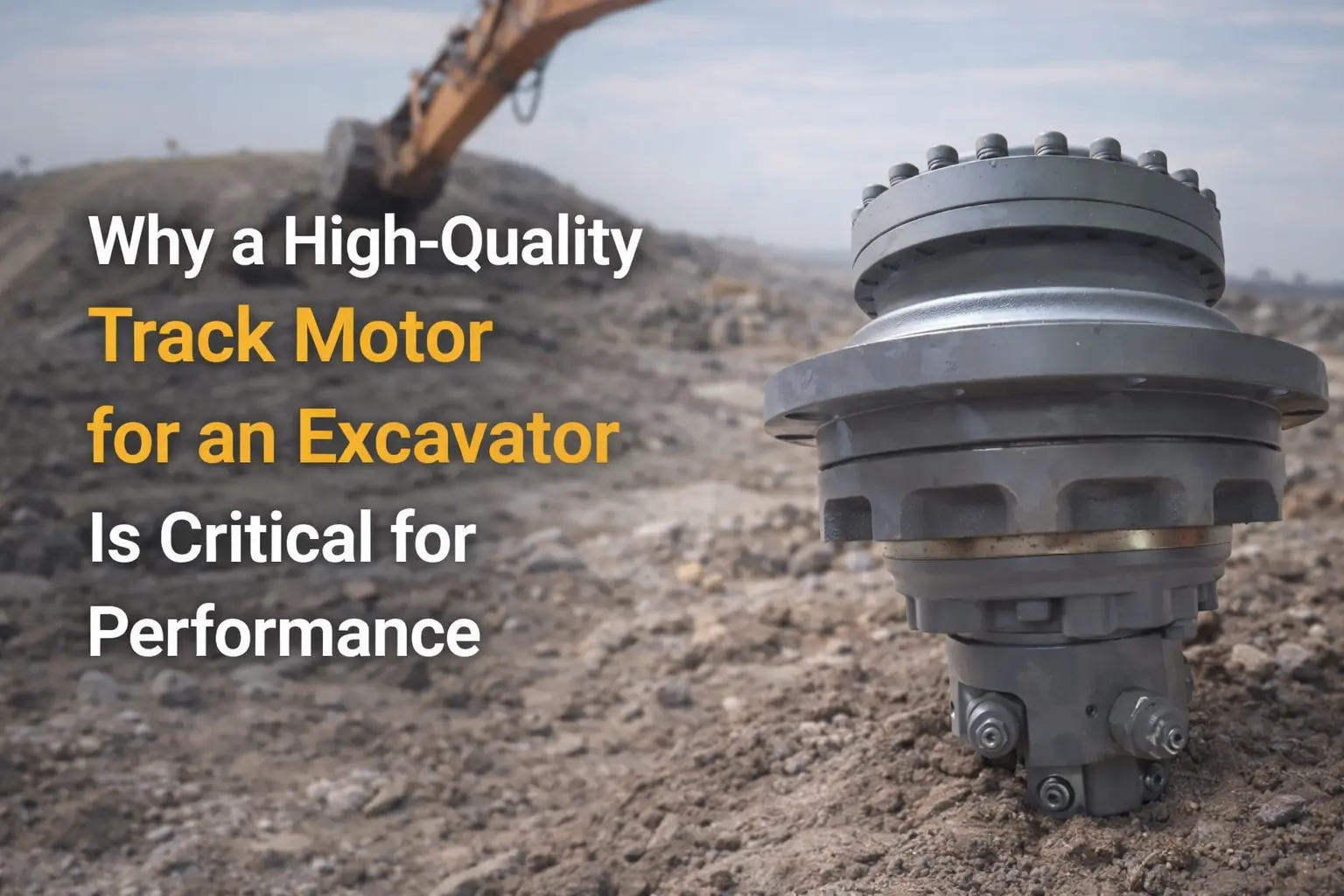
A track motor for excavator performance determines how efficiently your machine works on demanding job sites. In the USA, contractors rely on durability, torque, and smooth control. Therefore, choosing the right track motor has a direct impact on productivity, safety, and long-term operating costs.
A high-performance track motor, excavator motor durability, and hydraulic motor reliability all work together to support excavator mobility optimization. When these factors align, operators experience smoother movement and fewer breakdowns. As a result, your excavator delivers consistent results under pressure.
Track Motor for Excavator: The Foundation of Machine Performance
A track motor for excavators converts hydraulic energy into mechanical movement. It drives the tracks that allow precise control on uneven terrain. Without a reliable track motor, even powerful excavators lose efficiency.
Moreover, modern construction projects demand accuracy and stability. Therefore, a high-quality track motor ensures consistent torque delivery. It also supports smoother turns and controlled travel speeds.
In contrast, low-grade motors often fail under continuous loads. Over time, this leads to costly downtime and reduced machine lifespan. That is why investing in quality always pays off.
How Excavator Motor Durability Impacts Job Site Efficiency
Excavator motor durability determines how well the motor withstands stress, heat, and debris. On rugged USA job sites, durability is not optional—it is essential.
Durable motors resist internal wear. They also handle high pressure without seal failure. Consequently, maintenance intervals increase, saving both time and money.
Durable components reduce the likelihood of unexpected shutdowns. This reliability keeps projects on schedule. Therefore, excavator motor durability directly improves operational efficiency and crew confidence.
High-Performance Track Motor: Power Meets Precision
A high-performance track motor delivers superior torque without sacrificing control. This balance is crucial when working on slopes or confined spaces.
High-performance motors respond faster to operator input. That responsiveness improves maneuverability and safety. As a result, operators can complete tasks with greater accuracy.
Unlike standard motors, performance-focused designs optimize internal flow paths. This reduces energy loss. Therefore, a high-performance track motor maximizes hydraulic efficiency and fuel economy.
Hydraulic Motor Reliability Ensures Consistent Output
Hydraulic motor reliability is the backbone of excavator movement. When hydraulic systems fail, productivity stops instantly.
Reliable hydraulic motors maintain steady pressure under load. They also prevent internal leakage that causes power loss. Consequently, machines perform consistently throughout long work cycles.
Moreover, reliable motors reduce oil contamination risks. Clean hydraulic systems last longer and perform better. For this reason, hydraulic motor reliability protects your entire excavator investment.
Excavator Mobility Optimization for Challenging Terrain
Excavator mobility optimization focuses on smooth, controlled movement across varied surfaces. A well-designed track motor plays a key role in achieving this goal.
Optimized mobility improves traction and reduces track slippage. This matters on muddy, rocky, or uneven ground. Therefore, operators maintain control without overworking the machine.
Mobility optimization reduces stress on undercarriage components. Over time, this lowers repair costs. Thus, excavator mobility optimization enhances both performance and longevity.
Why Low-Quality Track Motors Cost More Over Time
Low-quality track motors may seem cost-effective initially. However, they often lead to frequent failures and inefficiencies.
Poor materials wear faster. Weak seals leak under pressure. As a result, repairs become frequent and expensive.
In contrast, a premium track motor for excavators delivers long-term value. It reduces downtime and protects other hydraulic components. Therefore, quality always outweighs short-term savings.
Key Features to Look for in a Track Motor for an Excavator
When selecting a track motor for an excavator, focus on engineering quality and compatibility.
Look for hardened gears and precision bearings. These features enhance excavator motor durability. Also, ensure the motor supports high torque at low speeds.
Check for proven hydraulic motor reliability ratings. Manufacturers with tested designs offer better long-term support. Ultimately, the right motor ensures seamless excavator mobility optimization.
Final Thoughts
A high-quality track motor for an excavator is not just a component—it is a performance investment. It supports durability, reliability, and mobility across every job site.
By prioritizing a high-performance track motor, you protect your equipment and your timeline. Moreover, improved excavator motor durability and hydraulic motor reliability lead to fewer interruptions.
In the long run, the right choice delivers confidence, control, and consistent results.
Upgrade with confidence, choose THM Huade track motors for unmatched power and reliability.
Frequently Asked Questions
How does excavator motor durability reduce costs?
Excavator motor durability minimizes wear and breakdowns. As a result, maintenance frequency drops. This reduces repair expenses, extends component life, and keeps projects running without costly delays.
What defines a high-performance track motor?
A high-performance track motor delivers strong torque, fast response, and efficient hydraulic flow. It improves control on challenging terrain while maintaining fuel efficiency and consistent output.
Why is hydraulic motor reliability critical?
Hydraulic motor reliability ensures steady pressure and power delivery. It prevents leaks and failures that cause downtime. Reliable hydraulics protect the entire excavator system and boost productivity.
How does excavator mobility optimization improve job efficiency?
Excavator mobility optimization enhances traction and control. It reduces slippage and component strain. This allows operators to work confidently on uneven surfaces while maintaining consistent performance.