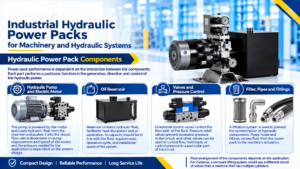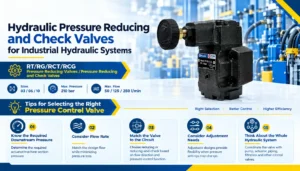
The industrial machines are heavy-duty machines that require constant hydraulic power to handle heavy loads, to control movement, and to carry out strenuous industrial tasks. The pressure and flow required and the capability to operate with varying loads should be ensured by a heavy machine hydraulic pump. The hydraulic piston pumps are extensively used in these systems since they are designed to work under high pressure, easily transmit power and offer hydraulic control precision in both industrial and mobile machines.
Hydraulic Piston Pumps for Industrial Machinery
Hydraulic piston pump is a hydraulic pump, which converts the mechanical energy to hydraulic energy by pushing the hydraulic fluid in a system. It runs on an electric motor or an engine and provides fluid to cylinders, hydraulic motors and other devices.
Industrial piston pump is especially good in circumstances where there is need of high pressure, controlled flow, and consistency in performance. Piston pumps can sustain challenging hydraulic circuits in the correct choice and upkeep when compared to many traditional pump designs.
Common applications include:
- Forming machines and hydraulic presses
- Injection moulding machinery
- Construction equipment and earthmoving equipment
- Heavy-duty lifting systems
- Industrial production machinery
- Mobile hydraulic equipment
The right pump is based on the pressure, flow, speed of operation and the duty cycle of the machine.
Piston Pump Working Principle
This principle of the piston pump is premised on repeated movements of pistons within cylinders. This movement pulls hydraulic oil into the pumping chambers and then forces it to the outlet.
A common rotary piston pump is one where the drive shaft turns a cylinder block or other pumping mechanism. The pistons are pushed along in their bores to produce a regulated flow of hydraulic fluid.
It is a process that has three major stages:
Fluid intake: As the piston swings, the chamber volume is expanded and oil can enter.
Fluid displacement: The rotating mechanism blows the piston into its stroke, decreases chamber volume.
Fluid delivery: The piston pushes the oil through the outlet to the hydraulic circuit.
The flow of the pump is supplied, and pressure is formed as the fluid overcomes the resistance of the load and hydraulic circuit. Protecting the system should therefore look at pressure ratings, the appropriate valves, and protection.
Axial Piston Pump Working and Design
Axial piston pump has a few pistons that are mounted in parallel to drive shaft in a rotating cylinder block. The reciprocating motion of the pistons is created by a swash plate or a bent-axis system.
The oil is ingested and expelled by the pistons during one side of the cycle and the other side of the cycle respectively. This design aids in the controlled fluid flow in rigorous hydraulic services.
This design is appropriate in systems that require high pressure and have a variety of flow capacity because of the axial piston working type of pump. Depending on the design, an axial pump may offer fixed or adjustable displacement.
Hydraulic axial piston pump may be applied in industrial equipments, hydraulic power units, construction equipment and other apparatuses where pressure and flow should be synchronized to varying operating conditions.
Fixed Displacement vs Variable Displacement Piston Pumps
Piston pumps come in various designs. The primary distinction is whether the volume of fluid supplied per turn is fixed or it can be varied.
Fixed Displacement Piston Pump
Fixed displacement piston pump is a pump that provides a fixed volume of fluid to be delivered per revolution under certain operating conditions. Flow is primarily dependent on the speed of the pump and as a result the system is able to provide a predictable hydraulic supply.
This one may be appropriate in machines that have a comparably constant flow demand. Appropriate pressure protection and control elements must be present in the circuit also.
Variable Displacement Piston Pump
The displacement of a variable displacement piston pump can be varied to alter the flow delivered. The swash plate angle is used to regulate the piston stroke in many types of axial designs and hence the volume of fluid per revolution.
A variable displacement hydraulic pump has the ability to minimize unnecessary flow in cases where the machine is not reaching peak output. It can be used to adjust the pump delivery to demand and enhance efficiency of the system depending on the design of the control.
The operating cycle, the flow range needed, how the system should be controlled, and the overall system design are all factors to consider before deciding on the type to use.
Hydraulic Piston Pump Applications in High-Pressure Systems
Potential applications of hydraulic piston pumps cover the industry manufacturing, mobile equipment, and high-performance equipment. They are especially beneficial when a hydraulic system needs to be either high-pressure or variable flow.
Heavy Construction and earth moving equipment
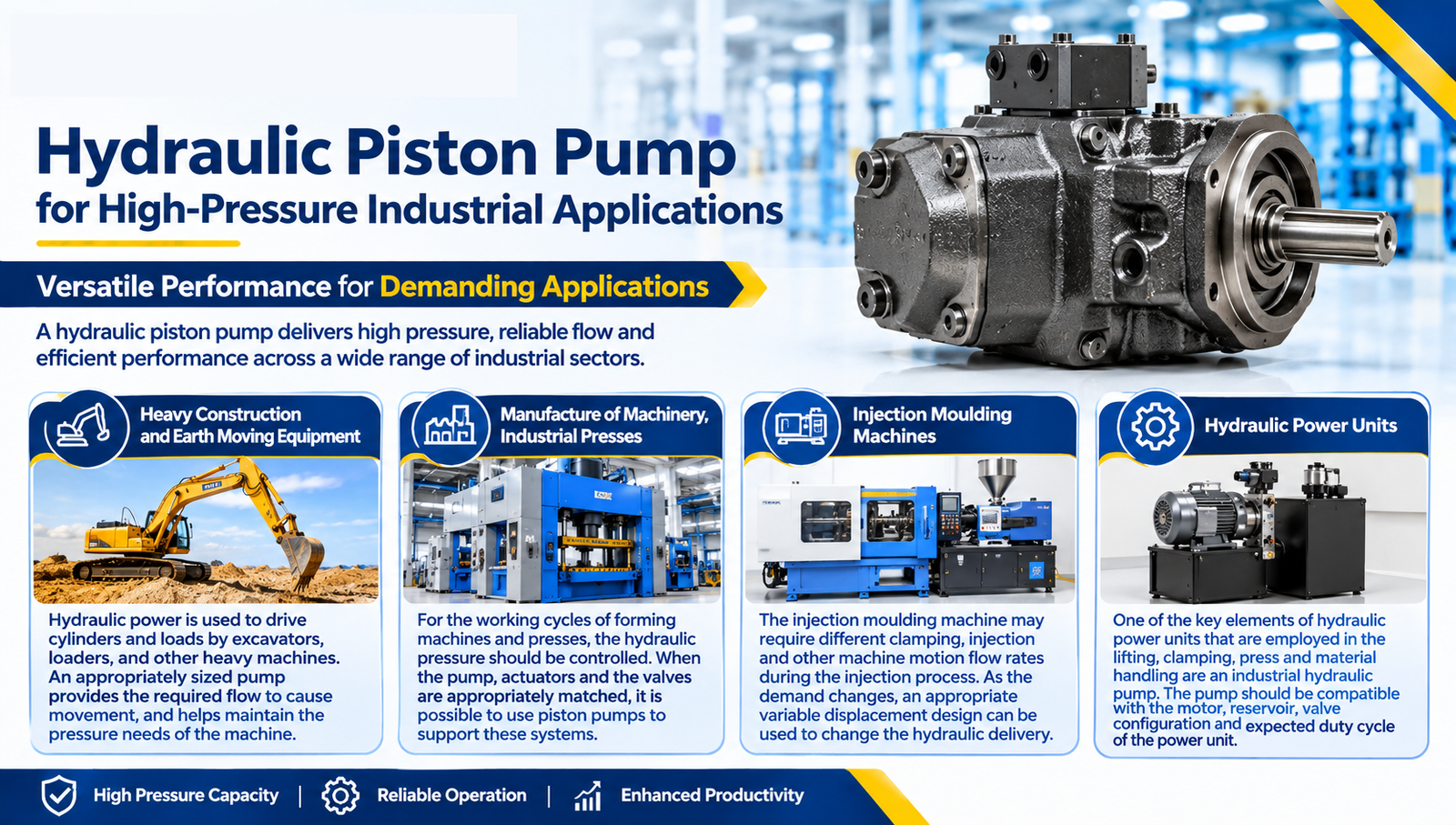
Hydraulic power is used to drive cylinders and loads by excavators, loaders, and other heavy machines. An appropriately sized pump provides the required flow to cause movement, and helps maintain the pressure needs of the machine.
Manufacture of machinery, industrial presses
For the working cycles of forming machines and presses, the hydraulic pressure should be controlled. When the pump, actuators and the valves are appropriately matched, it is possible to use piston pumps to support these systems.
Injection Moulding Machines
The injection moulding machine may require different clamping, injection and other machine motion flow rates during the injection process. As the demand changes, an appropriate variable displacement design can be used to change the hydraulic delivery.
Hydraulic Power Units
One of the key elements of hydraulic power units that are employed in the lifting, clamping, press and material handling are an industrial hydraulic pump. The pump should be compatible with the motor, reservoir, valve configuration and expected duty cycle of the power unit.
Available Model Codes for Axial Piston Pump
PV016, PV020, PV023, PV028, PV032, PV040, PV046, PV056, PV063, PV065, PV071, PV080, PV092, PV110, PV125, PV140, PV180, PV210, HY160Y-RP, HY180Y-RP, HY25Y-RP, HY40Y-RP, HY63Y-RP, HY80Y-RP, HY100M-RP, HY100P, HY100S-RP, HY100Y-RP, HY107M-RP, HY107P, HY107S-RP, HY107Y-RP, HY10M-RP, HY10S-RP, HY10Y-RP, HY125B-RP, HY125P-RP, HY125S-RP, HY125Y-RP, HY128MY-RP, HY140M-RP, HY140P, HY140S-RP, HY140Y-RP, HY160B, HY160M, A10VO/VSO 71, A10VO100DFR/31R-PSC62K02, A10VO100DR/31R-PSC62KO2, A10VO100DR/31R-VSC62K02, A10VO100DRG/31R-PSC62K02, A10VO18DFR/31L-PSC62NOO, A10VO18DFR/31R-PSC12K0, A4VSO 125 DFE1 /30R-PPB13N00, A4VSO 125 DFR /30R-PPB13N00, A4VSO 125 DFR /30R-VPB13N00, MV10, MV12, MV15, MV18, MV23, MV25, MV38, MV42, MV50, MV70, MV8
Selecting a High Pressure Hydraulic Pump
It’s not only a matter of choosing a high pressure hydraulic pump with the highest pressure rating when selecting a hydraulic pump. The hydraulic circuit and the actual working conditions of the machine should match the pump.
Before selection, take into account the following:
- Working pressure: Check the continuous and peak pressure requirements.
- Flow rate: Calculate flow needed to achieve desired speed of actuator(s).
- Displacement: Pick a suitable capacity according to the operating cycle.
- Drive speed: This is to maintain a proper speed of the motor or engine that is in the recommended range of the pump.
- Hydraulic fluid: Determine fluid compatibility, viscosity, cleanliness and temperature.
- Control requirements: Decide on the more suitable; fixed or variable flow.
- Installation: Check mounting, shaft positioning, inlet requirements, and connection sizes.
In the case of a high pressure piston pump used in industrial machinery, the pressure rating used should be appropriate to the application and the rest of the circuit should be rated to the required pressure.
Tips for Better Pump Performance
Tip 1: Have clean hydraulic oil. Contamination may harm precision parts and hasten wear.
Tip 2: Check inlet conditions. Limited suction lines or lack of oil supply can be a contributing factor towards cavitation and pump damage.
Tip 3: Monitor oil temperature. The overheating may lead to a decrease in fluid performance and decrease in component life.
Tip 4: Be appropriately filtered. Follow the fluid cleanliness and filtration instructions of the pump manufacturer.
Tip 5: Check on abnormal noise and vibration. They can be air inflow into the system, misalignment, wear or other malfunctions which must be subjected to scrutiny.
Tip 6: Adhere to maintenance schedules. Regular check-up assists in detecting leakage, contamination, and performance variations prior to leading to significant downtimes.
THM Huade provides hydraulic solutions to industrial and mobile hydraulic systems. To consider a pump suitable to your machine, call now to discuss the pressure, flow, displacement, and operating conditions required and then choose a model that suits your needs.
Final Considerations
The best pump is the one that will suit the real performance requirement of the machine- not necessarily the high pressure pump. Fixed displacement design can be employed where the demand of the flow remains constant in a system and variable displacement pumps can be employed where the demand is variable.
Proper sizing, clean hydraulic fluid, proper controls and regular maintenance contribute to reliable operation in the case of high-pressure industrial systems.
THM Huade is an advocate of hydraulic systems demands in industrial and mobile uses. Call to talk about your machinery needs and find an appropriate solution in a hydraulic pump
FAQs
Q. What is a hydraulic piston pump used for in industrial machinery?
Hydraulic piston pump supplies fluid (pressurised) to hydraulic motors and hydraulic cylinders. It is used in the machinery such as industrial presses, construction machines, injection moulding machines and heavy machinery lifting equipment.
Q. How does an axial piston pump work in a hydraulic system?
An axial piston pump is one that makes use of parallel pistons with the drive shaft. The swash plate or bent-axis mechanism consists of a rotating cylinder block and a swash plate which move the pistons, bringing in the hydraulic oil and pushing it out.
Q. What is the difference between fixed and variable displacement piston pumps?
A constant-volume pump provides a fixed amount of displacement per revolution whereas a variable-volume pump can varyingly provide the same amount. Variable designs are applicable whereby the flow requirements of the machine vary as it operates.
Q. Why are piston pumps used in high-pressure hydraulic applications?
Piston pumps are specified to meet the tough hydraulic requirements and when the model is properly specified can tolerate high operating pressures. They are suitable based on the rated pressure of the pump, flow, speed, conditions of the fluid and the use.
Q. How do you select a hydraulic piston pump for heavy machinery?
Verify the pressure needed, flow rate, displacement, drive speed, fluid type, duty cycle, control needs, and installation conditions. The pump chosen and all the other parts associated with it should be within the operating limits of the machine.