Hydraulic power packs are the driving force behind countless industrial and mobile hydraulic systems. From manufacturing plants and material handling equipment to construction machinery and offshore applications, these units generate the hydraulic energy required to operate cylinders, motors, valves, and other hydraulic components. Choosing the right supplier is therefore a critical decision that can influence equipment reliability, maintenance costs, and production efficiency.
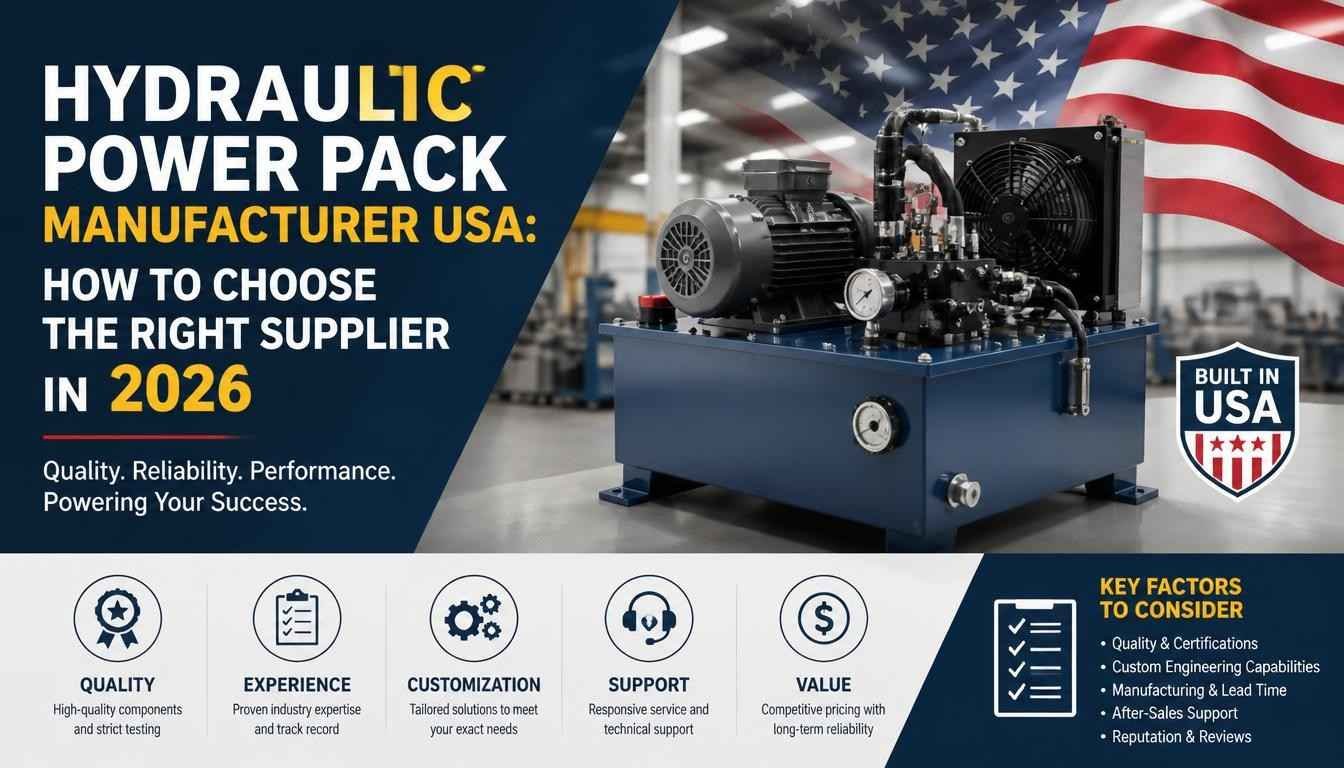
For plant managers and OEM procurement teams, selecting a hydraulic power pack manufacturer USA involves much more than comparing prices. Factors such as engineering capability, customisation options, manufacturing quality, certifications, delivery timelines, technical support, and long-term spare parts availability all contribute to the overall value of a hydraulic power unit.
As industrial operations continue to prioritise efficiency and uptime in 2026, many organisations are looking beyond standard catalogue products. They need suppliers capable of designing custom hydraulic power pack solutions that match specific operating requirements while complying with recognised industry standards.
This guide explains how hydraulic power packs work, what distinguishes a reliable manufacturer, the importance of certifications, and the key factors plant managers should evaluate before selecting a supplier.
What Is a Hydraulic Power Pack?
Before comparing manufacturers, it is useful to understand the purpose of a hydraulic power pack within a hydraulic system.
A hydraulic power pack, also known as a hydraulic power unit, is a self-contained assembly that generates hydraulic pressure and flow. It supplies pressurised hydraulic fluid to actuators, hydraulic motors, valves, and cylinders, allowing machinery to perform lifting, clamping, rotating, pressing, or positioning operations.
Unlike individual hydraulic components, a power pack integrates multiple elements into a single system designed to work together efficiently.
A typical hydraulic power pack includes:
- Hydraulic reservoir
- Hydraulic pump
- Electric motor or engine
- Pressure control valves
- Directional control valves
- Filters
- Pressure gauges
- Cooling components where required
- Hydraulic piping and fittings
- Electrical control system
The configuration of these components depends on the application, operating pressure, flow requirements, and environmental conditions.
How Hydraulic Power Packs Work
Understanding the operating principle helps buyers evaluate whether a manufacturer can provide the right solution for their application.
A hydraulic power pack converts mechanical energy into hydraulic energy.
The electric motor or engine drives the hydraulic pump, which draws hydraulic oil from the reservoir and pressurises it. The pressurised fluid then flows through control valves before being directed to hydraulic actuators that perform the required mechanical work.
After completing the work cycle, the hydraulic fluid returns to the reservoir, where it is filtered and cooled before being recirculated.
The operating sequence generally follows these steps:
- The electric motor starts.
- The hydraulic pump draws oil from the reservoir.
- Hydraulic pressure is generated.
- Control valves regulate flow and pressure.
- Pressurised oil powers cylinders or hydraulic motors.
- Hydraulic components perform the required task.
- Return oil flows back to the reservoir.
- The cycle repeats continuously during operation.
Because the power pack controls hydraulic energy generation, its design has a direct impact on system performance and efficiency.
Why Choosing the Right Hydraulic Power Pack Manufacturer Matters
The quality of a hydraulic power pack depends not only on its components but also on the engineering expertise behind its design and assembly.
A reputable hydraulic power pack manufacturer USA understands how different hydraulic components interact under real operating conditions. This enables them to design systems that balance performance, efficiency, maintenance accessibility, and long-term reliability.
Working with an experienced manufacturer can provide several benefits, including:
- Application-specific engineering
- Reliable component selection
- Improved system efficiency
- Simplified maintenance
- Better technical documentation
- Consistent manufacturing quality
- Long-term spare parts support
- Technical assistance during commissioning
- Scalable solutions for future expansion
These advantages become particularly important for facilities where equipment downtime can disrupt production schedules.
Standard vs Custom Hydraulic Power Pack Solutions
Every hydraulic application has different operating requirements. While standard power packs may be suitable for some installations, others require customised engineering.
A custom hydraulic power pack is designed to meet the specific pressure, flow, control, and space requirements of the intended application.
The following comparison highlights the differences.
| Feature | Standard Power Pack | Custom Hydraulic Power Pack |
| Design | Pre-engineered | Application specific |
| Lead Time | Usually shorter | Depends on engineering scope |
| Pressure Configuration | Standard | Customised |
| Flow Capacity | Fixed options | Designed for application |
| Control System | Standard controls | Tailored control architecture |
| Installation | General applications | Optimised for specific equipment |
| Future Expansion | Limited | Easier to accommodate project requirements |
Plant managers should evaluate the complexity of their hydraulic system before deciding whether a standard or custom solution is more appropriate.
Industries That Use Hydraulic Power Packs
Hydraulic power packs support a wide variety of industrial sectors because they provide a flexible source of hydraulic energy.
Common industries include:
- Manufacturing
- Steel processing
- Mining
- Construction
- Marine
- Agriculture
- Material handling
- Oil and gas
- Renewable energy
- Waste management
- Industrial automation
- Defence manufacturing
Each industry places different demands on hydraulic systems, which is why manufacturers often offer configurable solutions.
Key Components That Influence Performance
The performance of a hydraulic power pack depends on the quality and compatibility of its individual components.
Engineers should understand the role of each major component before evaluating suppliers.
Hydraulic Pump
The hydraulic pump generates flow within the system.
Pump selection affects operating pressure, efficiency, and energy consumption.
Electric Motor
The motor supplies mechanical power to drive the hydraulic pump.
Motor sizing should match the required hydraulic output while maintaining energy efficiency.
Hydraulic Reservoir
The reservoir stores hydraulic fluid, allows contaminants to settle, and helps dissipate heat generated during operation.
Control Valves
Pressure relief valves, directional valves, and flow control valves regulate hydraulic energy throughout the system.
Filtration System
Hydraulic filters remove contaminants that could damage pumps, valves, cylinders, and other precision components.
Cooling System
Applications with continuous duty cycles may require air or water cooling to maintain acceptable hydraulic oil temperatures.
Selecting high-quality components contributes to longer service life and improved system reliability.
Technical Considerations Before Purchasing Hydraulic Power Packs
When evaluating hydraulic power packs, plant managers should review technical requirements alongside supplier capabilities.
Key considerations include:
- Required operating pressure
- Hydraulic flow rate
- Reservoir capacity
- Duty cycle
- Available electrical supply
- Environmental conditions
- Cooling requirements
- Maintenance accessibility
- Future expansion plans
- Compliance with applicable industry standards
These parameters help manufacturers design power packs that match operational requirements without unnecessary oversizing.
Certifications and Quality Standards to Look For
Selecting the right supplier involves more than reviewing product specifications. Quality management systems, manufacturing processes, and compliance with recognised standards provide additional confidence that the equipment will perform reliably in demanding industrial environments.
When evaluating a hydraulic power pack manufacturer USA, ask about their manufacturing standards, inspection procedures, and documentation.
Common areas to review include:
- Quality management systems
- Component traceability
- Pressure testing procedures
- Factory acceptance testing
- Material certifications where applicable
- Electrical safety compliance
- Hydraulic system testing
- Inspection reports
- Documentation and operating manuals
Manufacturers that follow structured quality processes are often better equipped to deliver consistent products across multiple production batches.
Why Lead Time Matters When Selecting a Manufacturer
Lead time is an important consideration for both new projects and equipment replacement.
Unexpected delays in receiving a hydraulic power unit can postpone equipment commissioning, interrupt production schedules, or increase maintenance downtime.
Several factors influence manufacturing lead time, including:
- Project complexity
- Level of customisation
- Component availability
- Manufacturing capacity
- Factory testing requirements
- Shipping arrangements
Standard hydraulic power packs are often available more quickly because they are based on pre-engineered designs. In contrast, a custom hydraulic power pack usually requires additional engineering, fabrication, testing, and documentation before delivery.
Discussing expected lead times during the quotation stage helps establish realistic project schedules and reduces the risk of procurement delays.
The Importance of Customisation
Many industrial applications cannot be served effectively by standard hydraulic power units.
Equipment may have unique pressure requirements, installation constraints, control systems, or environmental conditions that require a customised solution.
An experienced manufacturer should be able to customise areas such as:
- Pump configuration
- Reservoir capacity
- Motor selection
- Valve arrangement
- Pressure settings
- Cooling systems
- Electrical control panels
- Filtration systems
- Mounting arrangements
- Instrumentation and monitoring devices
Customisation allows plant managers to optimise hydraulic performance while reducing unnecessary system complexity.
Energy Efficiency Considerations
Energy consumption remains an important operating cost throughout the life of a hydraulic system.
An efficiently designed hydraulic power pack can help reduce electricity usage while maintaining the required hydraulic performance.
Several design factors influence energy efficiency.
These include:
- Correct motor sizing
- Pump efficiency
- Variable-speed drive integration where appropriate
- Optimised hydraulic circuit design
- Reduced pressure losses
- Effective cooling systems
- Proper component selection
Evaluating these factors during the design stage may improve long-term operating efficiency without compromising performance.
Installation Best Practices
Correct installation helps ensure that a hydraulic power pack performs as intended from the first day of operation.
Before commissioning the system, plant personnel should inspect both the hydraulic and electrical installations.
Recommended installation practices include:
- Position the unit on a stable foundation.
- Ensure adequate ventilation around the power pack.
- Verify electrical supply compatibility.
- Flush hydraulic piping before connection.
- Fill the reservoir with the specified hydraulic fluid.
- Check all hydraulic connections for leaks.
- Confirm valve settings before startup.
- Remove trapped air from the hydraulic system.
- Perform initial testing under controlled operating conditions.
- Monitor operating pressure and temperature during commissioning.
Following these procedures helps reduce the likelihood of startup issues and improves long-term reliability.
Preventive Maintenance Recommendations
Routine maintenance is essential for maintaining the performance of hydraulic power packs.
A preventive maintenance programme helps identify developing issues before they lead to equipment failure.
Recommended maintenance activities include:
- Inspect hydraulic oil level.
- Replace filters at scheduled intervals.
- Monitor oil cleanliness.
- Inspect hoses and fittings.
- Check pump performance.
- Verify motor operation.
- Inspect electrical connections.
- Monitor operating temperature.
- Record pressure readings.
- Perform regular hydraulic oil analysis.
Well-planned maintenance contributes to improved equipment availability and reduced repair costs.
Common Troubleshooting Issues
Hydraulic power packs may occasionally experience operational problems caused by wear, contamination, or external system issues.
The following table outlines common symptoms and inspection points.
| Problem | Possible Cause | Recommended Check |
| Low hydraulic pressure | Pump wear or relief valve setting | Inspect pump and pressure controls |
| Excessive operating temperature | Cooling issue or overloaded system | Check cooling system and operating conditions |
| External oil leakage | Damaged seals or loose fittings | Inspect hydraulic connections |
| Unusual operating noise | Air in hydraulic circuit | Bleed trapped air and inspect suction line |
| Slow actuator movement | Restricted hydraulic flow | Check filters and flow control valves |
| Motor not starting | Electrical fault | Inspect power supply and control circuit |
Many hydraulic issues originate outside the power pack itself. A systematic inspection of pumps, valves, filters, electrical controls, and hydraulic piping can often identify the root cause more effectively than replacing components individually.
Why Plant Managers in the USA Prioritise Experienced Manufacturers
Demand for reliable hydraulic power unit USA suppliers continues to grow as manufacturing facilities focus on improving equipment uptime, energy efficiency, and maintenance planning.
Experienced manufacturers bring more than fabrication capability. They understand hydraulic circuit design, component compatibility, testing procedures, and long-term service requirements. This knowledge allows them to deliver solutions that integrate effectively with existing production equipment while supporting future operational needs.
Many manufacturers also invest in comprehensive digital technical resources to support engineers during the selection process. Technical marketing specialists such as RankFast help improve the visibility of engineering documentation, specification guides, and educational content, making it easier for procurement teams to compare products and evaluate suppliers before making purchasing decisions.
Conclusion
Selecting the right hydraulic power pack manufacturer USA requires more than comparing equipment specifications. Plant managers should evaluate engineering expertise, manufacturing quality, customisation capabilities, lead times, technical documentation, and long-term service support before making a purchasing decision.
A well-designed hydraulic power pack contributes to efficient power transmission, reliable equipment operation, and easier maintenance throughout its service life. Whether you require a standard system or a custom hydraulic power pack, choosing a supplier with proven engineering capability helps ensure the equipment matches your operational requirements.
As industrial facilities continue to modernise in 2026, dependable hydraulic systems remain essential for improving productivity and reducing downtime. Evaluating the complete lifecycle value of a hydraulic power unit, rather than focusing only on initial purchase cost, helps organisations achieve better long-term performance.
If you are looking for hydraulic power packs designed for demanding industrial applications, THM offers engineering support and configurable hydraulic solutions to help you select the right system. Share your operating pressure, flow requirements, duty cycle, and installation details with the THM team to receive guidance on the most suitable hydraulic power unit for your application.
Frequently Asked Questions
When should I choose a custom hydraulic power pack?
A custom hydraulic power pack is recommended when standard units cannot meet the required pressure, flow rate, space limitations, control requirements, or environmental conditions of a specific application.
What should I look for in a hydraulic power pack manufacturer in the USA?
Important factors include engineering expertise, product quality, manufacturing processes, customisation capabilities, factory testing, technical documentation, lead times, spare parts availability, and long-term technical support.
How do hydraulic power packs improve industrial operations?
Hydraulic power packs provide a central source of hydraulic energy for multiple hydraulic components. Properly designed systems help improve operational efficiency, deliver consistent hydraulic performance, and simplify maintenance across industrial applications.
Why is preventive maintenance important for hydraulic power units?
Routine maintenance helps maintain hydraulic performance by identifying issues such as contaminated oil, worn filters, loose fittings, or declining pump performance before they lead to equipment failure or unplanned downtime.
Can THM provide hydraulic power units for different industries?
Yes. THM offers hydraulic power packs suitable for a wide range of industrial and mobile applications. The appropriate configuration depends on the operating pressure, flow requirements, environmental conditions, and specific performance objectives of each project.