The direction of compressed air in automation systems can be controlled with the help of a pneumatic directional control valve. In industrial applications, however, engineers tend to use a hydraulic directional control valve as a reference when choosing the appropriate solution for their needs. Both valves have similar functions but are operated by different media and have distinct advantages for various applications.
The hydraulic versus pneumatic directional control valve selection relies on operating pressures, load capacity, speed, precision and maintenance. In this guide, the key differences are explained and it will help engineers and manufactures in India to make informed decisions.
What is Directional Control Valve?
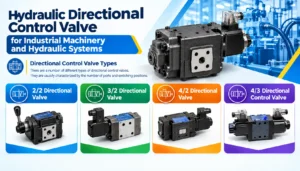
A directional control valve is a system component that regulates the direction of hydraulic oil (or compressed air) flow in a system. It decides when to start, stop and/or change direction of an actuator.
The valves are found in many industrial applications, such as fabrication, construction, packaging, mining and industrial automation.
Understanding Hydraulic Directional Control Valves
Hydraulic valve system is a system that uses a hydraulic fluid to move the valve. These are heavy-duty valves which can withstand high pressure and heavy load.
Key Features:
- High operating pressure
- Excellent load handling
- Smooth and precise motion
- Well suited for heavy equipment.
- Long service life
A hydraulic valve is found in many different applications including excavators, presses, injection molding machines and lifting devices.
Understanding Pneumatic Directional Control Valves
A pneumatic directional control valve is a valve that controls the flow of compressed air within a pneumatic valve system. It is generally employed for fast moving automation machinery where clean operation is needed.
Key Features:
- Fast switching speed
- Lightweight design
- Low maintenance
- Wash operation, without using hydraulic oil.
- Easy installation
These valves are frequently employed in the packaging, food processing, electronics and assembly industries.
Hydraulic vs Pneumatic Directional Control Valve: Main Differences
Choosing between a hydraulic and pneumatic system depends on your application requirements.
| Feature | Hydraulic Directional Control Valve | Pneumatic Directional Control Valve |
| Working Medium | Hydraulic Oil | Compressed Air |
| Operating Pressure | High | Low to Medium |
| Force Output | Very High | Moderate |
| Speed | Smooth and Controlled | Very Fast |
| Precision | High | Moderate |
| Maintenance | Requires oil maintenance | Easier maintenance |
| Applications | Heavy machinery | Factory automation |
Which Valve Performs Better for Heavy-Duty Applications?
If high force is needed a hydraulic control valve is the better choice.
Suitable Applications:
- Construction machinery
- Mining equipment
- Hydraulic presses
- Industrial lifting systems
- Heavy manufacturing
The force produced by hydraulic systems is much greater than that produced by pneumatic systems.
When Should Engineers Choose Pneumatic Valves?
A pneumatic control valve is recommended when speed, cleanliness and simplicity of maintenance is the key consideration.
Best Applications:
- Packaging machines
- Food processing
- Pharmaceutical production
- Pick-and-place automation
- Conveyor systems
Compressed air systems also minimize the chance of hydraulic oil leakage.
Factors to Consider Before Selecting a Directional Control Valve
Making the correct valve selection can result in greater efficiency and equipment longevity.
Important Tips:
Understand the Application: Determine if high force or high speed are needed.
Check Operating Pressure: The pressure is significantly higher in a hydraulic system compared with a pneumatic system.
Evaluate Maintenance Requirements: The pneumatic systems are typically more low maintenance.
Consider Installation Costs: Hydraulic systems typically have increased installation costs due to the use of pumps, reservoirs, and piping.
Think About Long-Term Performance: Select a valve that will meet future production needs.
Common Selection Mistakes Engineers Should Avoid
The wrong valve is all too often selected which leads to performance problems.
Avoid these mistakes:
- Doing so just for the price
- Ignoring operating pressure
- Incorrect valve size
- Poor compatibility with the system
- Overlooking future expansion
Good planning helps equipment to be reliable and productive.
Why Correct Valve Selection Improves Industrial Performance
The right valve will enhance more than direction of flow.
It also provides:
- Higher machine efficiency
- Better control accuracy
- Reduced downtime
- Lower maintenance costs
- Longer equipment life
Choosing the right valve is a critical decision for Indian manufacturers, impacting productivity and reliability directly.
Conclusion
The decision to use a Pneumatic directional control valve versus a hydraulic directional control valve will be determined by your machine’s operating environment, your machine’s force requirements, and your production objectives. Heavy duty applications demand power and precision, in which case hydraulic valves are the best choice; meanwhile, high-speed, clean and cost-effective automation systems rely on pneumatic valves.
Knowing the pros and cons of each technology will enable engineers to make the best of the equipment, minimize maintenance expenses, and maximize production.
THM Huade provides high-performance and reliable valve solutions with advanced products for modern industries.
Upgrade with THM Huade’s hydraulic or pneumatic system. Call now to select the best directional control valve for increased efficiency, accuracy and reliability.
FAQ’s
Q1. What is the difference between hydraulic and pneumatic directional control valves?
Directional control valves, which are hydraulic directional control valves, are controlled by the pressurized hydraulic oil, and the directional control valves are pneumatic directional control valves, which are controlled by the compressed air.
Q2. Which is better: hydraulic or pneumatic directional control valves?
Directional control valves made of hydraulics are more suitable in cases of high force and heavy duty, but pneumatic directional control valves are more suitable in light, quick and clean automation systems.
Q3. Where are hydraulic directional control valves commonly used?
They find extensive applications in construction machinery, hydraulic presses, injection molding machines, mining machinery and other heavy industrial machinery.
Q4. Where are pneumatic directional control valves used?
Directional control valves are pneumatic in nature and are very popular in packaging machines, food processing machines, pharmaceutical manufacturing machines and factory automation machines.
Q5. What factors should engineers consider when choosing a directional control valve?
When choosing a directional control valve, engineers must take into account the operating pressure, flow rate, response time, fluid medium (oil or air), space to be installed, maintenance, and the intended application.