Industrial operations depend on precision, reliability, and efficiency. In many cases, these qualities rely on the correct selection of a rotary actuator within a hydraulic system. Whether used in heavy machinery or advanced automation, the right actuator determines how smoothly torque is delivered and how efficiently movement occurs.
However, specifying the correct actuator involves more than simply choosing a component that fits. Engineers and equipment designers must evaluate multiple technical factors to ensure compatibility with existing systems, such as an orbit hydraulic motor, small hydraulic motors, or a hydraulic motor pump.
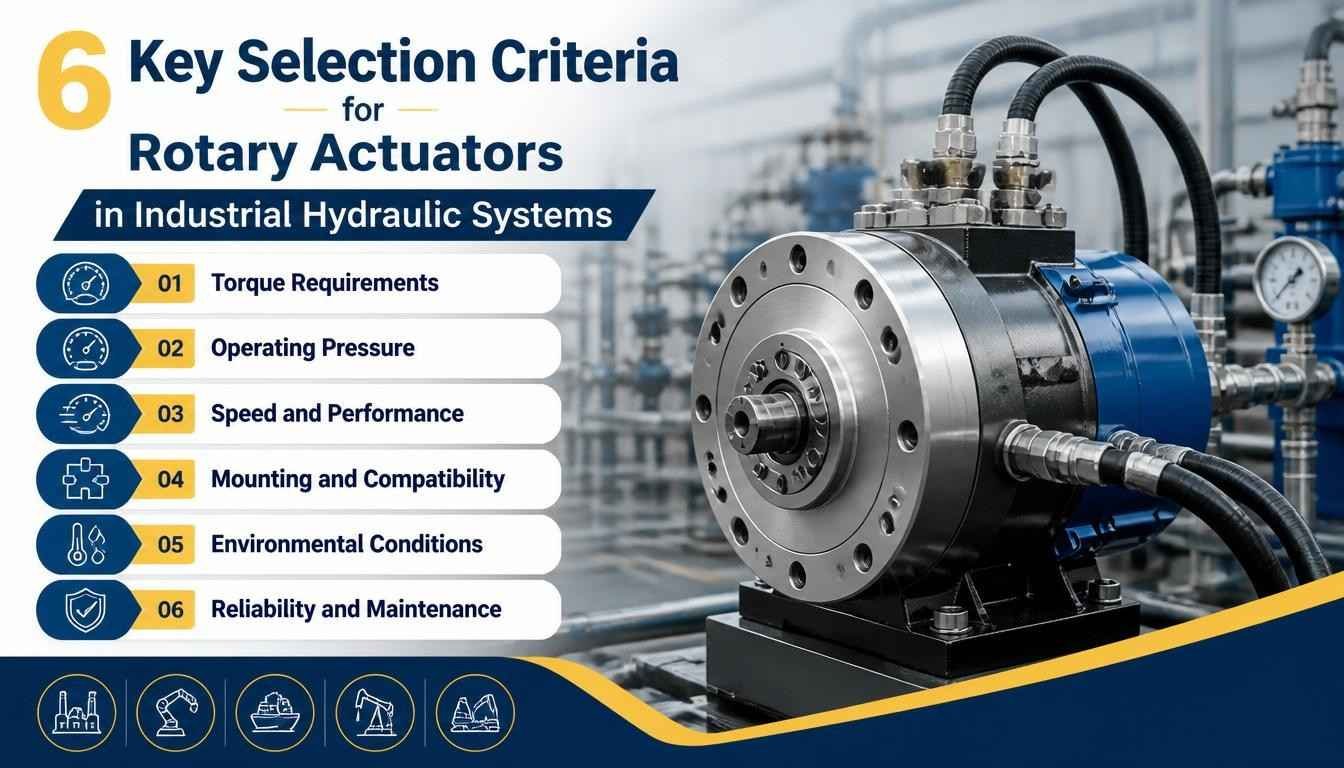
This guide explores six essential criteria that help professionals choose the ideal rotary actuator for demanding applications, especially in hydraulic systems for mobile equipment and industrial environments.
Why Is the Right Rotary Actuator Critical for Hydraulic Performance?
A rotary actuator converts hydraulic pressure into rotational motion. This motion is essential for tasks such as positioning arms, rotating platforms, opening valves, or controlling attachments.
When the actuator is properly specified, it enhances system performance, reduces wear on components, and ensures operational consistency. Conversely, selecting an incompatible unit may lead to reduced efficiency, premature component failure, and costly downtime.
Therefore, understanding the technical selection criteria becomes essential for engineers working with hydraulic assemblies that include orbit hydraulic motors and hydraulic motor pump configurations.
1. How Much Torque Does Your Application Require?
Torque capacity is the most fundamental selection factor for any rotary actuator. Torque determines the actuator’s ability to rotate loads under pressure.
If the actuator cannot generate sufficient torque, the system may stall or operate inefficiently. On the other hand, excessive torque capacity may increase costs and energy consumption unnecessarily.
When calculating torque requirements, engineers should evaluate:
- Load weight and resistance
- Friction levels in the system
- Operating pressure of the hydraulic motor pump
- Safety factors for peak load conditions
For example, heavy industrial attachments in hydraulic systems for mobile equipment often require significantly higher torque than lightweight automation tools.
Additionally, systems that incorporate small hydraulic motors may need carefully balanced torque calculations to maintain efficiency while preventing overload.
2. What Rotation Range Does Your System Need?
Not all rotary actuators are designed for continuous rotation. Many operate within a limited angular range, making it essential to match the actuator’s rotation capacity to the application.
Typical rotary actuator rotation ranges include:
- 90 degrees for valve control
- 180 degrees for mechanical positioning
- 360 degrees or continuous rotation for specialized systems
Selecting the appropriate range ensures optimal functionality without unnecessary mechanical stress.
In applications where a hydraulic motor pump drives continuous motion, a full rotation system or an orbit hydraulic motor may sometimes be a more suitable alternative. Therefore, understanding the difference between rotary actuators and orbit motors is essential during system design.
3. Will the Mounting Configuration Fit Your Equipment?
Mounting compatibility is another critical factor that directly impacts installation and operational stability.
Rotary actuators are available in various mounting styles designed to integrate with industrial machinery and hydraulic systems for mobile equipment. A mismatched configuration can lead to alignment problems, vibration, or mechanical strain.
Common mounting considerations include:
- Flange mounting designs
- Foot-mounted configurations
- Shaft orientation and coupling type
- Structural load support
For instance, construction machinery often integrates small hydraulic motors and actuators within tight equipment spaces. In these cases, compact mounting options help maintain system efficiency without compromising accessibility.
Therefore, engineers should always review equipment schematics and mounting specifications before selecting a rotary actuator.
4. Is the Actuator Compatible With Your Hydraulic Fluid?
Hydraulic fluid compatibility is frequently overlooked but plays a major role in system longevity.
Different hydraulic fluids possess unique chemical properties, viscosities, and temperature tolerances. If a rotary actuator uses seals or materials incompatible with the fluid type, it can lead to leakage, seal degradation, or reduced efficiency.
To ensure compatibility, engineers should verify:
- Seal material composition
- Operating temperature limits
- Fluid viscosity requirements
- Resistance to chemical additives
Hydraulic systems used in mobile equipment often experience varying environmental conditions. As a result, ensuring that both the actuator and associated components, such as an orbit hydraulic motor or hydraulic motor pump, are compatible with the fluid type is essential for long-term reliability.
5. How Important Is Durability and Load Capacity?
Industrial environments expose equipment to extreme operating conditions, including vibration, pressure fluctuations, and heavy loads.
A durable rotary actuator must withstand these stresses without compromising performance. Selecting an actuator designed for high-cycle operation helps extend system lifespan and reduce maintenance requirements.
Important durability considerations include:
- Bearing strength and load rating
- Internal gear or vane design
- Shock load tolerance
- Resistance to contamination and debris
In systems where small hydraulic motors operate alongside actuators, maintaining consistent durability standards across components ensures balanced performance.
Furthermore, construction and agricultural machinery rely heavily on rugged hydraulic components to maintain productivity under demanding conditions.
6. Does the Actuator Integrate Efficiently With Your Hydraulic System?
The final criterion involves overall system integration. Even a high-quality actuator will underperform if it does not match the hydraulic system’s operating characteristics.
Key integration considerations include:
- Flow rate compatibility with the hydraulic motor pump
- Pressure rating alignment
- Control valve compatibility
- Synchronization with orbit hydraulic motor components
In modern hydraulic systems for mobile equipment, integration efficiency is especially important. Machines often rely on coordinated hydraulic movements to perform multiple operations simultaneously.
Therefore, selecting a rotary actuator that aligns with system flow dynamics and pressure limits ensures smoother motion control and improved equipment performance.
How Do These Selection Criteria Improve Hydraulic System Efficiency?
When engineers evaluate torque, rotation range, mounting, fluid compatibility, durability, and integration together, they create a more balanced and efficient hydraulic system.
A properly selected rotary actuator enhances operational precision while reducing unnecessary mechanical strain. Additionally, compatibility with related components, such as an orbit hydraulic motor, small hydraulic motors, or a hydraulic motor pump, ensures the entire hydraulic system operates as a cohesive unit.
This holistic approach ultimately improves equipment longevity, reliability, and overall productivity in industrial applications.
Conclusion
Selecting the right rotary actuator is essential for achieving reliable performance in industrial hydraulic applications. By carefully evaluating torque requirements, rotation range, mounting configuration, fluid compatibility, durability, and system integration, engineers can ensure optimal functionality and long-term efficiency. These criteria are particularly important in complex hydraulic systems for mobile equipment, where components such as an orbit hydraulic motor, small hydraulic motors, and a hydraulic motor pump must work seamlessly together.
For organizations seeking dependable hydraulic solutions, THM Huade offers advanced engineering expertise and high-quality components designed to support demanding industrial environments. Their focus on precision manufacturing and system compatibility helps businesses achieve consistent performance, improved operational efficiency, and long-lasting hydraulic reliability.
FAQs
How is a rotary actuator different from an orbital hydraulic motor?
A rotary actuator typically operates within a limited rotation range for positioning tasks. In contrast, an orbit hydraulic motor provides continuous rotation, making it suitable for applications that require constant rotational motion.
Can rotary actuators work with small hydraulic motors?
Yes, rotary actuators can operate within systems that include small hydraulic motors. Proper flow, pressure compatibility, and mounting alignment are necessary to ensure the components function together efficiently.
What factors affect rotary actuator durability?
Durability depends on several factors, including load capacity, material strength, seal quality, and resistance to contamination. Systems operating in harsh environments require actuators specifically designed for heavy-duty industrial conditions.
Why is hydraulic fluid compatibility important?
Hydraulic fluid compatibility prevents seal damage, leakage, and component wear. Ensuring the rotary actuator materials match the hydraulic fluid properties helps maintain efficiency and extend system lifespan.