Hydraulic systems power some of the most demanding machines in construction, manufacturing, agriculture, and material handling. At the center of these systems lies the hydraulic motor pump combination. When pumps and motors are correctly matched, the system delivers reliable torque, steady flow, and optimal efficiency.
However, an incorrect pairing can cause excessive energy loss, overheating, and reduced equipment life. Understanding how hydraulic pumps and motors interact is essential for engineers, technicians, and buyers seeking dependable performance.
This guide explains how to match flow and torque effectively, ensuring your hydraulic system performs smoothly while maintaining efficiency.
Why Does Proper Hydraulic Motor Pump Matching Matter?
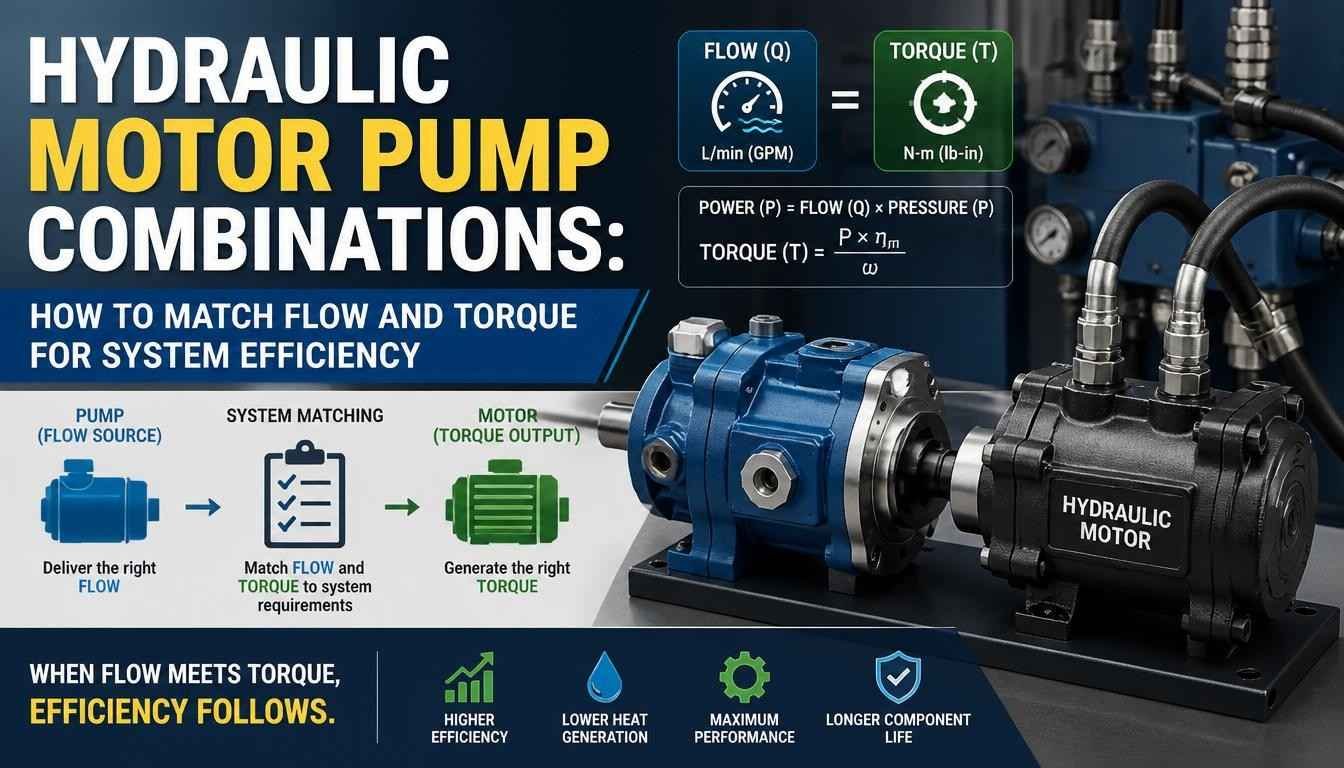
The relationship between flow and torque defines the performance of any hydraulic system. A hydraulic motor pump pairing determines how efficiently hydraulic energy converts into mechanical motion.
When pumps and motors operate in balance, the system experiences several benefits:
- Consistent torque output across varying loads
- Improved energy efficiency and reduced power loss
- Lower heat generation and extended component life
- More precise speed control for machinery operations
On the other hand, poorly matched hydraulic pumps and motors may force the system to work harder than necessary. This often leads to higher maintenance costs and operational inefficiencies.
Therefore, selecting compatible components is not only a design decision but also a long-term investment in system performance.
What Role Do Flow and Torque Play in Hydraulic Performance?
Flow and torque are the two key variables that define how hydraulic systems operate.
Flow Rate Determines Speed
Flow rate, measured in gallons per minute (GPM) or liters per minute (LPM), determines how fast a hydraulic motor rotates. A pump delivers hydraulic fluid through the system, which then powers the motor.
Higher flow rates increase rotational speed, while lower flow rates slow the motor.
Torque Defines Mechanical Power
Torque represents the turning force produced by the hydraulic motor. It depends on motor displacement and system pressure.
For example, small hydraulic motors often operate in compact machinery where moderate torque and controlled speed are required. These motors must be matched with pumps capable of delivering appropriate flow without exceeding pressure limits.
Balancing these two variables ensures a machine delivers sufficient power without compromising efficiency.
How Do Hydraulic Pumps and Motors Work Together?
Hydraulic systems function through the continuous circulation of pressurized fluid. The pump converts mechanical energy into hydraulic energy, while the motor converts that hydraulic energy back into mechanical motion.
The compatibility between these two components is critical.
Key factors influencing compatibility include:
- Pump displacement
- Motor displacement
- Operating pressure
- Required speed range
- Load requirements
For instance, variable displacement piston pumps allow operators to adjust fluid flow based on system demand. This flexibility helps maintain efficiency even when load conditions change.
Because of this adaptability, many modern hydraulic systems rely on variable displacement technology to achieve smoother operation and reduced energy consumption.
How Can You Calculate the Right Flow and Torque?
Matching a hydraulic motor pump combination begins with accurate calculations. Engineers must determine how much flow and torque the system requires before selecting components.
Key steps in the process include:
- Determine required motor speed
Identify the RPM needed for the application. - Calculate flow rate
Use the motor displacement and desired RPM to estimate required pump flow. - Evaluate system pressure
Ensure the pump can generate sufficient pressure for the required torque. - Select compatible displacement values
Pump and motor displacement must align to maintain balanced performance.
These calculations help prevent mismatches that can lead to inefficient power transfer.
What Are the Advantages of Using Variable Displacement Pumps?
Many advanced hydraulic systems incorporate variable displacement piston pumps because they offer exceptional flexibility.
Unlike fixed pumps, variable displacement pumps adjust output flow based on system demand.
Key advantages include:
- Improved energy efficiency during variable loads
- Reduced power consumption
- Better control over system speed
- Extended component lifespan
For industries where equipment operates under changing workloads, these pumps allow precise flow control without sacrificing torque performance.
This capability makes them an excellent choice for pairing with various hydraulic pumps and motors across different applications.
When Should You Consider Small Hydraulic Motors?
In compact machinery, small hydraulic motors provide efficient power in limited spaces. These motors commonly appear in:
- Agricultural equipment
- Compact construction machinery
- Industrial conveyors
- Mobile hydraulic systems
Despite their size, these motors must still be carefully matched with the right hydraulic motor pump combination. Incorrect pump sizing can overwhelm the motor or limit its ability to produce sufficient torque.
Therefore, even small-scale systems require careful engineering to ensure optimal performance.
How Do You Choose the Right Hydraulic Pumps for Sale?
When evaluating hydraulic pumps for sale, it is important to focus on more than price. Performance specifications and system compatibility should guide the decision.
Consider the following factors:
- Required flow rate and pressure
- Pump efficiency rating
- Compatibility with existing motors
- Maintenance requirements
- Manufacturer reliability
Reliable suppliers often provide technical data and performance curves to help buyers match pumps with suitable motors.
Investing time in proper evaluation ensures the selected pump will operate efficiently within the system.
What Common Mistakes Should You Avoid?
Even experienced operators sometimes overlook critical details when pairing hydraulic pumps and motors.
Frequent mistakes include:
- Selecting pumps solely based on flow capacity
- Ignoring pressure requirements
- Overlooking motor displacement compatibility
- Using oversized pumps that waste energy
Avoiding these errors helps maintain consistent torque output and prevents unnecessary stress on system components.
Careful planning and accurate calculations remain the most effective strategies for achieving reliable hydraulic performance.
Conclusion:
A properly matched hydraulic motor pump system ensures smooth power transfer, consistent torque, and efficient operation. By carefully balancing flow rate, pressure, and displacement, engineers can optimize performance across a wide range of applications.
Whether using small hydraulic motors, evaluating hydraulic pumps for sale, or implementing variable displacement piston pumps, the goal remains the same: maximize efficiency while minimizing energy loss.
With thoughtful component selection and accurate system design, hydraulic systems can deliver reliable performance and long service life.
Upgrade your hydraulic system with precision-engineered solutions from THM Huade. Discover high-performance hydraulic pumps, motors, and valves designed for reliability and efficiency. With decades of industry expertise and advanced hydraulic technology, THM delivers solutions trusted across multiple industries. Our team helps you select the right hydraulic components for your application. Contact us today to power your machinery with dependable hydraulic performance.
FAQs
How do hydraulic pumps and motors affect system efficiency?
Hydraulic pumps and motors influence energy transfer within a system. Proper matching ensures balanced flow and torque, reduces energy loss, and improves the overall reliability and lifespan of hydraulic equipment.
Are small hydraulic motors suitable for industrial systems?
Yes, small hydraulic motors are widely used in compact machinery and mobile equipment. When paired with the correct pump, they deliver reliable torque and speed while maintaining efficient hydraulic performance.
What benefits do variable displacement piston pumps offer?
Variable displacement piston pumps adjust flow output based on demand. This flexibility improves energy efficiency, reduces unnecessary power consumption, and allows precise control over hydraulic system performance.
How can I find reliable hydraulic pumps for sale?
When searching for hydraulic pumps for sale, review technical specifications, compatibility with motors, pressure ratings, and supplier reputation. Choosing high-quality components ensures dependable operation and longer equipment life.