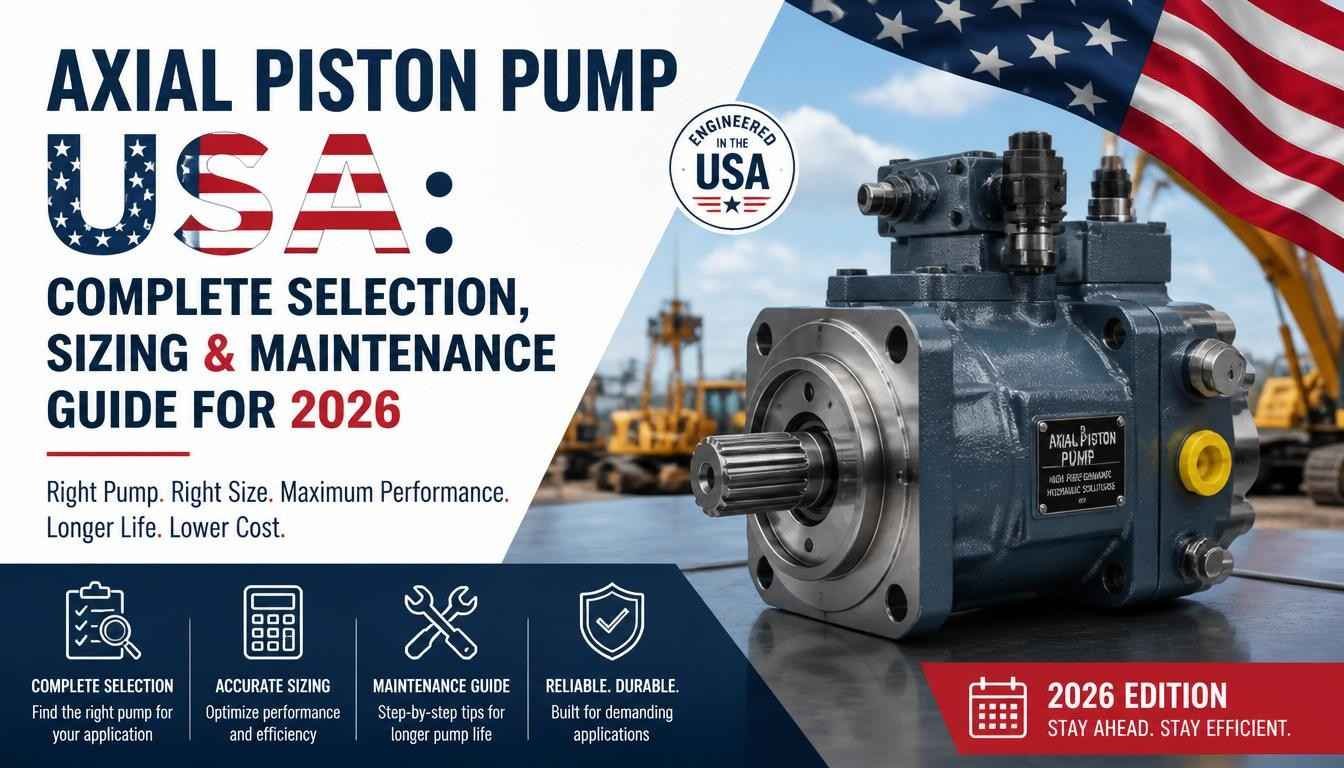
Hydraulic systems used in manufacturing, construction, mining, agriculture, and industrial automation rely on pumps that deliver high pressure with consistent performance. Among the many hydraulic pump technologies available today, the axial piston pump USA market continues to grow because of its efficiency, precise flow control, and ability to operate under demanding conditions.
Unlike simpler gear or vane pumps, axial piston pumps are designed to deliver high-pressure hydraulic power while maintaining excellent volumetric efficiency. Many modern industrial systems also use variable displacement technology, allowing the pump to adjust flow based on system demand rather than operating at full output continuously. This improves energy efficiency, reduces heat generation, and extends the life of hydraulic components.
Whether you’re replacing an existing pump, designing a hydraulic power unit, or comparing different technologies, understanding how axial piston pumps work is essential before making a purchasing decision.
This guide explains pump construction, operating principles, sizing calculations, maintenance practices, applications, and how to choose the right hydraulic pumps USA supplier for long-term reliability.
What Is an Axial Piston Pump?
An axial piston pump is a positive displacement hydraulic pump that uses several pistons arranged parallel to the drive shaft. As the shaft rotates, the pistons reciprocate within a rotating cylinder block, drawing hydraulic fluid into the pump before forcing it into the hydraulic circuit under pressure.
Unlike gear pumps that produce fixed flow, many axial piston pumps can vary their displacement through an adjustable swash plate mechanism. This enables the pump to match hydraulic output with actual system demand.
Because of their high operating pressure and excellent efficiency, axial piston pumps are widely used across industries requiring accurate hydraulic control.
Typical applications include:
- Industrial manufacturing
- Injection moulding machines
- Hydraulic presses
- Construction equipment
- Marine hydraulic systems
- Mining machinery
- Material handling equipment
- Agricultural machinery
- Mobile hydraulics
- Hydraulic power units
How Does an Axial Piston Pump Work?
Understanding the basic operating principle helps explain why these pumps perform so efficiently under changing load conditions.
As the drive shaft rotates:
- The cylinder block rotates with the shaft.
- Pistons move back and forth inside their bores.
- During the suction stroke, hydraulic oil enters the cylinder.
- During the discharge stroke, oil is pushed into the hydraulic circuit.
- The swash plate angle determines the piston stroke length and therefore the pump’s displacement.
When the swash plate angle increases, piston travel becomes longer, producing higher flow. Reducing the angle decreases flow output, while maintaining pressure capability.
This ability to vary flow without changing motor speed makes variable displacement pumps highly energy efficient.
Types of Axial Piston Pumps
Axial piston pumps are available in different configurations to suit various hydraulic systems.
Fixed Displacement Axial Piston Pumps
Fixed displacement pumps deliver the same amount of hydraulic fluid during every revolution.
They are commonly used where:
- Constant flow is required
- System demand rarely changes
- Simplicity is preferred
- Lower initial cost is important
Although reliable, they may consume more energy during partial-load operation.
Variable Displacement Axial Piston Pumps
A variable displacement piston pump USA automatically adjusts flow according to hydraulic demand.
Benefits include:
- Reduced energy consumption
- Lower operating temperatures
- Improved hydraulic control
- Reduced noise
- Longer component life
This design has become increasingly common in modern industrial and mobile hydraulic systems.
A4VSO Variable Displacement Pump
One of the most recognised open-circuit hydraulic pump designs is the A4VSO variable displacement pump USA.
It is widely used in:
- Manufacturing plants
- Hydraulic presses
- Steel processing
- Plastic injection moulding
- Industrial automation
- Hydraulic power packs
Typical features include:
- Open-circuit operation
- High operating pressure
- Swash plate design
- Pressure compensation
- Load sensing options
- Constant power control
- Electro-hydraulic controls
Its ability to match flow with changing system requirements helps reduce overall operating costs while improving efficiency.
A11VO Variable Displacement Piston Pump
Another widely used configuration is the A11VO variable displacement piston pump USA.
Unlike the A4VSO series, A11VO pumps are commonly selected for demanding mobile hydraulic applications.
Typical industries include:
- Construction equipment
- Agricultural machinery
- Forestry equipment
- Mobile cranes
- Road construction equipment
These pumps are valued for:
- Compact design
- High power density
- Reliable performance
- Smooth flow regulation
- Efficient operation under varying loads
Choosing between A4VSO and A11VO models depends on whether the application is primarily industrial or mobile, along with the hydraulic circuit design and control requirements.
Why Axial Piston Pumps Are Preferred
Modern hydraulic systems place increasing emphasis on efficiency, precision, and long-term reliability.
Compared with many traditional pump designs, axial piston pumps offer several important advantages.
Higher Operating Pressure
Axial piston pumps are capable of operating continuously at pressures up to approximately 350 bar, with some models supporting even higher peak pressures.
Better Energy Efficiency
Variable displacement technology supplies only the flow required by the hydraulic system, reducing wasted energy.
Improved Hydraulic Control
Precise flow regulation improves machine responsiveness and overall process control.
Reduced Heat Generation
Producing only the required flow minimises excess hydraulic oil circulation, lowering system temperatures.
Longer Service Life
Lower operating temperatures reduce wear on seals, hoses, valves, bearings, and hydraulic oil, helping extend equipment lifespan.
Axial Piston Pump Specifications
Before selecting an axial piston pump, it’s important to compare its technical specifications with your hydraulic system requirements. Although specifications vary between manufacturers and models, most industrial pumps share similar operating ranges.
The table below outlines the typical specifications for modern axial piston pumps.
| Specification | Typical Range |
| Pump Type | Axial piston |
| Circuit Type | Open or closed circuit |
| Displacement Range | Approximately 18–500 cc/rev |
| Continuous Operating Pressure | Up to 350 bar |
| Peak Pressure | Up to 400 bar |
| Maximum Speed | Model dependent |
| Mounting | SAE flange |
| Shaft Options | Splined, keyed, SAE |
| Rotation | Clockwise or counter-clockwise |
| Hydraulic Fluid | Mineral hydraulic oil and compatible fluids |
| Control Options | Pressure compensation, load sensing, constant power, electro-hydraulic |
Always verify the manufacturer’s technical data before selecting a specific model.
How to Size an Axial Piston Pump
Proper sizing is one of the most important steps when selecting an axial piston pump USA. A pump that is too small may not provide enough hydraulic power, while an oversized pump can increase energy consumption, operating temperatures, and maintenance costs.
Pump sizing depends on several key parameters:
- Required flow rate
- Operating pressure
- Motor speed
- Duty cycle
- Hydraulic actuator requirements
- System efficiency
Step 1: Calculate Required Flow
Flow determines how quickly hydraulic cylinders or motors operate.
Typical industrial flow requirements include:
| Application | Typical Flow |
| Small hydraulic power units | 20–60 L/min |
| Machine tools | 40–120 L/min |
| Injection moulding machines | 80–250 L/min |
| Industrial presses | 150–400 L/min |
| Heavy manufacturing | 250 L/min and above |
Higher flow generally increases actuator speed but also affects power requirements.
Step 2: Determine Operating Pressure
Pressure depends on the force required by the hydraulic system.
Typical operating ranges include:
| Application | Pressure |
| General industrial equipment | 140–210 bar |
| Manufacturing systems | 180–280 bar |
| Hydraulic presses | 280–350 bar |
| Heavy-duty equipment | Up to 350 bar continuous |
The pump should comfortably meet the maximum working pressure without operating continuously at its limit.
Step 3: Calculate Pump Displacement
Pump displacement can be estimated using the following formula:
Flow (L/min) = Displacement (cc/rev) × Speed (RPM) ÷ 1000
Example:
Required flow = 180 L/min
Motor speed = 1800 RPM
Required displacement:
180 × 1000 ÷ 1800 = 100 cc/rev
A pump with a displacement close to 100 cc/rev would generally meet this requirement, subject to efficiency losses and system design.
Step 4: Estimate Hydraulic Power
Hydraulic power requirements can be calculated using:
Power (kW) = Pressure (bar) × Flow (L/min) ÷ 600
Example:
- Pressure = 250 bar
- Flow = 180 L/min
Power required:
250 × 180 ÷ 600 = 75 kW
This calculation helps ensure the selected electric motor or engine is appropriately sized.
Axial Piston Pumps vs Other Hydraulic Pumps
Different hydraulic systems require different pump technologies. Comparing their characteristics can help determine the most suitable option.
| Pump Type | Best Applications | Advantages | Limitations |
| Gear Pump | Basic hydraulic systems | Simple, affordable, easy to maintain | Lower efficiency, fixed flow |
| Vane Pump | Medium-pressure industrial systems | Smooth operation, quieter performance | Lower pressure capability |
| Fixed Displacement Axial Piston Pump | Constant-load applications | High efficiency, compact design | Fixed flow output |
| Variable Displacement Axial Piston Pump | Industrial automation, heavy machinery | Adjustable flow, energy efficient, precise control | Higher initial investment |
Although axial piston pumps generally have a higher purchase cost, they often provide lower operating costs throughout their service life due to improved efficiency.
Maintenance Best Practices
Routine maintenance plays a major role in extending pump life and preventing unexpected downtime.
A preventive maintenance programme should include the following:
Maintain Oil Cleanliness
Contaminated hydraulic oil is one of the leading causes of premature pump wear.
Replace filters according to the manufacturer’s recommendations and regularly monitor oil cleanliness.
Inspect Hydraulic Fluid
Check for:
- Contamination
- Water ingress
- Oxidation
- Changes in viscosity
Replacing degraded hydraulic oil helps protect internal pump components.
Monitor Operating Temperature
Excessive heat can shorten the life of seals, bearings, and hydraulic oil.
If temperatures rise above recommended limits, inspect:
- Cooling systems
- Relief valve settings
- Pump displacement adjustments
- Hydraulic circuit efficiency
Check for Leakage
Inspect:
- Shaft seals
- Hose connections
- Flanges
- Hydraulic fittings
Small leaks should be repaired promptly to prevent contamination and pressure loss.
Listen for Unusual Noise
Changes in operating sound may indicate:
- Air entering the suction line
- Cavitation
- Bearing wear
- Damaged pistons
- Low hydraulic oil level
Early diagnosis often prevents more expensive repairs.
Common Applications Across the USA
The hydraulic pumps USA market serves a wide range of industries where high-pressure hydraulic power is required.
Axial piston pumps are commonly used in:
Manufacturing
- Injection moulding machines
- CNC equipment
- Press systems
- Metal fabrication
- Automated production lines
Construction
- Excavators
- Loaders
- Cranes
- Concrete pumps
- Road construction machinery
Agriculture
- Harvesters
- Tractors
- Sprayers
- Forestry equipment
Mining
- Underground machinery
- Hydraulic drills
- Crushers
- Conveyor systems
Marine
- Deck cranes
- Steering systems
- Winches
- Hydraulic stabilisers
Their ability to deliver consistent hydraulic performance under demanding operating conditions makes them suitable for both industrial and mobile applications.
How to Choose the Right Axial Piston Pump Supplier in the USA
Selecting the right supplier is just as important as choosing the correct pump. A reliable supplier can help ensure compatibility, reduce downtime, and provide technical support throughout the product’s lifespan.
When comparing suppliers, consider the following factors.
Product Quality
Choose pumps manufactured using precision-machined components and high-quality materials. Consistent manufacturing standards contribute to better efficiency, smoother operation, and longer service life.
Look for suppliers that perform thorough quality inspections before products leave the factory.
Technical Support
Hydraulic systems often require application-specific recommendations. A supplier with experienced technical engineers can help you select the appropriate pump based on:
- Flow requirements
- Operating pressure
- Control options
- Mounting configuration
- Shaft design
- Hydraulic circuit type
Proper technical guidance reduces the risk of selecting an incompatible pump.
Product Availability
Unexpected hydraulic failures can halt production and increase operating costs.
Choosing a supplier with reliable inventory and shorter lead times helps minimise equipment downtime, particularly for businesses operating multiple hydraulic systems.
Spare Parts Support
Over time, hydraulic pumps require routine servicing and replacement components.
Before purchasing, check whether the supplier offers readily available:
- Seal kits
- Bearings
- Valve plates
- Pistons
- Cylinder blocks
- Swash plates
Easy access to spare parts can reduce maintenance delays and extend the overall life of the pump.
Warranty and After-Sales Service
A strong warranty demonstrates confidence in product quality.
In addition to warranty coverage, consider suppliers that provide:
- Technical documentation
- Installation guidance
- Maintenance recommendations
- Troubleshooting assistance
- Repair services
Reliable after-sales support helps maximise system uptime and long-term value.
Common Mistakes to Avoid When Buying an Axial Piston Pump
Purchasing the wrong hydraulic pump can result in reduced performance, higher energy consumption, and increased maintenance costs.
Avoid these common mistakes.
Choosing Based on Price Alone
A lower purchase price does not always represent better value.
A high-quality pump often delivers lower lifetime operating costs through improved efficiency, reduced maintenance, and longer service life.
Ignoring System Requirements
Always verify:
- Required flow
- Operating pressure
- Displacement
- Shaft type
- Mounting dimensions
- Control configuration
Selecting a pump solely because it matches the previous model number may lead to compatibility issues.
Oversizing the Pump
Many buyers assume a larger pump provides better performance.
In reality, oversized pumps often:
- Consume more energy
- Generate additional heat
- Increase operating costs
- Reduce overall system efficiency
Proper sizing is always the better approach.
Overlooking Maintenance Requirements
Even the best hydraulic pump requires routine maintenance.
Ignoring oil cleanliness, filter replacement, or hydraulic fluid quality can significantly reduce pump lifespan.
Future Trends in Axial Piston Pump Technology
The hydraulic industry continues to evolve as manufacturers focus on improving efficiency, reliability, and automation.
Several developments are shaping the future of axial piston pump USA solutions.
Smart Hydraulic Systems
Modern pumps increasingly integrate with electronic controllers, allowing real-time monitoring of:
- Pressure
- Flow
- Temperature
- Operating hours
- System diagnostics
This supports predictive maintenance and helps reduce unexpected downtime.
Greater Energy Efficiency
Manufacturers continue to improve volumetric and mechanical efficiency to help industrial facilities lower energy consumption without compromising hydraulic performance.
Industry 4.0 Integration
Many variable displacement pumps now support electro-hydraulic controls that communicate with programmable logic controllers (PLCs) and factory automation systems.
This enables more precise control and better monitoring across connected manufacturing environments.
Sustainable Hydraulic Solutions
Growing environmental awareness is driving demand for pumps that are compatible with biodegradable hydraulic fluids and designed to reduce energy usage throughout their operating life.
Why Axial Piston Pumps Continue to Lead Industrial Hydraulics
The demand for axial piston pump USA solutions continues to grow because they combine high-pressure capability, excellent efficiency, and reliable performance across a wide range of industries.
Whether you’re selecting an A4VSO variable displacement pump USA for industrial manufacturing or an A11VO variable displacement piston pump USA for mobile equipment, choosing the correct displacement, pressure rating, and control option is essential for achieving reliable hydraulic performance.
Compared with traditional pump technologies, modern variable displacement piston pump USA models help reduce energy consumption, minimise heat generation, and improve machine productivity. When combined with proper installation and preventive maintenance, they offer dependable long-term performance for demanding applications.
Partnering with an experienced supplier of hydraulic pumps USA also ensures access to technical expertise, spare parts, and after-sales support, helping businesses maximise uptime and protect their investment.
Frequently Asked Questions
What is the difference between a fixed and variable displacement axial piston pump?
A fixed displacement pump delivers the same flow during every revolution, while a variable displacement pump adjusts its output based on system demand. Variable displacement pumps improve energy efficiency and reduce unnecessary heat generation.
How do I select the correct axial piston pump?
Selection depends on several factors, including required flow rate, operating pressure, motor speed, duty cycle, hydraulic circuit type, and control requirements. Proper sizing helps optimise performance and minimise operating costs.
What industries use axial piston pumps?
Axial piston pumps are widely used in manufacturing, construction, agriculture, mining, marine, material handling, industrial automation, and hydraulic power units where high-pressure hydraulic performance is required.
What maintenance is required for an axial piston pump?
Routine maintenance includes replacing hydraulic filters, monitoring oil cleanliness, inspecting seals and fittings, checking operating temperatures, and ensuring the hydraulic fluid remains in good condition. Regular preventive maintenance helps extend pump life and reduce downtime.
Can an axial piston pump replace other hydraulic pump types?
In many applications, yes. However, the replacement should be selected based on system pressure, flow requirements, mounting dimensions, shaft configuration, and control type to ensure compatibility and reliable operation.