Modern hydraulic systems demand pumps that can deliver high pressure, respond quickly to changing load conditions, and operate efficiently across a wide range of applications. The A11VO variable displacement piston pump USA is widely used in mobile and industrial hydraulic systems because it combines high power density with precise flow control and dependable performance.
Unlike fixed displacement pumps that deliver a constant flow regardless of demand, the A11VO automatically adjusts its output by changing the swash plate angle. This allows the hydraulic system to produce only the required flow, reducing energy consumption, minimising heat generation, and improving overall efficiency.
From construction equipment and agricultural machinery to mining vehicles and material handling systems, A11VO-style pumps support applications where operating conditions change continuously. Their compact design and high-pressure capability also make them suitable for machines with limited installation space.
Whether you’re replacing an existing hydraulic pump or specifying one for a new system, understanding its working principle, pressure ratings, flow characteristics, and selection criteria is essential before making a purchasing decision.
This guide explains how A11VO pumps operate, where they are used, how to size them correctly, and what to consider when comparing suppliers in the USA.
What Is an A11VO Variable Displacement Piston Pump?
The A11VO is an axial piston variable displacement pump designed primarily for open-circuit hydraulic systems. It uses a swash plate mechanism to adjust piston stroke, allowing the pump to vary its displacement according to system demand.
Unlike pumps with fixed output, the A11VO can continuously regulate hydraulic flow without changing the speed of the prime mover. This improves efficiency while providing smooth hydraulic performance under varying operating conditions.
The variable displacement piston pump USA market commonly uses A11VO pumps in equipment requiring:
- High operating pressure
- Variable hydraulic flow
- Fast response times
- Compact installation
- Reliable continuous operation
Because the pump automatically adjusts output, it reduces unnecessary power consumption during partial-load operation.
How Does an A11VO Pump Work?
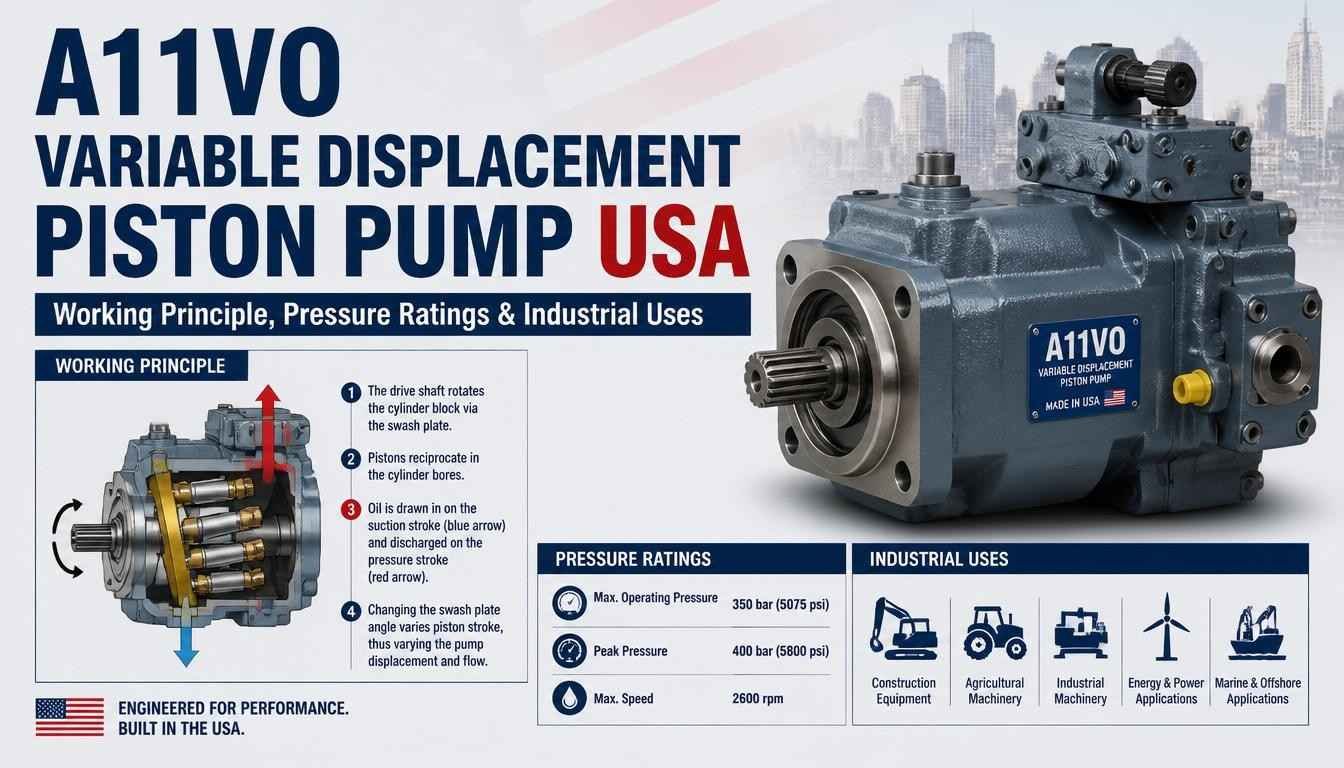
The A11VO operates using multiple pistons arranged parallel to the drive shaft inside a rotating cylinder block.
As the shaft turns:
- The cylinder block rotates with the drive shaft.
- Pistons move back and forth against the swash plate.
- During the suction stroke, hydraulic oil enters each cylinder.
- During the discharge stroke, oil is forced into the hydraulic system.
- Adjusting the swash plate angle changes piston stroke length, which varies pump displacement and flow output.
When greater hydraulic flow is required, the swash plate angle increases, producing a longer piston stroke. As system demand decreases, the angle reduces, lowering flow while maintaining pressure capability.
This design allows the pump to match hydraulic output with system requirements, improving energy efficiency and reducing wear on hydraulic components.
Key Features of the A11VO Pump
The A11VO series is designed for demanding hydraulic applications where efficiency and reliability are essential.
Some of its key features include:
- Variable displacement design
- Swash plate axial piston construction
- Open-circuit hydraulic operation
- High volumetric efficiency
- Compact installation dimensions
- Multiple control options
- High operating pressure capability
- Smooth flow regulation
- Low noise operation
- Long service life with proper maintenance
These features make the A11VO suitable for both mobile machinery and industrial hydraulic power systems.
Pressure Ratings and Technical Specifications
Before purchasing an A11VO pump, compare its specifications with your hydraulic system requirements.
Although exact values vary by manufacturer and model, the table below outlines the typical operating range for A11VO-style pumps.
| Specification | Typical Range |
| Pump Type | Axial piston variable displacement |
| Hydraulic Circuit | Open circuit |
| Displacement Range | Approximately 40–260 cc/rev |
| Continuous Operating Pressure | Up to 350 bar |
| Peak Pressure | Up to 400 bar |
| Mounting | SAE flange |
| Shaft Options | Splined, keyed, SAE |
| Rotation | Clockwise or counter-clockwise |
| Hydraulic Fluid | Mineral hydraulic oil and compatible fluids |
| Control Options | Pressure compensation, load sensing, constant power, electro-hydraulic |
The appropriate model should always be selected based on system flow, operating pressure, and application requirements rather than displacement alone.
Why Choose a Variable Displacement Pump?
Many hydraulic systems experience changing load conditions throughout normal operation.
A variable displacement pump automatically adjusts flow to match these changes, providing several operational advantages over fixed displacement designs.
Improved Energy Efficiency
Only the required hydraulic flow is produced, reducing wasted energy and lowering power consumption.
Reduced Heat Generation
Since unnecessary hydraulic oil is not continuously circulated, the system generates less heat, helping extend hydraulic oil life.
Better Hydraulic Control
Variable displacement allows smoother machine operation and improved response to changing loads.
Lower Operating Costs
Improved efficiency and reduced component wear contribute to lower maintenance and operating expenses over time.
Common Industrial Applications
The A11VO variable displacement piston pump USA is widely used across industries where hydraulic systems operate under varying load conditions.
Typical applications include:
- Excavators
- Wheel loaders
- Agricultural tractors
- Harvesting equipment
- Road construction machinery
- Mobile cranes
- Forestry equipment
- Mining vehicles
- Material handling equipment
- Hydraulic power units
Its combination of compact size and high-pressure performance makes it suitable for equipment where installation space is limited without compromising hydraulic output.
How to Size an A11VO Variable Displacement Piston Pump
Choosing the correct pump size is essential for achieving reliable hydraulic performance and avoiding unnecessary energy consumption. An undersized pump may fail to deliver the required flow, while an oversized pump can increase operating costs and generate excess heat.
When selecting an A11VO variable displacement piston pump USA, consider the following factors:
- Required flow rate
- Maximum operating pressure
- Prime mover speed (RPM)
- Duty cycle
- Hydraulic actuator requirements
- System efficiency
Evaluating these parameters helps ensure the pump matches your application’s performance requirements.
Step 1: Calculate the Required Flow
Flow determines how quickly hydraulic cylinders and motors operate.
Typical flow requirements include:
| Application | Typical Flow |
| Compact mobile equipment | 20–60 L/min |
| Agricultural machinery | 50–180 L/min |
| Construction equipment | 100–300 L/min |
| Mining machinery | 180–450 L/min |
| Heavy-duty hydraulic systems | 300 L/min and above |
Higher flow generally improves machine speed but also increases power demand.
Step 2: Determine the Operating Pressure
Pressure depends on the force required by the hydraulic system.
Typical operating ranges include:
| Application | Typical Pressure |
| Agricultural equipment | 180–250 bar |
| Construction machinery | 210–320 bar |
| Mobile hydraulic systems | 250–350 bar |
| Heavy-duty applications | Up to 350 bar continuous |
Selecting a pump with sufficient pressure capacity provides reliable performance while maintaining a suitable safety margin.
Step 3: Estimate Pump Displacement
Pump displacement can be estimated using the following formula:
Flow (L/min) = Displacement (cc/rev) × Speed (RPM) ÷ 1000
Example:
Required flow = 180 L/min
Motor speed = 1800 RPM
Required displacement:
180 × 1000 ÷ 1800 = 100 cc/rev
The closest available displacement should then be selected while accounting for efficiency losses and application-specific requirements.
Step 4: Calculate Hydraulic Power
Hydraulic power requirements can be estimated using:
Power (kW) = Pressure (bar) × Flow (L/min) ÷ 600
Example:
- Pressure = 250 bar
- Flow = 180 L/min
Power required:
250 × 180 ÷ 600 = 75 kW
This calculation helps ensure the engine or electric motor is appropriately sized for the hydraulic system.
Understanding A11VO Control Options
Different applications require different methods of regulating hydraulic output. The A11VO series is available with several control configurations to suit varying operating conditions.
Pressure Compensation
Pressure-compensated pumps automatically reduce displacement once the preset pressure is reached.
They are commonly used in:
- Hydraulic power units
- Industrial presses
- Manufacturing equipment
Load Sensing Control
Load sensing adjusts pump output according to system demand while maintaining a pressure margin.
Typical applications include:
- Excavators
- Loaders
- Agricultural machinery
- Mobile hydraulic equipment
This improves fuel efficiency while providing responsive hydraulic control.
Constant Power Control
Constant power control automatically reduces displacement as pressure increases, preventing overload of the engine or electric motor.
This feature is particularly useful in heavy-duty mobile equipment operating under varying load conditions.
Electro-Hydraulic Control
Electronic proportional controls allow integration with PLCs and advanced machine control systems.
These controls are increasingly used where precise hydraulic movement and automated operation are required.
A11VO vs Other Axial Piston Pumps
Selecting the right pump depends on the application, hydraulic circuit, and performance requirements.
The table below compares common axial piston pump configurations.
| Pump Type | Typical Applications | Advantages | Considerations |
| Fixed Displacement Axial Piston Pump | Constant-load machinery | Simple design, consistent flow | Flow cannot adjust to demand |
| A11VO Variable Displacement Pump | Mobile hydraulics | Compact, energy efficient, high power density | Higher initial investment |
| A4VSO Variable Displacement Pump USA | Industrial manufacturing | Excellent efficiency, ideal for open-circuit industrial systems | Better suited to stationary industrial equipment |
| Hydraulic Servo Pump USA | Precision automation | Highly accurate control and rapid response | Typically used in specialised servo systems |
The choice depends on operating conditions, installation requirements, and the level of hydraulic control needed.
Maintenance Best Practices
Routine maintenance helps maximise pump performance and minimise unexpected downtime.
A preventive maintenance programme should include the following.
Maintain Hydraulic Oil Cleanliness
Contaminated hydraulic oil is one of the leading causes of internal component wear.
Replace filters according to maintenance schedules and monitor oil cleanliness regularly.
Check Hydraulic Fluid Condition
Inspect the hydraulic oil for:
- Contamination
- Water ingress
- Oxidation
- Changes in viscosity
Replacing degraded oil helps protect internal pump components and maintain system efficiency.
Monitor Operating Temperature
Excessive temperatures can reduce seal life and accelerate oil degradation.
If high temperatures occur, inspect:
- Cooling systems
- Pump settings
- Relief valves
- Hydraulic circuit efficiency
Inspect for Leaks
Regularly examine:
- Shaft seals
- Hydraulic hoses
- Fittings
- Mounting flanges
Repairing minor leaks early helps prevent pressure loss and contamination.
Listen for Abnormal Noise
Unusual sounds may indicate:
- Cavitation
- Air entering the suction line
- Bearing wear
- Low hydraulic oil level
- Internal component damage
Early diagnosis can reduce repair costs and prevent major failures.
Buying Considerations for USA Industries
When comparing suppliers of A11VO variable displacement piston pump USA products, focus on overall value rather than purchase price alone.
Key considerations include:
- Product quality and manufacturing standards
- Technical support during selection and installation
- Availability of spare parts
- Warranty coverage
- Delivery lead times
- After-sales service
- Industry experience
Businesses sourcing axial piston pump USA solutions should also confirm that the supplier can provide documentation, replacement parts, and ongoing technical assistance to support long-term operation.
As manufacturers continue expanding their digital presence, many also collaborate with specialist marketing partners such as Rankfast to make technical product information easier for engineers and procurement teams to access.
Why A11VO Pumps Are a Trusted Choice
The A11VO variable displacement piston pump USA remains a preferred solution for mobile and industrial hydraulic systems because it delivers efficient flow control, high operating pressure, and dependable performance across demanding applications.
Compared with fixed displacement pumps, modern variable displacement piston pump USA models reduce energy consumption, minimise heat generation, and improve machine productivity. Their compact design and flexible control options make them suitable for construction equipment, agricultural machinery, mining vehicles, and other applications where hydraulic demand changes throughout the operating cycle.
For businesses comparing axial piston pump USA solutions or evaluating a hydraulic servo pump USA for more specialised applications, selecting the correct pump based on flow, pressure, and system requirements will help ensure reliable long-term performance and lower operating costs.
Frequently Asked Questions
What pressure can an A11VO pump handle?
Most A11VO-style pumps operate continuously at pressures up to 350 bar, with peak pressures reaching approximately 400 bar, depending on the manufacturer and model.
Where are A11VO pumps commonly used?
They are widely used in construction equipment, agricultural machinery, mining vehicles, forestry equipment, material handling systems, and mobile hydraulic applications.
How do I select the correct A11VO pump?
Selection depends on required flow rate, operating pressure, motor speed, duty cycle, hydraulic circuit design, and control requirements. Proper sizing helps optimise efficiency and equipment performance.
What maintenance does an A11VO pump require?
Routine maintenance includes monitoring hydraulic oil condition, replacing filters, inspecting seals and fittings, checking operating temperatures, and ensuring the hydraulic system remains clean and properly lubricated.
How does an A11VO differ from an A4VSO pump?
Both are variable displacement axial piston pumps, but A11VO pumps are generally preferred for mobile hydraulic equipment, while A4VSO pumps are commonly used in stationary industrial applications such as manufacturing, presses, and hydraulic power units.